
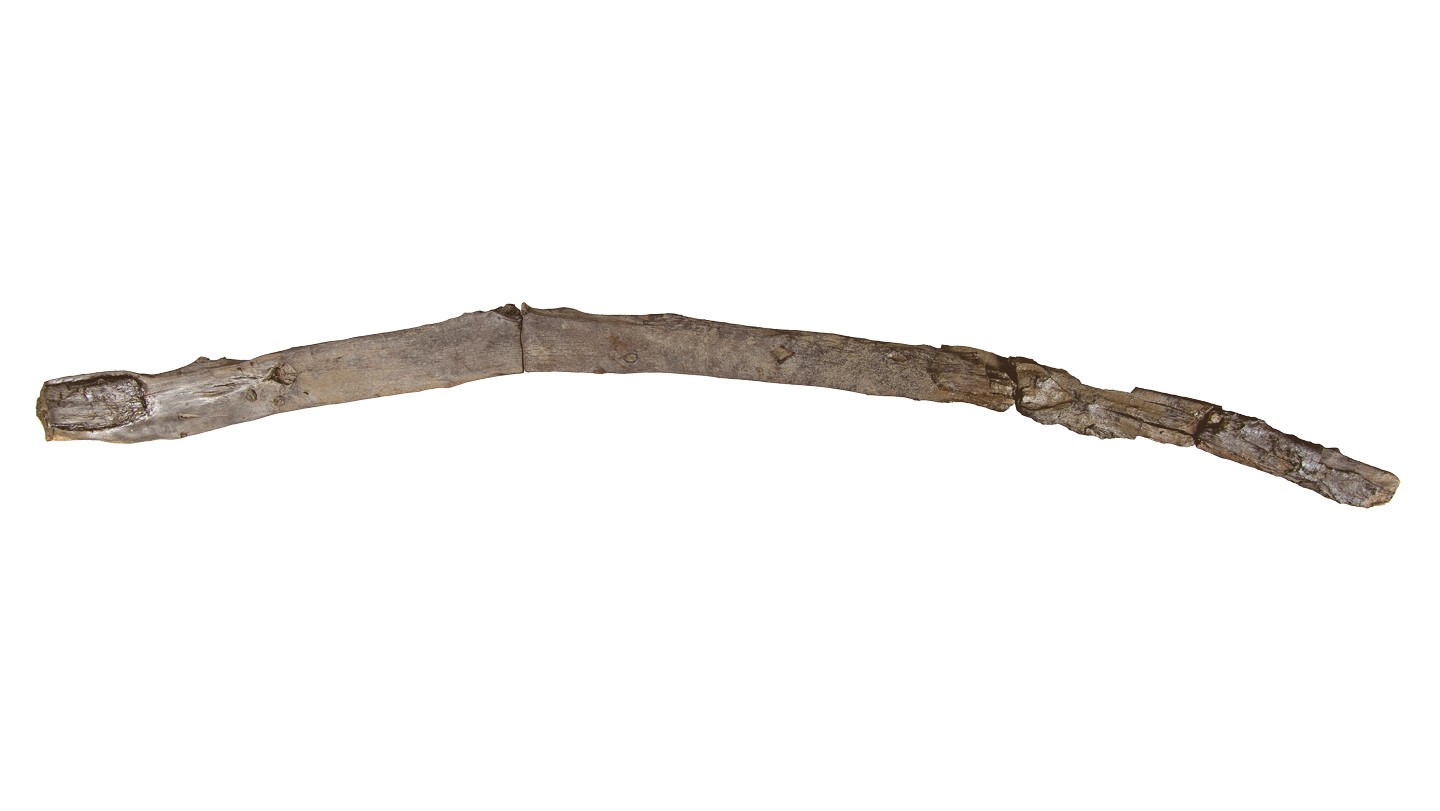
Archaeologists in Greece have unearthed remarkably preserved wooden tools dating back nearly half a million years, pushing back the known timeline of human wood-based technology. The discovery—a digging stick and an unidentified smaller tool—demonstrates that early human ancestors were not just using stone and bone, but actively crafting and utilizing wood for tools, potential weapons, and even shelter construction far earlier than previously understood.
Unexpected Preservation in Greece
The tools were found at an ancient lignite (brown coal) mine near Marathousa, in the Peloponnese Peninsula. The site, once a lakeshore, is now dry land, but the waterlogged conditions and deep burial (approximately 30 meters underground) preserved the wood against typical decay. As paleolithic archaeologist Annemieke Milks of the University of Reading explains, finding wooden artifacts is extraordinarily rare due to their perishability, making this discovery “incredibly lucky.”
Details of the Artifacts
The primary find is a digging stick, reconstructed from four fragments and measuring approximately 81 centimeters (2.5 feet) long. Analysis confirms it was deliberately shaped—branches were removed, and a handle was formed—and used for digging. The second tool, made from willow and less than 8 centimeters long, remains more enigmatic. It shows clear shaping but its exact function is unknown; it may have been used in conjunction with other stone or bone tools for detailed work.
Why This Matters: Rewriting Early Human History
The survival of these tools challenges the assumption that early hominids relied solely on stone technology. Wood was likely far more widespread in early toolkits than the archaeological record suggests, simply because it decomposes so rapidly. The discovery highlights a crucial gap in our understanding of prehistoric life: we’ve long focused on durable materials like stone, overlooking the ubiquity of wood in daily survival.
A Growing Body of Evidence
This isn’t an isolated case. Similar discoveries in recent years point to a long, largely hidden tradition of wooden toolmaking. In Zambia, shaped logs have been dated to 480,000 years ago, while Neanderthal tools from Italy (wedges, digging sticks, handles) are around 171,000 years old. Even older, a polished wooden artifact from the Jordan River dates back 780,000 years, though its exact form is now incomplete.
Implications for Hominid Species
The Marathousa tools could have been crafted by either Neanderthals or Homo heidelbergensis, suggesting that earlier hominids possessed sophisticated wood-based technologies. Anthropologist Bruce Hardy notes that “we’re finding only a very small amount of the material culture” due to the perishable nature of these materials, implying much more remains undiscovered.
The findings reinforce the idea that early humans and their ancestors were more adaptable and resourceful than previously thought, capable of leveraging their environment effectively with tools we rarely find today.
The survival of these tools is a rare glimpse into the daily lives of people from hundreds of thousands of years ago, reminding us that much of humanity’s past remains buried—and will likely remain so—beneath the soil.