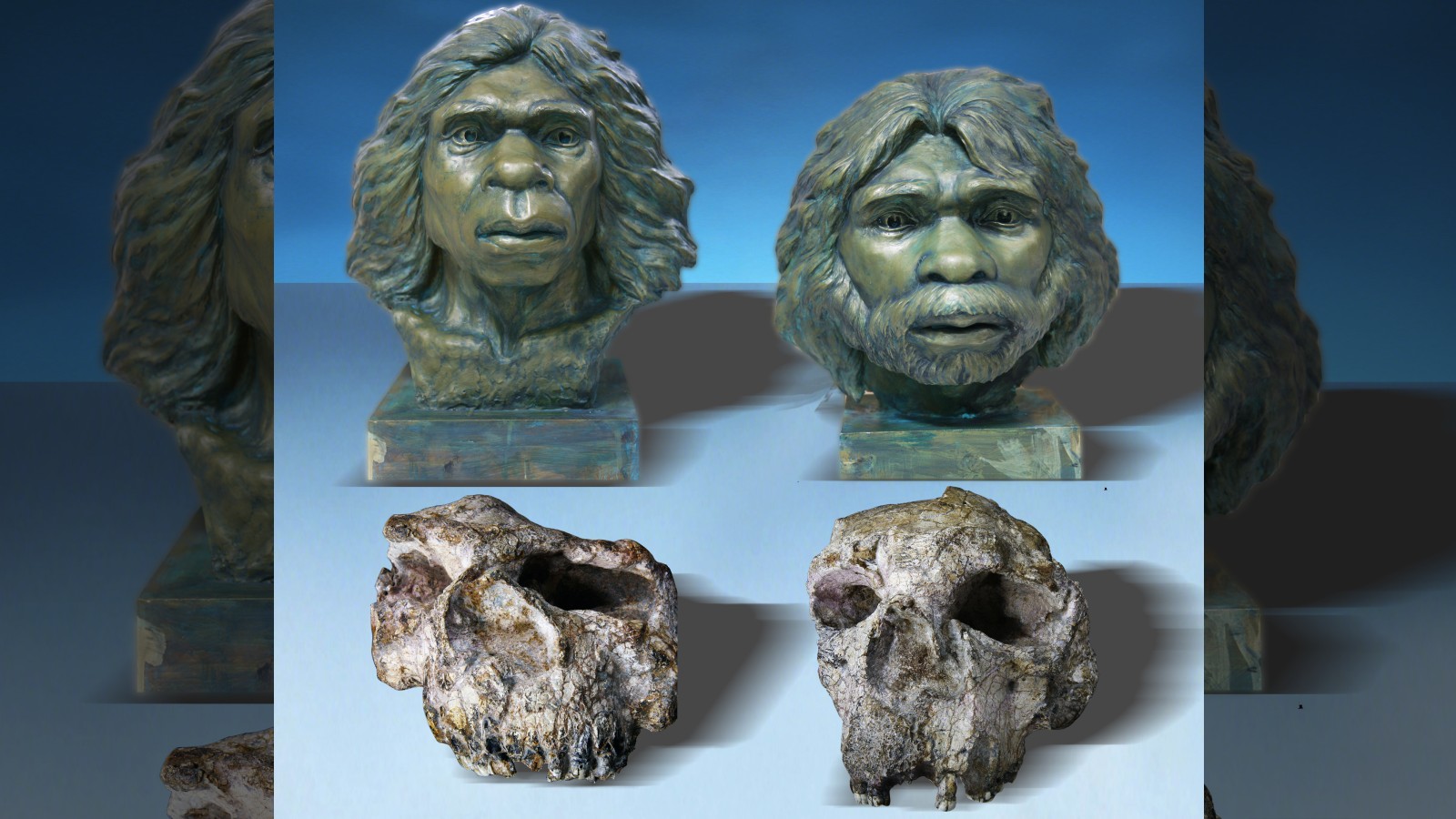
New research reveals three Homo erectus skulls discovered in China are approximately 1.8 million years old – significantly older than previously estimated. This finding reshapes our understanding of early hominin dispersal across Asia, placing East Asia as a key region for the evolution of this ancient human relative.
Redating the Yunxian Skulls
For decades, the Yunxian skulls from Hubei province were believed to be around 1 million years old, based on associated animal fossils. However, a recent study published in Science Advances employs a cutting-edge dating method – cosmogenic nuclide burial dating – to pinpoint their age with greater accuracy. This technique analyzes the decay of isotopes in sediment layers, revealing the skulls are roughly 600,000 years older than prior estimates, at approximately 1.77 million years old.
Implications for Human Evolution
The revised timeline has major implications. Homo erectus is considered the first human relative to venture out of Africa. Previously, the oldest Asian fossils were found at Dmanisi, Georgia, dating back 1.78–1.85 million years. These new findings suggest that H. erectus may have migrated across Asia relatively quickly, possibly even earlier than thought.
Notably, the Yunxian skulls exhibit larger brain sizes compared to those found at Dmanisi, despite being a similar age. This variation highlights the rapid evolutionary changes occurring in hominins outside of Africa.
The Puzzle of Early Tools
The dating also complicates the existing archaeological record. Stone tools discovered in China date back as far as 2.1–2.43 million years ago, predating the newly confirmed age of the Yunxian skulls by as much as 600,000 years. This gap raises questions about which hominin species created these early tools and how they relate to the later arrival of H. erectus.
Debate and Further Research
While the new dating is compelling, some researchers urge caution. Chris Stringer of the National History Museum in London notes that such an age would place the Yunxian fossils out of sync with the broader fossil record. He suggests the fossils may belong to a population that eventually gave rise to the Denisovans, an extinct group of hominins closely related to Neanderthals.
Further dating work is crucial to confirm these findings and resolve the remaining uncertainties about early hominin migration patterns.
The revised timeline for the Yunxian skulls forces experts to reconsider the origins of not only Homo erectus but also the ancestors of modern humans, Homo sapiens. The research underscores the importance of continued investigation in China, which could unlock further insights into our evolutionary past.