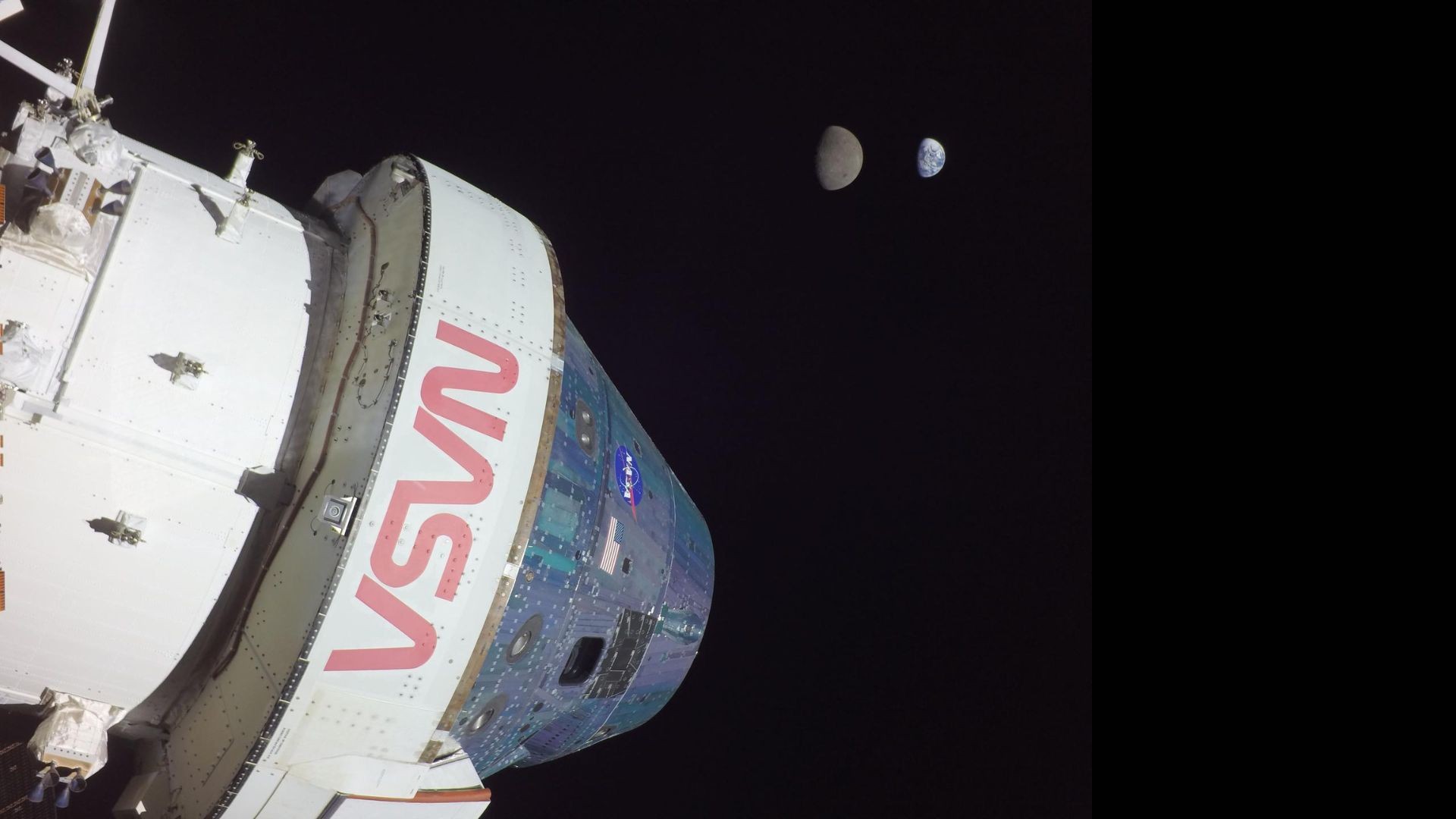
NASA’s upcoming Artemis 2 mission will send astronauts on a 10-day lunar orbit, exposing them to the hazards of deep-space radiation. While the Orion spacecraft offers some protection, the crew will rely on active monitoring and a pre-planned “shelter in place” strategy to mitigate risks from solar storms and other space weather events.
The Radiation Threat in Deep Space
Once beyond Earth’s protective magnetic field, astronauts face a heightened risk from high-energy particles. These include galactic cosmic rays (GCRs), which are difficult to shield against due to their extreme energies, and solar particle events (SPEs) – sudden bursts of radiation from the Sun. SPEs pose the most immediate threat, as they can deliver high doses of radiation over a short period. The Artemis 2 crew, consisting of Reid Wiseman, Victor Glover, Christina Koch, and Jeremy Hansen, will be equipped with radiation detectors and dosimeters to track exposure levels.
Orion’s Shielding and Shelter Protocol
The Orion spacecraft is designed with radiation shielding in mind. Its compact and dense structure provides inherent protection, as demonstrated by data from the uncrewed Artemis 1 mission in 2022. However, during severe SPEs, the crew will activate a “shelter in place” protocol. This involves moving supplies from central stowage bays to create a localized high-density shield, reducing exposure in critical areas of the capsule.
“We learned that the Orion radiation storm shelter performs as expected and at different locations in the vehicle,” said Stuart George, NASA’s radiation instrumentation lead.
The crew also has access to additional shielding in less-used areas, such as storage bays and near the toilet, which offer denser protection. This strategy is based on predefined dose rate thresholds: if exceeded, the shelter is constructed to minimize exposure.
Advanced Radiation Monitoring
Artemis 2 will deploy several radiation monitoring systems. Hybrid Electronic Radiation Assessors (HERA) sensors, strategically placed throughout Orion, will provide real-time data. Crew Active Dosimeter badges worn by the astronauts will also track individual exposure. NASA is partnering with the German Space Agency (DLR) to use an updated M-42 EXT sensor, offering six times the resolution of the previous model. This will allow for a more precise analysis of different energy types within the radiation environment.
Lessons From Artemis 1
The Artemis 1 mission provided crucial data on Orion’s shielding capabilities. Instruments aboard the spacecraft, including manikins and body phantoms, revealed that doses to internal organs can be lower than those to the skin during space weather events. This insight will help refine crew protection strategies for Artemis 2.
Understanding these dynamics is critical because prolonged radiation exposure can increase cancer risk and cause acute health problems. The Artemis program’s emphasis on shielding and monitoring is a direct response to this threat, ensuring astronaut safety during future lunar missions.
The Artemis 2 mission represents a significant step towards sustained lunar exploration, but it also highlights the challenges of operating in the harsh environment of deep space. The success of the mission hinges on proactive radiation mitigation, advanced monitoring, and a well-defined emergency response protocol.