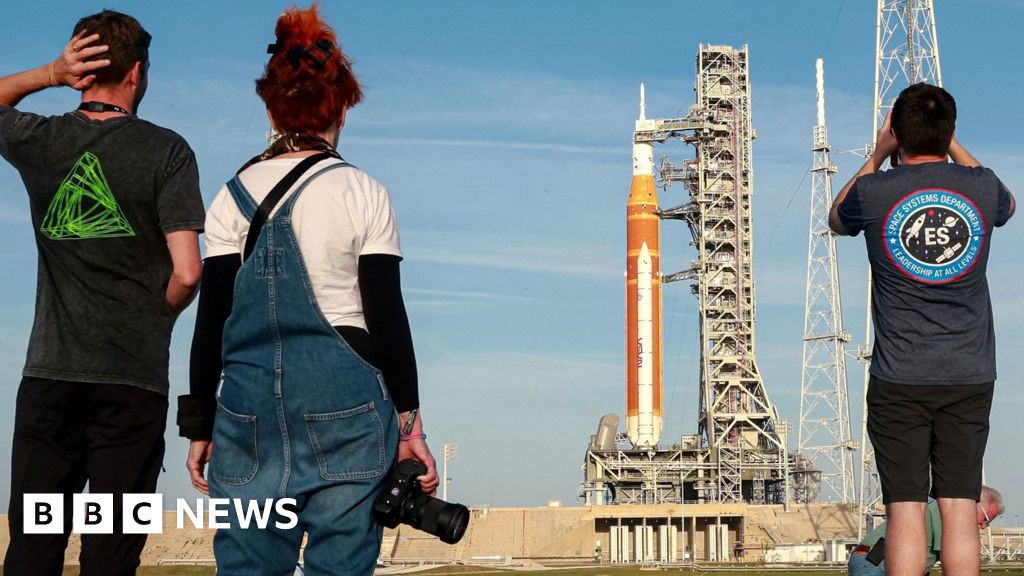
The atmosphere on Florida’s Space Coast is electric as NASA prepares to launch Artemis II, a pivotal test flight that could carry humanity closer to returning to the Moon and eventually, Mars. Hundreds of thousands of people are converging on the region, with an estimated economic impact of $160 million, as the world anticipates witnessing four astronauts embark on a 10-day journey around the lunar orbit.
The Spectacle and the Stakes
This isn’t just another rocket launch. It’s a revival of lunar ambition, decades in the making. Eight-year-old Isiah captures the mood perfectly: “People going up to the Moon is kind of cool.” But beneath the excitement, there’s a deeper significance. Artemis II isn’t about landing; it’s about validating the technology and human endurance needed for sustained lunar presence.
The crew—Reid Wiseman, Victor Glover, Christina Koch, and Jeremy Hansen—will push the Orion capsule and the Space Launch System (SLS) rocket to their limits. The mission will test life support systems, manual flight capabilities, and the crucial heat shield that will protect the astronauts during a fiery re-entry at 25,000 mph.
A Region Transformed
The launch is reshaping the Space Coast. Hotels are booked solid, bars are serving “moonshots,” and traffic is expected to grind to a halt. Local businesses are booming, particularly those like Space Shirts, which has been selling NASA memorabilia for 40 years. Owner Brenda Mulberry puts it simply: “People are beyond excited.”
This influx of tourists and investment underscores how heavily the region relies on space exploration. Artemis II isn’t just a scientific endeavor; it’s a lifeline for Florida’s economy and a source of local pride.
Beyond the Launch: A New Era of Lunar Exploration
Future Artemis missions aim to establish a permanent Moon base, leveraging its resources as a stepping stone to Mars. This shift from short-term visits to long-term habitation represents a paradigm shift in space exploration. Astronaut Reid Wiseman envisions a future where children will look at the Moon and know that humans are already there, not just in history books but in real time.
The mission’s trajectory involves a daring flyby of the Moon’s far side, where radio contact will be lost for 40 minutes, testing both the crew’s preparedness and NASA’s remote monitoring capabilities. If successful, Artemis II will pave the way for the next phase: a return to the lunar surface and the realization of a new age of space exploration.
The Artemis II mission is more than just a launch; it is a testament to human ambition and technological progress. As the SLS rocket stands poised on Launch Pad 39B, the same historic site from which Apollo missions first sent humans to the Moon, the world watches with anticipation, knowing that this is just the beginning of a new chapter in our journey beyond Earth.