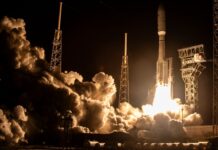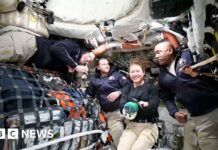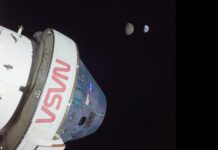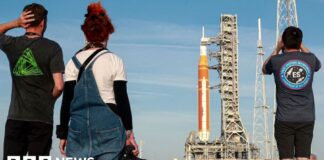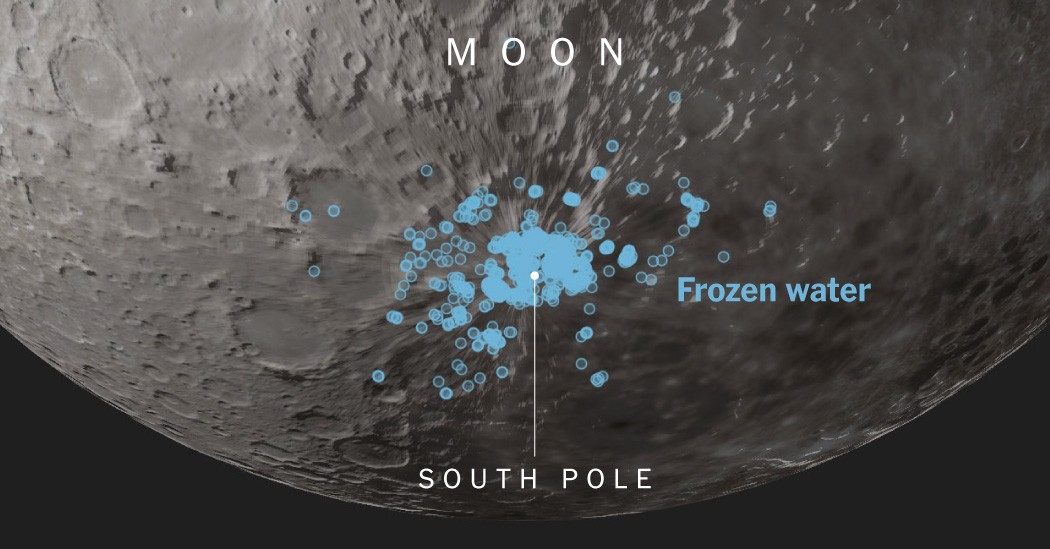
The upcoming Artemis II mission marks the first crewed journey to the moon since 1972, but this return is driven by new ambitions beyond simple exploration. A modern space race is underway, with the United States aiming to land astronauts back on the lunar surface by 2028, slightly ahead of China’s own lunar plans. This time, the focus is not just on reaching the moon, but on utilizing its resources.
Water Ice: The Key Resource
One of the primary drivers for renewed lunar interest is the discovery of substantial water ice deposits at the moon’s poles, trapped in permanently shadowed craters. This ice isn’t just a curiosity; it’s a potential game-changer.
- Resource Extraction: Water can be broken down into hydrogen and oxygen, providing both breathable air for lunar bases and essential rocket propellant for further space travel. Astronauts could also drink the water directly.
- Strategic Importance: Both NASA and China are targeting the moon’s south pole for potential outposts, signaling a long-term commitment to lunar presence.
Scientific Value: A 4.5 Billion-Year Time Capsule
Beyond resource extraction, the lunar poles hold invaluable scientific data. The permanently shadowed regions act as natural archives for cometary and asteroid impacts over billions of years.
- Solar System History: Ice cores drilled from these craters could reveal a detailed history of the solar system, mirroring how Antarctic ice cores illuminate Earth’s past climate.
- Unique Chemistry: The unique chemical composition of these deposits, preserved for eons, offers a glimpse into the early solar system’s composition.
Helium-3: The Potential Fusion Fuel
The moon also harbors helium-3, a rare isotope on Earth but abundant in the lunar soil. While currently expensive at roughly $9 million per pound, its potential is transformative.
- Fusion Power: Helium-3 is considered an ideal fuel for future fusion power plants, offering a cleaner and more efficient energy source than current methods.
- Quantum Computing: In the near term, helium-3 could be critical for ultracold refrigerator systems used in quantum computing, a rapidly developing field.
- Lunar Geology: Titanium-rich minerals on the near side of the moon are believed to contain the highest concentrations of helium-3, making these areas prime targets for potential mining operations.
The moon’s lack of a global magnetic field allows the solar wind, which carries helium-3, to directly deposit the isotope into its soil, making it more accessible than on Earth.
The Artemis II mission, and the subsequent lunar programs, represent a shift in space exploration from symbolic achievements to practical resource utilization and scientific advancement. The new lunar race isn’t just about planting flags; it’s about building a sustainable presence beyond Earth, and unlocking the secrets of our solar system’s past — and potentially, its future.