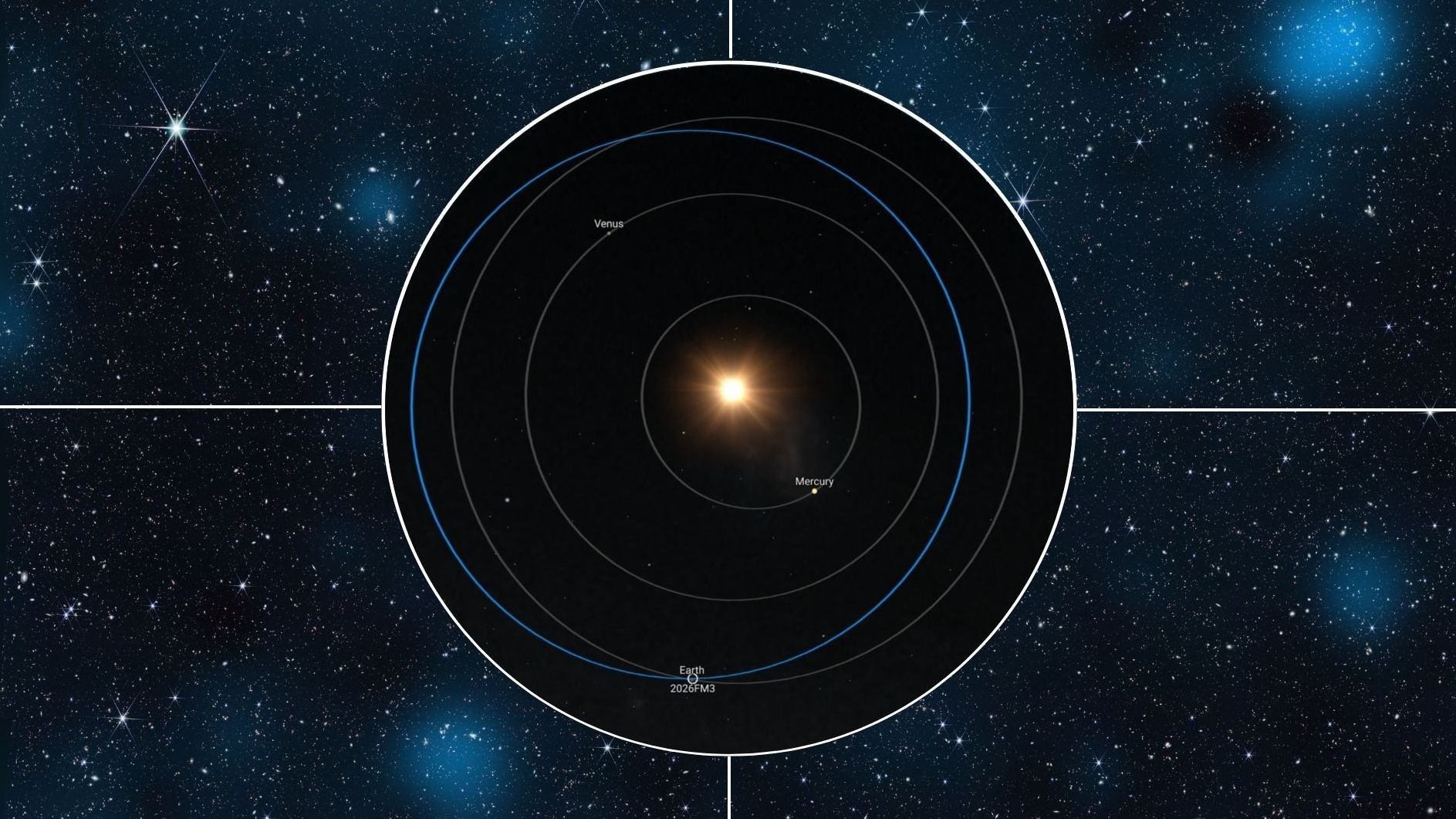
A newly discovered asteroid, designated 2026 FM3, will make a remarkably close pass by Earth late tonight, March 24th. While the event poses no threat, it highlights how frequently near-Earth objects traverse our planet’s orbital path. Here’s what you need to know about this celestial flyby.
What is Happening?
The asteroid, estimated to be between 13 and 26 feet in diameter (roughly car-sized), was detected just three days ago by the Zwicky Transient Facility at the Palomar Observatory in California. It will pass at a distance of approximately 147,836 miles (237,918 kilometers) from Earth’s southern hemisphere at 10:07 PM EDT (0207 GMT on March 25th). This is about 61.9% of the distance to the Moon. The asteroid is traveling at a high speed of 11,461 miles per hour (18,444 kilometers per hour).
Why This Matters
Near-Earth asteroids (NEAs) are a constant presence in our solar system. Most are small and burn up harmlessly in Earth’s atmosphere as meteors, but larger objects pose a potential risk. The fact that 2026 FM3 was discovered so recently underscores the need for continuous sky surveys to identify and track these objects.
The asteroid follows an orbital path that intersects Earth’s twice per year, and its closest previous approach occurred in 1965, when it missed Earth by just 30,559 miles. While NASA classifies asteroids based on their potential hazard, 2026 FM3 is too small to be considered dangerous.
What About Future Encounters?
Current projections show that 2026 FM3 won’t make another close approach to Earth for at least the next century. However, the discovery of this asteroid emphasizes the growing number of known NEAs, with over 41,000 identified to date.
New observatories like the Vera Rubin Observatory are expected to significantly increase this number by pinpointing thousands more previously unknown asteroids. The ability to detect these objects early is critical for assessing any potential long-term threats.
Atmospheric Protection
Earth’s atmosphere serves as a natural shield against smaller asteroids, which disintegrate upon entry as meteors or “shooting stars.” Larger debris can create spectacular fireballs, sometimes scattering fragments on the ground. While 2026 FM3 is not expected to cause any such event, it serves as a reminder of the dynamic interplay between Earth and its surrounding space environment.
The frequent discovery of near-Earth asteroids highlights the ongoing need for robust monitoring systems to track and assess potential risks, ensuring planetary defense readiness.
The close encounter with 2026 FM3 is a routine event in astronomical terms, but it underscores the constant vigilance required to understand and mitigate potential hazards from space.