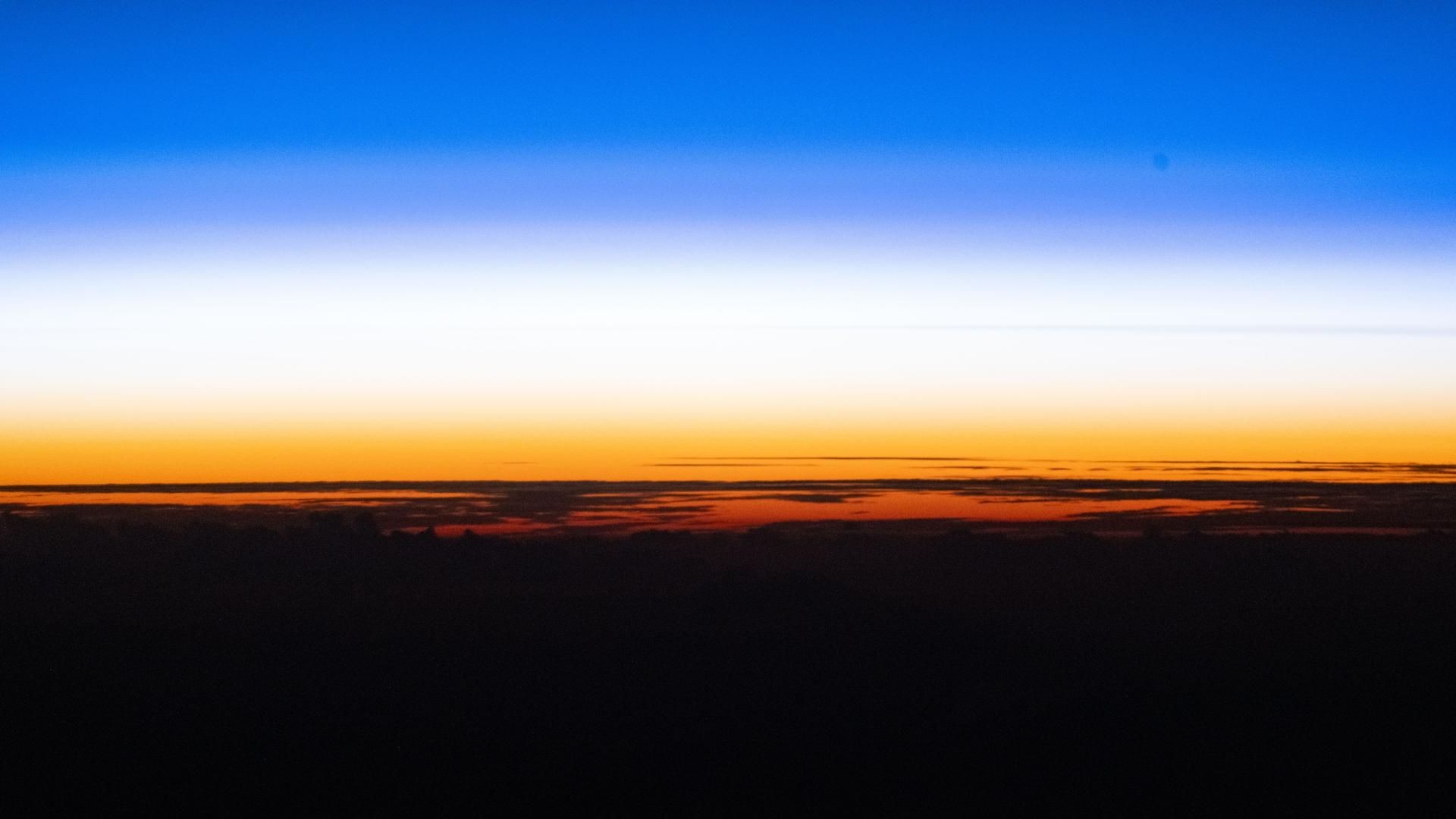
Astronauts aboard the International Space Station (ISS) experience a phenomenon unlike any on Earth: 15 to 16 sunrises and sunsets every 90 minutes. This isn’t due to rapid shifts in time zones, but because the station orbits the planet at roughly 17,500 miles per hour, constantly moving between sunlight and shadow. A recent image captured in January 2026 shows a stunning sunset over the Pacific Ocean, with clouds silhouetted against the golden light.
The Science Behind the View
The ISS orbits Earth at an altitude of approximately 250 miles (400 kilometers). From this vantage point, the sun doesn’t set behind the horizon in the traditional sense. Instead, the station itself flies into Earth’s shadow, creating a swift and dramatic transition. This rapid shift allows astronauts to witness the full spectrum of light interaction with Earth’s atmosphere.
The curvature of the planet plays a critical role: sunlight bends and filters through the atmosphere, scattering blues and emphasizing reds and oranges. This creates a razor-thin, thousands-of-mile-long gradient across the Earth’s curve. This effect is more pronounced than what viewers on the ground experience, as astronauts are looking at the sunset from a different angle.
The ISS: A Global Laboratory
The International Space Station is a collaborative project between NASA and international partners, including Roscosmos (Russia), ESA (Europe), JAXA (Japan), and CSA (Canada). It serves as a permanent, crewed laboratory for long-duration spaceflight and scientific research that’s difficult or impossible to conduct on Earth.
The ISS environment allows scientists to study phenomena like light refraction and atmospheric scattering on a planetary scale. Moreover, the constant visual reminder of Earth as a single, interconnected system impacts the astronauts’ perspective, reinforcing the concept of our planet as a unified entity.
Why This Matters
The unique vantage point from the ISS offers more than just a breathtaking view. It provides real-time observation of atmospheric processes, reinforcing the importance of understanding how light interacts with matter on a global scale. The perspective reinforces the idea that Earth is one large, interconnected system, not a series of isolated regions. This view is critical for both scientific research and for cultivating a broader sense of planetary awareness.
This perspective on Earth’s fragility and interconnectedness is especially important as climate change and space exploration become increasingly intertwined.