The Artemis II mission concluded this past Friday with a successful splashdown in the Pacific Ocean, marking the end of a ten-day lunar orbit that was as much a psychological milestone as it was a scientific one. While the mission’s primary objectives were technical—gathering data, capturing high-resolution imagery, and testing critical life-support systems—the journey resonated far beyond the telemetry data sent back to Earth.
The Dual Nature of Space Exploration
On paper, Artemis II was a rigorous test of human endurance and hardware. The four astronauts aboard the spacecraft functioned as high-level researchers, pushing the boundaries of what is possible in deep-space habitation. However, the mission also served as a massive, global moment of reflection.
For the crew and the millions watching from Earth, the mission highlighted a recurring theme in space exploration: the tension between human capability and cosmic insignificance.
- Technical Success: Testing life support and lunar proximity.
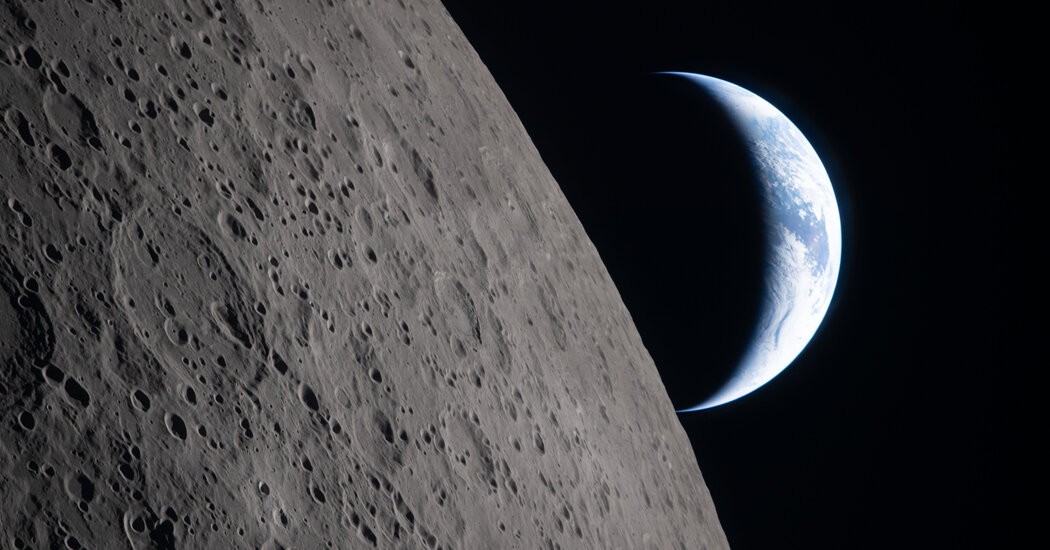
- Scientific Gain: New data and visual records of the lunar landscape.
- Philosophical Impact: A collective realization of the scale of the universe.
A Shared Sense of Wonder
The mission triggered a profound emotional response that bridged the gap between the astronauts in orbit and the public on the ground. For many, the sight of the rocket ascending or the moon hanging in the sky prompted a sense of “grandeur and smallness.”
Mission specialist Christina Koch captured this sentiment during her communication with mission control. She described a sudden, overwhelming moment where the lunar landscape “became real,” a fleeting but intense connection to the vastness of space that defied simple explanation.
This experience was mirrored on Earth. From small groups watching launches in restaurant parking lots to global audiences tracking the mission online, the event acted as a unifying force. It reminded humanity of two conflicting truths:
1. Our Power: The incredible engineering required to send humans hundreds of thousands of miles away.
2. Our Frailty: The extreme vulnerability of the human species when faced with the vacuum and scale of the cosmos.
Why This Matters
Space missions are often framed through the lens of “the race to the moon” or technological supremacy. However, the Artemis II mission demonstrates that these endeavors serve a deeper sociological purpose. They provide a rare, shared experience that forces humanity to pause and contemplate its place in the universe.
By looking up, we are not just observing distant rocks; we are confronting the limits of our existence and the interconnectedness of our species.
The mission transformed a technical flight into a collective moment of contemplation, reminding us of both our technological reach and our cosmic fragility.