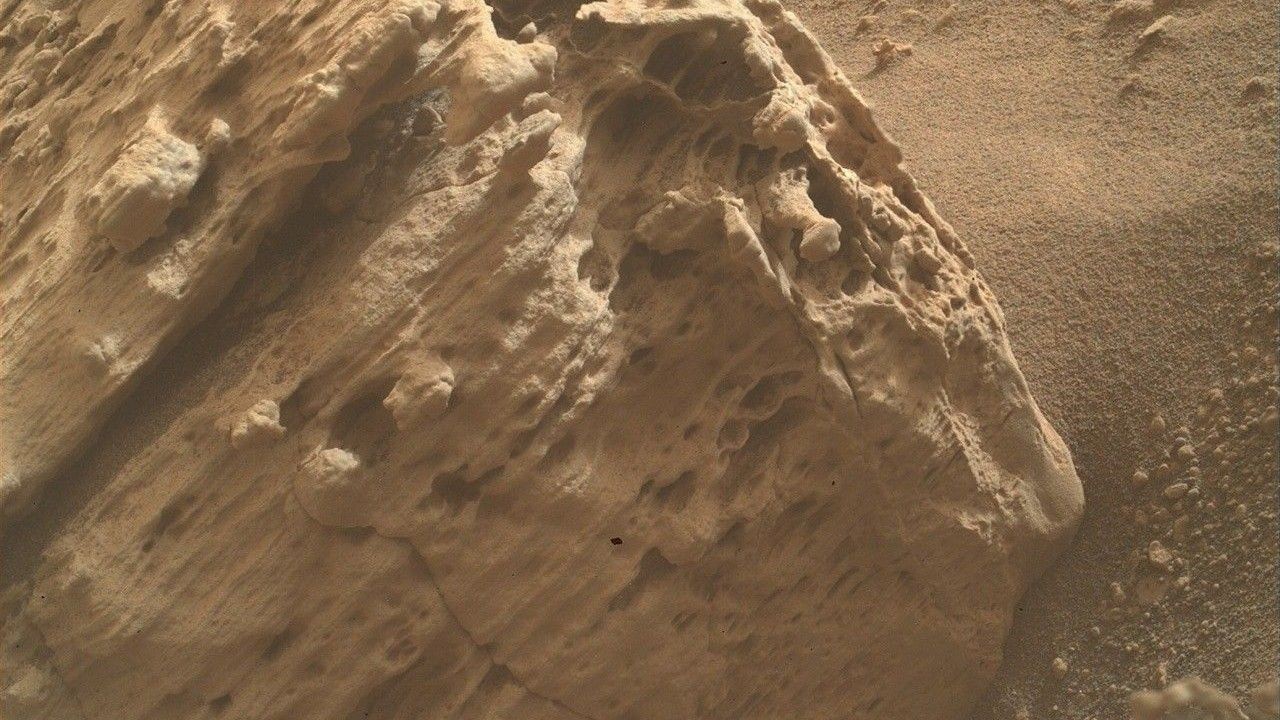
NASA’s Curiosity rover has captured a striking image of a heavily eroded rock formation on Mount Sharp in Gale Crater, Mars. The feature, dubbed “Timboy Chaco,” provides further evidence that liquid water once flowed across the Red Planet, potentially leaving behind traces of ancient microbial life.
Boxwork Formations Reveal Martian History
For months, Curiosity has been studying peculiar geological structures called “boxwork formations” in this region. These formations appear as delicate, web-like patterns from orbit, but close-up images reveal a network of ridges and hollows carved into the rock. These are the result of wind and erosion exposing mineral deposits left behind by evaporating water.
Scientists believe these deposits may contain crucial clues about Mars’ past habitability. The rover is currently focused on the eastern and southern “borderlands” of this area, collecting data to determine if organic materials or biosignatures are preserved within the rock.
Water’s Lingering Influence on Mars
The discovery of water-related mineral deposits is significant because it challenges previous assumptions about when Mars became arid. The presence of these formations suggests that groundwater may have persisted on the planet for a longer period than previously estimated. This means conditions suitable for life could have existed later in Martian history, increasing the possibility of finding preserved evidence of past organisms.
“The intricate patterns in Timboy Chaco demonstrate how wind erosion can reveal hidden geological stories,” explains NASA in a statement. “By studying these rocks, we are piecing together a more complete picture of Mars’ wet and potentially habitable past.”
Future Investigations
The Curiosity team is continuing to analyze these formations, with the hope of uncovering definitive proof of past life. The data collected will help refine our understanding of Mars’ geological evolution and inform future missions aimed at searching for evidence of extant or extinct microbial ecosystems.
The ongoing exploration of Mount Sharp is not only revealing the history of water on Mars but also raising crucial questions about the potential for life beyond Earth.