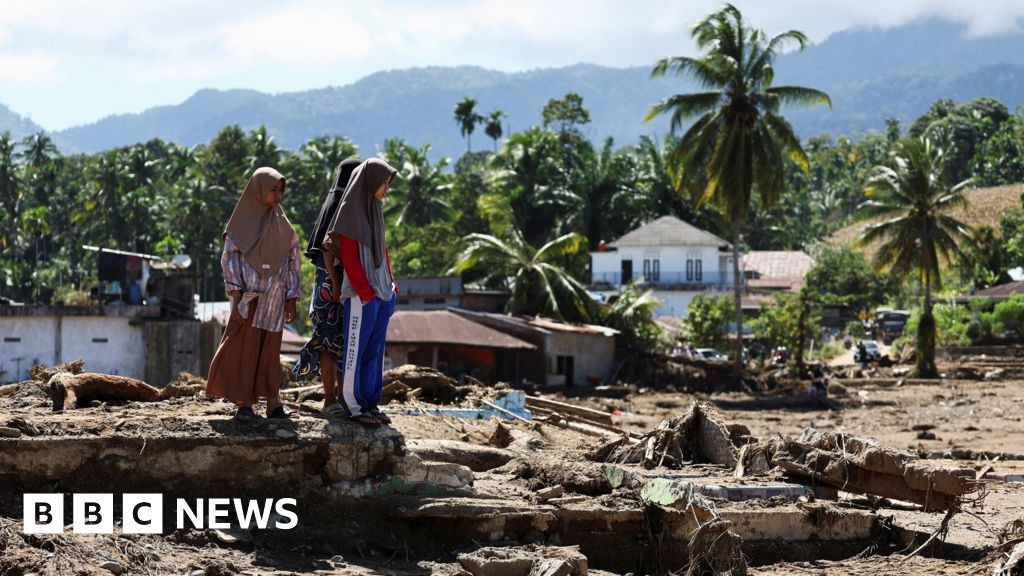
The death toll from severe flooding across Indonesia has risen beyond 500, as rescue efforts continue to struggle against impassable conditions and widespread destruction. The disaster, triggered by an unusually strong cyclone over the Malacca Strait, has left over 1.4 million people affected across three provinces: Aceh, North Sumatra, and West Sumatra. Hundreds remain missing, and thousands more are injured, facing critical shortages of food, water, and communication access.
Scale of the Crisis
The floods are not isolated; torrential rains and storms have swept through much of Asia in recent days, with Thailand, Malaysia, and Sri Lanka also reporting fatalities. However, Indonesia’s situation stands out due to the sheer scale of the damage and the challenges in reaching isolated communities. Residents describe scenes of devastation akin to a tsunami, with roads washed away, bridges collapsed, and entire villages submerged under thick layers of mud and debris.
One resident in Aceh described the flooding as “the worst in her life,” while another in West Sumatra expressed grim fears for missing family members, fearing their bodies may be unrecognizable when recovered. The lack of access is critical; aid workers are relying on foot and motorcycle travel to reach trapped populations.
Growing Frustration with Response
As days pass, desperation grows among survivors. Many have gone without food for days, and competition for scarce resources has become fierce. Residents report walking kilometers for even basic necessities, like clean water and a functioning internet connection. The government’s response has drawn criticism, with some accusing authorities of slow bureaucratic processes that hinder the timely distribution of aid.
President Prabowo Subianto acknowledged the difficulties in reaching affected areas but assured the public that “everything” is being done to overcome the challenges. However, the reality on the ground suggests otherwise: widespread shortages and a growing sense of abandonment.
Regional Context and Climate Change Link
The Indonesian floods are part of a broader pattern of extreme weather events plaguing South and Southeast Asia, where over 1,100 people have died in flooding and landslides in the last week alone. Sri Lanka has reported 355 deaths, while Thailand’s toll stands at at least 176.
The underlying causes are complex but include the seasonal northeast monsoon, which brings heavy rainfall to the region. This year, the monsoon has been intensified by two rare cyclones – Ditwah and Senyar – that lingered over affected areas, dumping over half a meter of rain in some locations. Senyar, in particular, formed unusually close to the equator, where cyclones are not normally expected.
The growing intensity of these storms raises concerns about the role of climate change. While global warming may not necessarily increase the number of cyclones, it is expected to make them more powerful, with heavier rainfall and more destructive potential.
The situation in Indonesia serves as a stark reminder of the escalating human cost of extreme weather events. Until systemic improvements in disaster preparedness and response are implemented, vulnerable communities will continue to bear the brunt of climate change’s growing impact.