The latest round of United Nations climate negotiations, held in Belém, Brazil (COP30), concluded with minimal progress despite ambitious goals. The conference, intended to finalize “implementation” plans following the 2015 Paris Agreement, instead saw familiar patterns of delayed commitments and weakened language, leaving many observers disillusioned.
A Conference Marred by Contradictions
The event, attended by delegates from over 190 nations, was plagued by logistical issues and symbolic contradictions from the start. The choice of Belém – a gateway to the Amazon rainforest – as the host city drew criticism when officials bulldozed forest land to build a highway and brought in diesel-powered cruise ships for accommodation. This undermined the stated focus on forest conservation and sustainable practices.
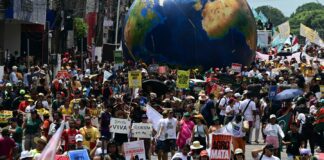
Indigenous protests erupted, with demonstrators demanding an end to deforestation and resource extraction that threatens their territories. These activists clashed with security forces, highlighting the conflict between climate rhetoric and on-the-ground realities. Despite a record number of Indigenous participants, fossil fuel lobbyists outnumbered every national delegation except Brazil’s, skewing the influence at the talks.
Fire and Fizzle: A Symbolic Ending
The conference’s final days were further disrupted when a fire broke out in the venue, forcing an evacuation and stalling negotiations. This incident, while likely caused by an electrical fault, added to the sense of dysfunction. Ultimately, two key initiatives – a “roadmap” for phasing out fossil fuels and another to halt deforestation – were dropped from the final agreement. The final text made no mention of either issue.
The US government’s absence was also notable. With the Trump administration prioritizing fossil fuel production, the country skipped the talks entirely, relieving pressure on other oil- and gas-producing nations to commit to stricter climate measures.
Limited Gains Offset by Fossil Fuel Influence
Some modest progress was made: Brazil recognized ten new Indigenous territories, and billions in funding were pledged for forest conservation and climate adaptation. A “Just Transition Work Program” aimed to ensure that the shift to carbon-free energy is equitable and respects human rights. However, these gains were overshadowed by the industry’s success in blocking a commitment to reduce fossil fuel use.
As Ife Kilimanjaro, of the US Climate Action Network, stated, “Failing to name and address the climate crisis’ root cause undermines the credibility of the entire process.” The outcome reinforces skepticism about the effectiveness of international climate negotiations, given the clear influence of vested interests and the lack of binding commitments.
The COP30 president, André Corrêa do Lago, pledged to continue working toward the abandoned roadmaps next year. But without stronger political will and concrete actions, these negotiations risk becoming another cycle of empty promises.