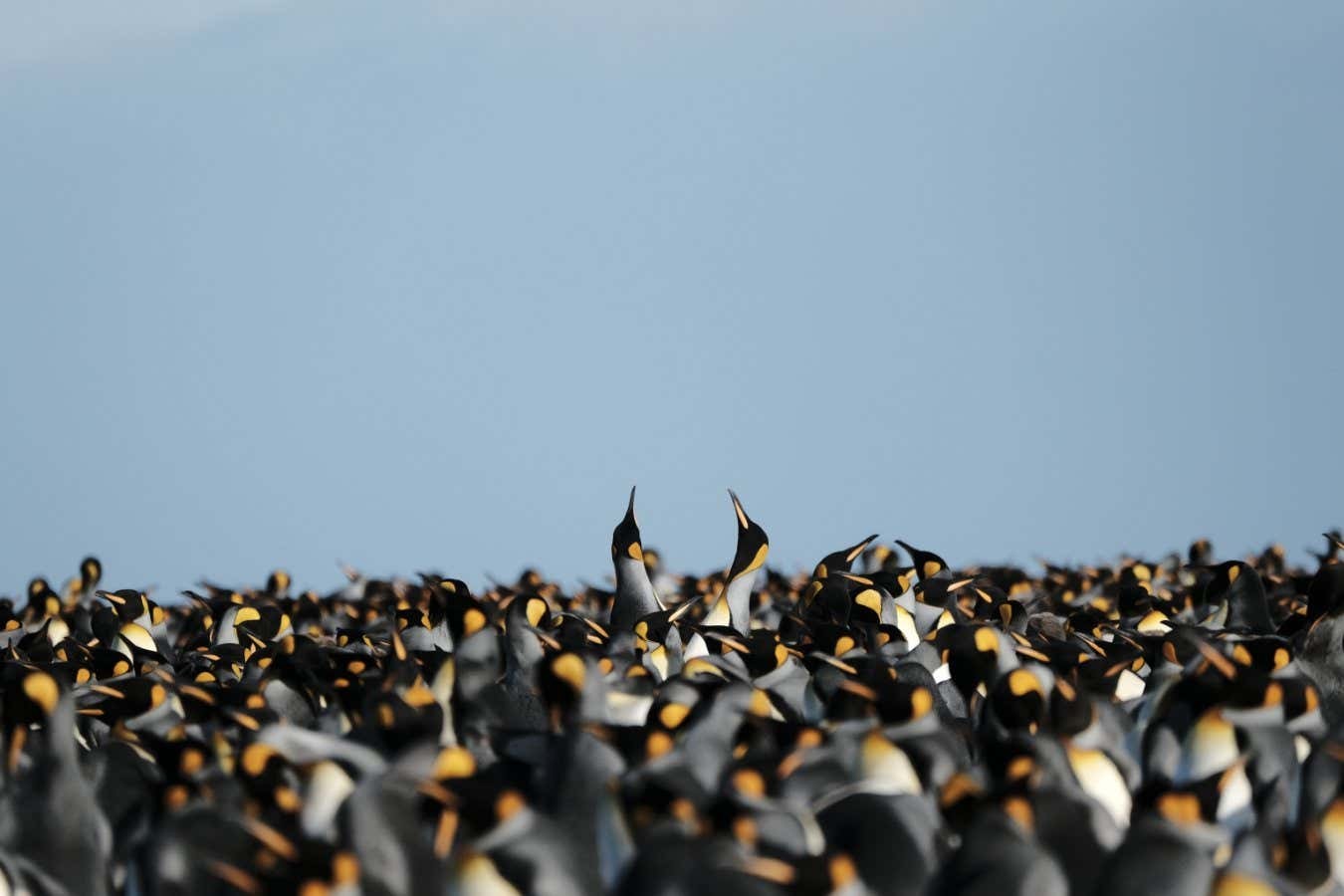
King penguins are defying expectations in a warming world, experiencing improved breeding success despite the broader ecological crisis. While this appears as a short-term benefit, researchers caution that this advantage could be fleeting, with long-term access to vital food sources at risk. The situation highlights how rapidly changing conditions can create temporary winners, but also underscores the fragility of even seemingly resilient species.
Shifting Breeding Cycles and Increased Chick Survival
On Possession Island, a sub-Antarctic French territory, king penguins are now breeding nearly three weeks earlier than they did in 2000. This shift has dramatically increased chick survival rates, from 44% to 62% in the last two decades. The longer breeding season allows chicks more time to grow before the harsh winter, reducing starvation. This is a significant improvement, but the underlying cause is complex. Warmer waters are boosting populations of lanternfish—a key food source for penguin chicks—which thrive on increased plankton growth triggered by changing ocean currents.
The Fragile Link to the Polar Front
King penguins rely on foraging trips to the polar front, where nutrient-rich waters support abundant marine life. This zone, where warm and cold currents mix, provides the food they bring back to their chicks. However, this reliance creates a critical vulnerability. If warmer waters continue to push the polar front further south, penguins will have to swim increasingly long distances for food. This extended foraging range has already proven problematic in past warm years, leading to reduced chick survival and population declines on Possession Island, where there are no further islands for the penguins to migrate to.
A Tipping Point on the Horizon?
Researchers predict that continued warming will eventually reach a “tipping point.” Once the polar front retreats too far, the penguins will be unable to sustain their colonies, leading to collapse. While some scientists remain more optimistic, pointing to alternative food sources like squid, the fundamental challenge remains: the long-term viability of the king penguin population depends on the stability of the Southern Ocean ecosystem. The rapid pace of change—faster than in nearly any other polar species—serves as an “alarm call” about the broader environmental shifts underway.
A Rare Win in a Declining Ecosystem
Despite the looming risks, the current success of king penguins stands out. While most penguin populations are in decline, this species is thriving, at least for now. This makes it a rare example of adaptation in a rapidly changing climate. However, the ultimate outcome remains uncertain; the temporary success does not guarantee long-term survival. The future of the king penguin will depend on the continued balance of the Southern Ocean and the ability of these adaptable birds to overcome the challenges of a warming world.
The situation with king penguins is a stark reminder: even species that appear to be benefiting from climate change may face eventual collapse if the underlying environmental conditions continue to deteriorate.