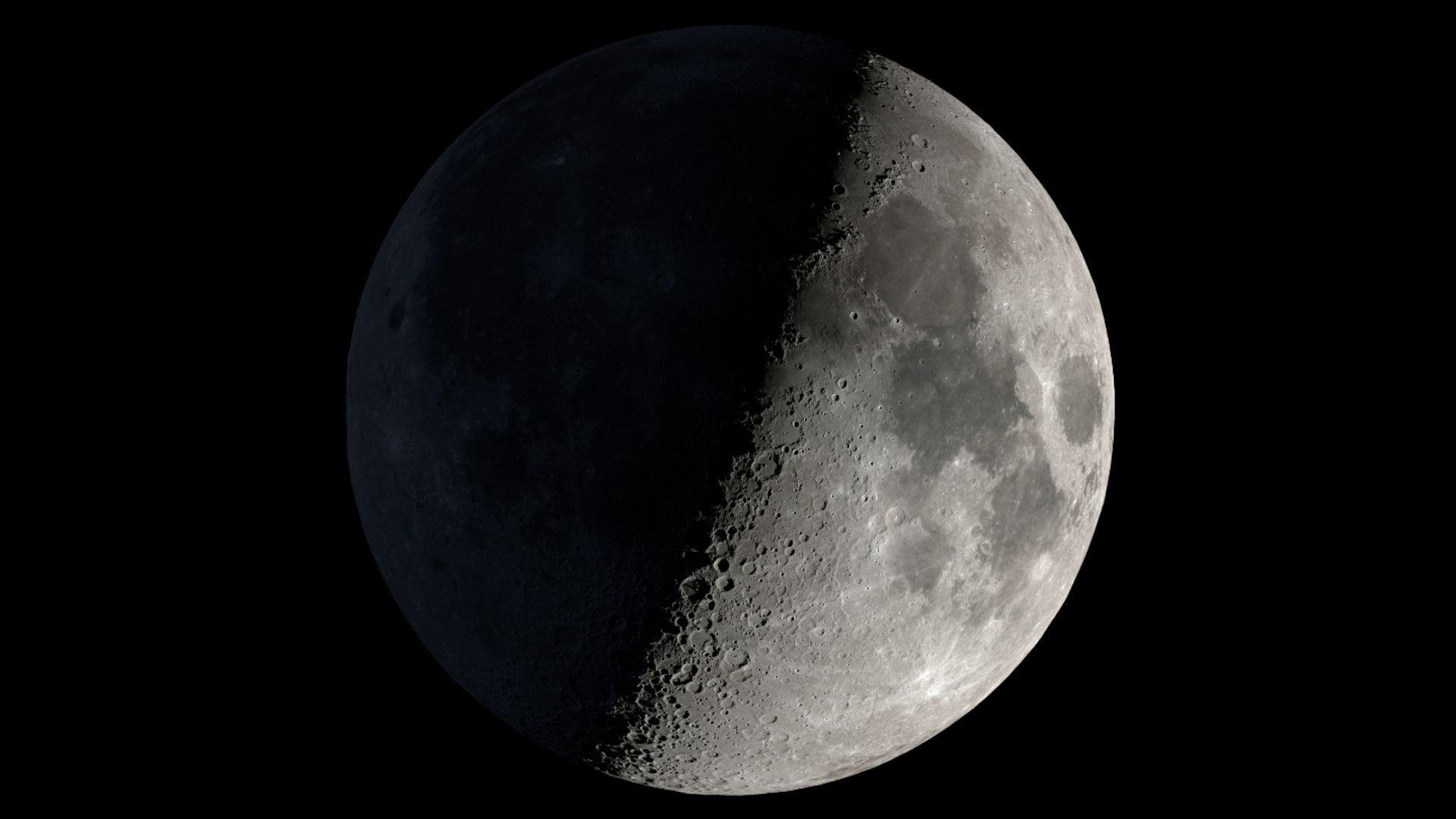
Tonight, under the half-lit first quarter moon, lies an opportunity to observe three striking lunar craters named after influential astronomers. These impact sites reveal the violent history of our moon’s formation, carved by ancient collisions that shaped its surface. The craters are not just geological features; they honor the pioneers who expanded humanity’s understanding of the cosmos.
Eudoxus Crater: Ancient Models and Modern Views
The 42-mile (67-kilometer) Eudoxus Crater, located in the northeastern quadrant above the Mare Serenitatis, is a prime target for observation tonight. Named after the Greek astronomer Eudoxus of Cnidus, who proposed an early model of the solar system centered on Earth, this crater stands as a silent witness to the evolution of our understanding.
Eudoxus’s geocentric model—Earth at the center surrounded by concentric spheres—was a foundational attempt to explain planetary motion. The crater itself, formed millions of years before his theories, will feature dramatic shadowing on Jan. 25 due to the moon’s phase, highlighting its depth and rugged terrain. This contrast between ancient impact and historical theory exemplifies how scientific progress builds upon earlier ideas.
Aristoteles Crater: Spherical Earth and Ancient Beliefs
Just north of Eudoxus lies the 54-mile (87 km) Aristoteles Crater, bordering the Mare Frigoris. Like Eudoxus, this crater honors a Greek philosopher and astronomer whose ideas shaped early cosmology. Aristotle believed Earth was stationary at the universe’s center, surrounded by crystalline spheres driving celestial movement.
Notably, Aristotle was among the first to deduce Earth’s spherical shape from lunar eclipse observations. The crater’s shadowed terrain tonight will visually showcase its rugged structure, a reminder that even flawed models contribute to our current understanding.
Cassini Crater: Lava Floods and Saturnian Discoveries
Finally, the Cassini Crater, 35 miles (57 km) wide, scars the eastern edge of Mare Imbrium. Named after 17th-century astronomer Jean-Dominique Cassini, who discovered Saturn’s moons Rhea, Tethys, and Dione, this crater reveals another layer of lunar history.
Unlike the others, Cassini’s basin was partially flooded by ancient lava, resurfacing its interior. The darkness shrouding its inner features on the night of Jan. 25 creates a striking telescopic view. This crater illustrates how geological processes can alter even the most dramatic impact sites over time.
Observing these craters is a vivid reminder of the moon’s violent past and the human drive to understand the universe. Each impact site honors those who dared to look up and question our place in the cosmos.