2025 saw a wave of scientific breakthroughs that redefined what we thought possible. From the longest lightning strike ever recorded to the first AI-designed genomes, researchers pushed the boundaries of our understanding in physics, biology, and even animal behavior. These achievements aren’t just numbers; they reveal how our planet works, how life evolves, and where technology is taking us.
Extreme Weather: The World’s Longest Lightning Bolt
A record-shattering lightning flash stretched over 830 kilometers (516 miles) from Texas to Missouri in October 2023, officially making it the longest megaflash ever documented. This beats the previous record, held by a bolt over South America, by over 120 kilometers. Megaflashes like this are rare, occurring in less than 1 in 1,000 thunderstorms across the Americas. This discovery highlights the extreme power of atmospheric events and the increasing precision with which we can measure them.
Invasive Species: Mosquitoes Arrive in Iceland
For years, Iceland stood as one of the last mosquito-free places on Earth. That changed this year when citizen scientists spotted three Culiseta annulata mosquitoes in the country. While this species is common in colder regions of Europe, its presence in Iceland raises questions about its long-term survival in the harsh Nordic climate. This event underscores how climate change and human activity are altering species distribution.
Artificial Intelligence: Designing Life From Scratch
In a landmark achievement, AI systems generated the complete genetic code for 16 viruses designed to kill bacteria. This marks the first time AI has successfully created working genomes, even if limited to non-threatening organisms. The technology is still imperfect, as demonstrated by experiments where AI-submitted papers required human correction. However, this step paves the way for designing living organisms with unprecedented precision.
Ancient History: The Oldest Mummies Unearthed
The oldest known mummies were discovered in Southeast Asia, dating back over 10,000 years. These remains were preserved through slow smoke-drying over fires, predating Egyptian and South American mummification by roughly 7,000 years. This discovery rewrites our understanding of early burial practices and the ingenuity of ancient cultures.
Earth’s Origins: The Oldest Rocks Revealed
In northeastern Canada, researchers identified rocks dating back 4.16 billion years, making them among the oldest on Earth. These findings support previous estimates from 2008 suggesting rocks from the Hadean Eon, a period when the planet was bombarded by asteroids, may be even older (up to 4.3 billion years). Studying these rocks provides critical insights into Earth’s earliest formation and the conditions that allowed life to emerge.
Animal Intelligence: A Tool-Using Wolf?
A gray wolf in British Columbia was observed dragging a crab trap onto shore and feeding on the bait, potentially marking the first documented case of tool use by a canid. Some scientists debate whether this qualifies as true tool use, as the wolf didn’t set up the trap. However, the behavior demonstrates remarkable problem-solving abilities in the wild.
Cosmic Collisions: Massive Black Hole Merger
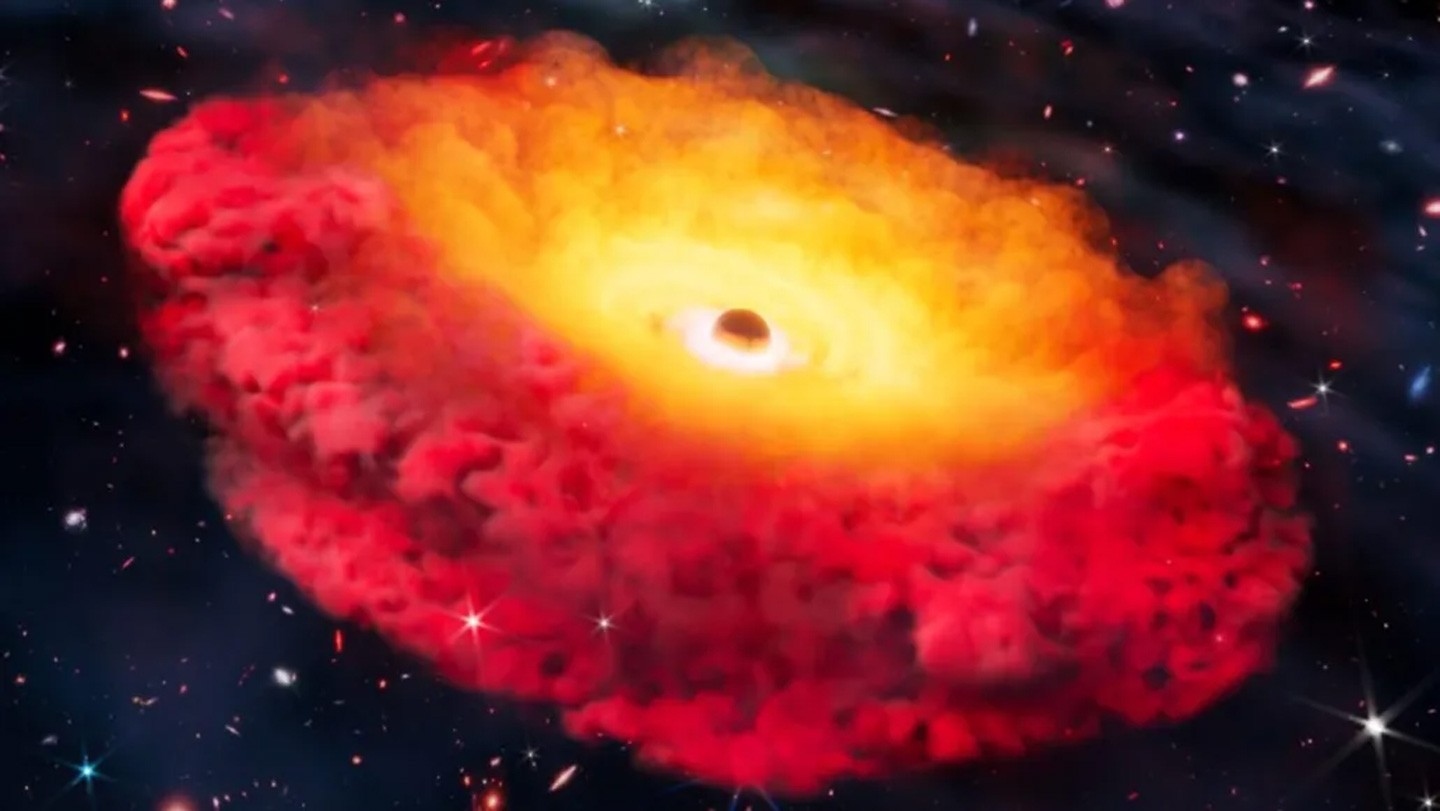
The largest black hole collision ever recorded involved two black holes with masses exceeding 100 times that of the sun. The resulting black hole weighed in at about 225 solar masses. This event challenges current physics theories because such massive black holes shouldn’t form through conventional stellar collapse. The mystery remains: did these black holes merge repeatedly, or did a smaller one consume a larger one?
These discoveries highlight that 2025 was not just another year for science; it was a year of boundaries being broken, mysteries being deepened, and our understanding of the universe being forever changed. Each finding raises further questions, driving the pursuit of knowledge into an even more uncharted territory.