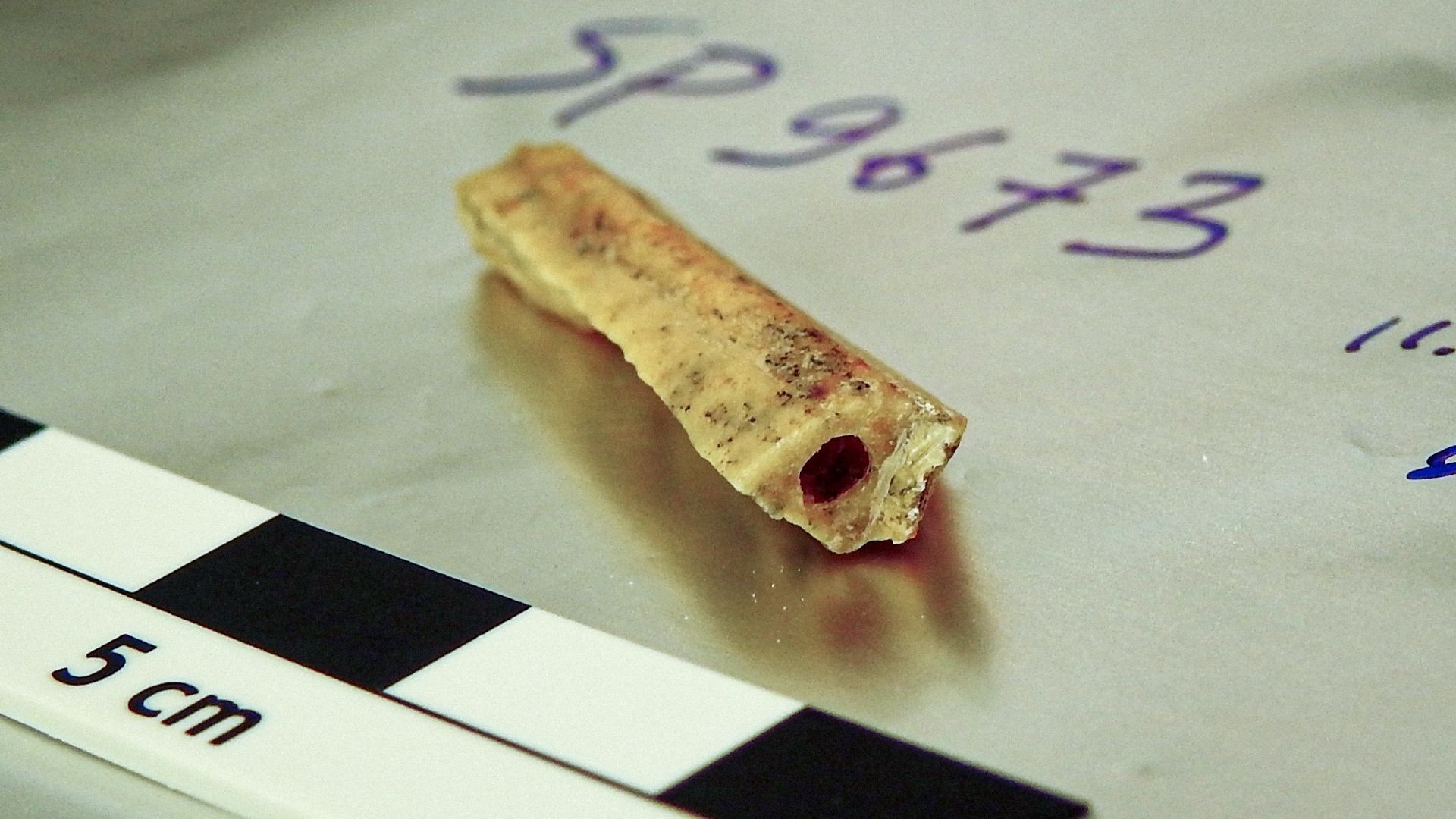
A newly analyzed bone fragment from Siberia confirms that Neanderthals occupying the same cave over a 10,000-year span were distantly related, offering fresh insight into their small, isolated populations before extinction. The discovery, detailed in the journal PNAS, provides the fourth complete Neanderthal genome to date and underscores how fragmented and vulnerable these hominins were in the late Pleistocene.
The Cave and Its Inhabitants
The bone fragment was unearthed at Denisova Cave in the Altai Mountains – a site frequented by both Neanderthals and Denisovans for nearly 300,000 years. Researchers compared the genome of a 110,000-year-old Neanderthal male (designated D17) with that of a female (D5) from 120,000 years ago, also found in the cave. The analysis revealed a kinship, though not direct lineage; both individuals shared a common ancestor, suggesting a long-term Neanderthal presence in the region.
This finding is crucial because it demonstrates that Neanderthals did not simply pass through the Altai region but maintained a presence there for extended periods. However, the cave was likely part of a broader territory, not continuously occupied by one group. As Yale genetics professor Diyendo Massilani explains, “Denisova Cave was likely part of a larger landscape repeatedly used by Neanderthal populations, not a single, unbroken settlement.”
Population Size and Isolation
The study also highlights the severe isolation of these Neanderthals. Genetic markers indicate populations of 50 or fewer individuals, with high levels of inbreeding. Researchers found large stretches of identical DNA, suggesting that parents were closely related – potentially as close as first cousins. This inbreeding is a key factor in understanding why Neanderthals eventually disappeared around 40,000 years ago, though the new research shows they survived under these extreme conditions for a significant time.
Previous studies have confirmed similar patterns: one Altai Neanderthal community numbered around 20, while another remained isolated for 50,000 years. The latest results add to the growing evidence that small population sizes and inbreeding were major drivers of Neanderthal extinction.
East-West Divide in Neanderthal Genetics
The analysis also reveals a genetic divergence between Altai Neanderthals and those from Europe. D17 was more closely related to D5 than to any European Neanderthal, suggesting rapid genetic differentiation within Eurasia. This rapid separation is likely due to genetic drift in small, isolated groups – random genetic changes becoming dominant over time.
As Massiliani notes, “Even though the individuals were separated by only 50,000 years, they reached levels of difference comparable to modern human populations that diverged 300,000 years ago.” This indicates that Neanderthal populations became genetically distinct much faster than previously thought.
Implications for Extinction
The high degree of genetic separation may have hindered the Neanderthals’ ability to adapt to changing environments. While the exact causes of their extinction remain complex, the new findings reinforce the idea that limited genetic diversity played a critical role.
Population geneticist Léo Planche, who was not involved in the study, emphasizes the value of having more Neanderthal genomes: “We start to have enough data to make informed claims about their population structure.” The study provides detailed insights into how Neanderthal populations were structured and how quickly they diverged.
Ultimately, the study underscores that Neanderthals were not a monolithic group but a patchwork of small, isolated populations shaped by complex demographic processes. Their extinction was likely a result of these same dynamics: a lack of genetic diversity, combined with environmental pressures.