
Paleontologist Thomas R. Holtz Jr. from the University of Maryland has presented new research suggesting that dinosaurs’ parenting style—or lack thereof—fundamentally shaped the Mesozoic world. The study challenges common assumptions about dinosaur behavior and raises questions about how we measure ecological diversity.
The Key Difference: Parental Investment
For decades, scientists have broadly compared dinosaurs to mammals as dominant terrestrial animals, but this comparison overlooks a critical distinction: how these creatures raised their young. Mammals, including humans, invest heavily in prolonged parental care. Tiger cubs rely on their mothers for years, and elephants remain dependent on their herds well into adolescence. This intensive care ensures offspring occupy the same ecological niche as their parents, consuming similar food and facing similar threats.
Dinosaurs, however, operated differently. While they provided some initial care, juvenile dinosaurs quickly became independent, forming groups and fending for themselves within months or a year. This “latchkey kid” approach—as Dr. Holtz puts it—has significant consequences. Fossil evidence supports this theory; juvenile dinosaur remains are often found in clusters without adult skeletons nearby.
Functional Species: A New Way to Measure Diversity
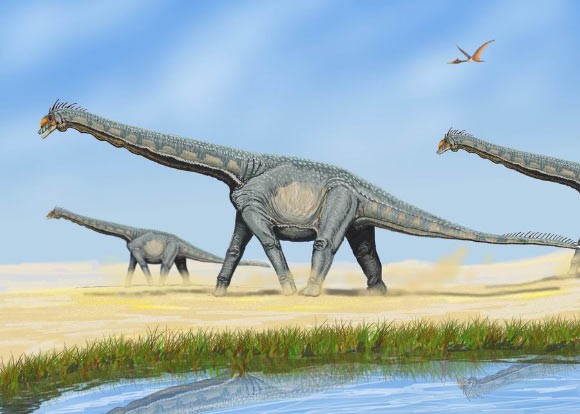
This early independence creates what Dr. Holtz terms “functional species” : young dinosaurs occupied distinct ecological roles from their parents. A juvenile Brachiosaurus the size of a sheep couldn’t reach the same vegetation as a fully grown adult and faced different predators. As it grew, its ecological niche shifted continuously, meaning that even within the same biological species, dinosaurs acted as different functional players in the ecosystem.
This concept challenges traditional views on ecological diversity. If we count these life-stage variations as separate species, Dr. Holtz argues that dinosaur ecosystems were actually more diverse than modern mammalian ones—a counterintuitive finding given that mammals are often considered more speciose today.
Mesozoic Conditions and Metabolism
The study raises the question of how the Mesozoic world supported this functional diversity. Two factors may have played a role: higher plant productivity due to warmer temperatures and increased carbon dioxide levels, and potentially lower metabolic rates in dinosaurs compared to similarly sized mammals. A more productive food chain and less demanding physiology could have sustained a greater number of functional species.
“Our world might actually be kind of starved in plant productivity compared to the dinosaurian one,” Dr. Holtz said. “A richer base of the food chain might have been able to support more functional diversity.”
Rethinking Dinosaur Ecosystems
Dr. Holtz’s research underscores the importance of considering life stage when reconstructing ancient ecosystems. Dinosaurs were not simply scaled and feathered mammals; their unique reproductive and parenting strategies fundamentally shaped their world. Future studies will continue to explore these patterns across different dinosaur species to refine our understanding of how Mesozoic ecosystems functioned and evolved. The full paper appears in the Italian Journal of Geosciences.