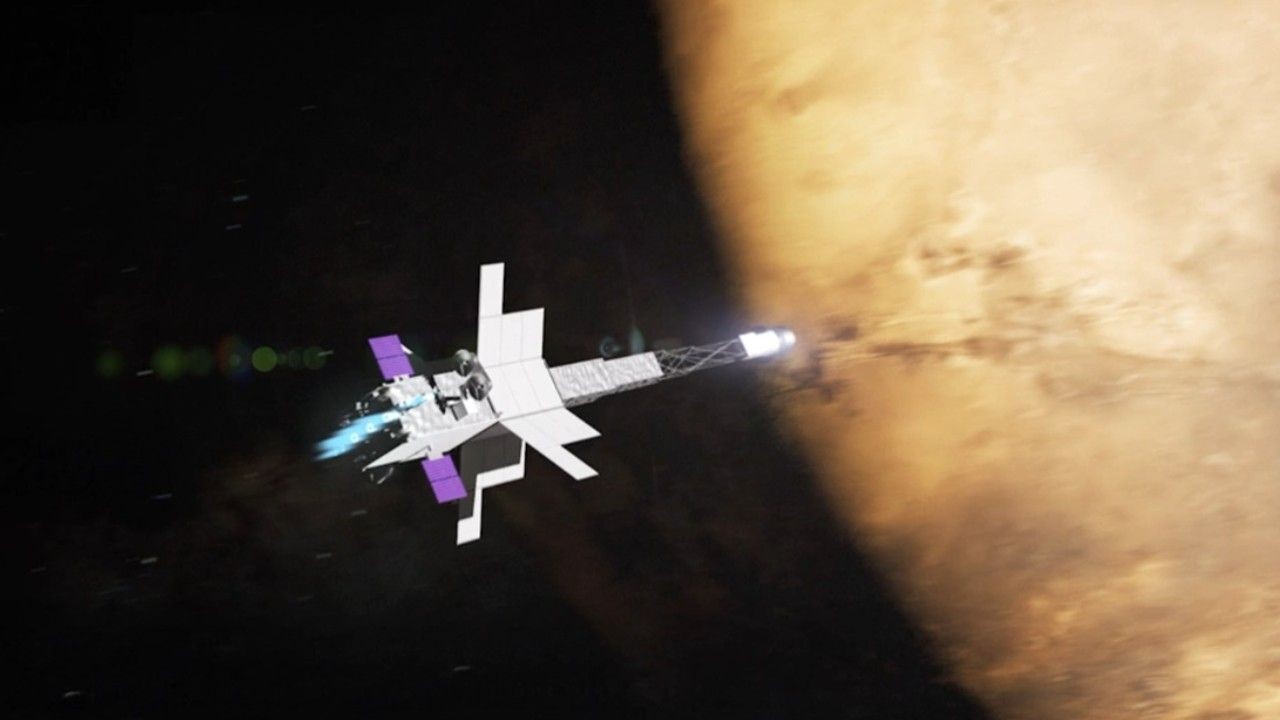
NASA is pushing ahead with plans for the first nuclear-powered interplanetary spacecraft, dubbed Space Reactor-1 (SR1) Freedom, aiming for a 2028 Mars mission. This isn’t just about reaching the Red Planet faster; it’s the latest attempt in a 60-year quest to harness nuclear energy for deep-space travel, a field littered with past failures. The mission proposes a nuclear electric propulsion system that could revolutionize how we explore the solar system, but the details matter: what does this mean in practice, and why is it only now becoming viable?
The History of Nuclear Power in Space
Nuclear power has been quietly used in space for decades, though not in the headline-grabbing way SR1 Freedom suggests. Since the 1960s, missions have relied on radioisotope thermoelectric generators (RTGs) – devices that convert heat from radioactive decay into electricity. Voyager, Curiosity, and Perseverance all owe their long lifespans to these reliable, albeit low-power, nuclear batteries.
But RTGs aren’t enough for ambitious interplanetary travel. They provide a trickle of energy, sufficient for instruments and basic systems but insufficient for powerful propulsion. This is where NASA’s new plan diverges: SR1 Freedom will use a nuclear fission reactor – essentially a scaled-down version of a terrestrial nuclear power plant – to generate electricity for a high-efficiency ion engine. This is fundamentally different than earlier concepts like Project Orion, which envisioned spacecraft propelled by nuclear explosions, or Project Daedalus, which proposed nuclear fusion.
The Advantage of Nuclear Electric Propulsion
Ion engines, though weak in terms of immediate thrust, excel at long-duration acceleration. They work by ionizing propellant gas (like xenon) and accelerating the charged particles out a nozzle, creating a gentle but persistent push. This is why they’re already in use, albeit powered by solar panels.
The key advantage of nuclear power is scalability and independence from sunlight. Deep in the outer solar system, solar power is weak, making RTGs essential for many missions. SR1 Freedom’s reactor would produce ten to a hundred times more power than current RTGs, enabling faster travel times and heavier payloads. This is crucial for crewed missions to Mars, where radiation shielding and life support demand significant power.
Safety and Risks: A Legacy of Controversy
The use of nuclear materials in space is not without risk. The 1997 Cassini-Huygens mission faced protests over the potential for radioactive contamination in a launch accident. NASA mitigated these concerns by encasing the plutonium RTGs in robust shielding, but accidents can happen.
Fission reactors introduce a new level of complexity. While the SR1 Freedom design includes safety features like a long boom to isolate the reactor, the prospect of a reactor failure in orbit or on another planet raises serious concerns about contamination. The waste products of nuclear fission are toxic, and a crash landing could leave a lasting radioactive scar on Mars or another celestial body.
Past Failures and Future Prospects
NASA has attempted nuclear electric propulsion before. The SNAP-10A mission in 1965 successfully operated a nuclear reactor in space for 43 days before a malfunction. However, subsequent projects, like DRACO, were shelved due to technical hurdles and budget constraints.
Now, with private space companies driving down launch costs and renewed interest in crewed interplanetary missions, NASA appears determined to revisit nuclear power. If successful, SR1 Freedom could unlock a new era of deep-space exploration. But history suggests that technological and regulatory challenges remain, making the 2028 launch target ambitious at best.
Ultimately, NASA’s nuclear gamble is a high-stakes bet on a technology that has promised much but delivered little for over half a century. Whether this time will be different depends on overcoming past failures and navigating the complex safety concerns that come with sending a nuclear reactor into the cosmos.