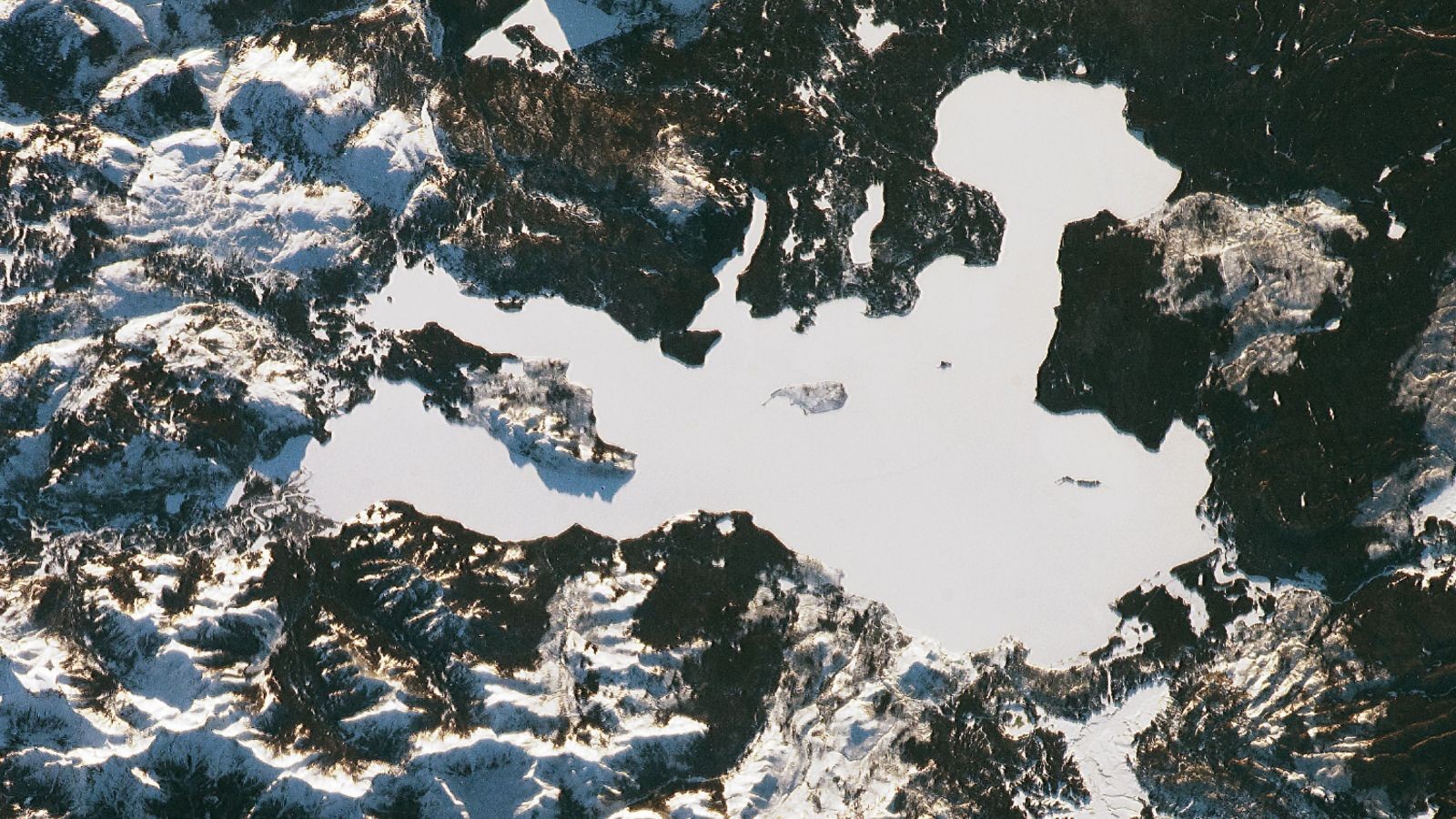
Yellowstone Lake appears as a vast, snow-covered expanse from space, but beneath the ice lies a surprising geological reality: some of the planet’s hottest hydrothermal vents. This combination of extreme cold and heat makes Yellowstone a unique environment, resilient to climate change while holding a powerful, volatile secret below.
The Scale of the Freeze
Yellowstone Lake, the largest high-elevation lake in North America at 7,733 feet (2,357 meters) above sea level, freezes over every winter. By March, snow accumulation can reach up to 3.5 feet (1.1 m) deep, blanketing the 20-mile-wide (32 km) lake. This creates a strikingly stable ice sheet despite rising global temperatures, making it an outlier among other high-altitude lakes. The lake typically thaws by late May or early June.
Hidden Heat Below the Ice
The lake’s frozen surface belies the intense geothermal activity below. Hydrothermal vents on the lake floor maintain surprisingly mild water temperatures, allowing aquatic life like the lake’s large cutthroat trout population to survive even under long periods of ice cover.
One vent near Stevenson Island releases water at a remarkable 345 degrees Fahrenheit (174 degrees Celsius) – hotter than Old Faithful and any other known geyser in Yellowstone. This extreme heat is possible because the lake’s depth creates pressure, preventing the water from boiling. According to the U.S. Geological Survey, these are the hottest hydrothermal vents measured in any lake worldwide.
A Volcanic Time Bomb
The source of this heat is a massive magma blob 2.6 miles (3.8 km) beneath Yellowstone National Park. This molten rock reservoir acts as a cap on a gigantic volcanic system. While currently stable, this system will eventually erupt in a “supervolcanic” event that could be felt across the continent.
Yellowstone Lake itself was formed after a similar eruption 640,000 years ago, which carved out the 1,500-square-mile (3,900 square kilometers) caldera it occupies. A smaller eruption around 130,000 years ago shaped the lake’s West Thumb area.
Yellowstone’s unique combination of extreme surface cold and hidden volcanic heat demonstrates Earth’s complex and dynamic nature, where stability and volatility coexist. The lake serves as a reminder that even seemingly frozen environments can mask powerful forces below.