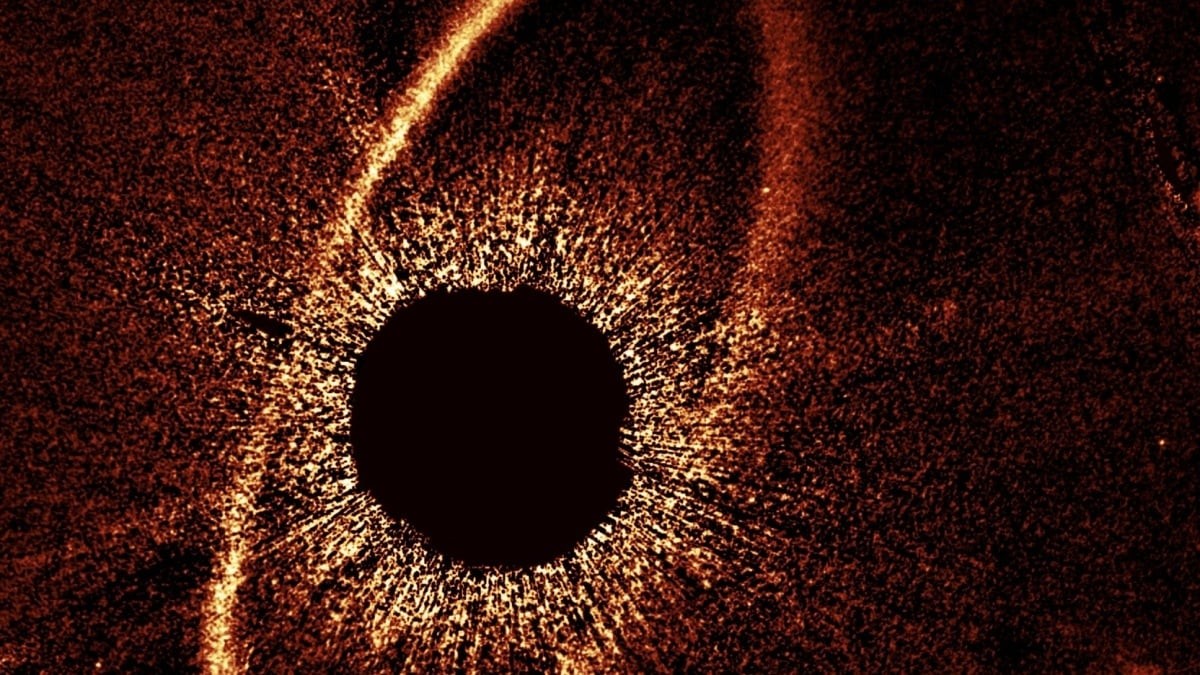
Astronomers using the Hubble Space Telescope have observed compelling evidence of ongoing, violent collisions between planet-building blocks around the nearby star Fomalhaut, located 25 light-years away. This discovery isn’t just about seeing impacts; it’s about witnessing a fundamental process of planetary system development in real-time—something rarely observed directly.
The Case for Collisions, Not Planets
For years, scientists debated a bright point of light detected within Fomalhaut’s debris disk, initially suggesting a planet dubbed Fomalhaut b. However, the object mysteriously dimmed and stretched over time, a behavior inconsistent with a planet but entirely expected from a dispersing cloud of debris following a massive impact. Now, a new, similar point of light has appeared nearby, strengthening the conclusion that these detections are not planets, but the aftermath of planetesimal collisions.
Why This Matters: Planetary systems aren’t static; they evolve through frequent, energetic events like collisions. These impacts distribute material, potentially seeding future planet formation, and reshape existing debris disks. Observing these events directly provides unique insight into how planetary systems truly form and mature.
Evidence of Repeat Impacts
The key to this discovery is the timing: two separate collisions observed in roughly the same region over two decades. This is unexpected, as such large-scale impacts were previously thought to occur on timescales of 100,000 years or longer. The proximity of these events raises questions about the stability of the Fomalhaut system and whether there are underlying mechanisms driving these frequent crashes.
“This is certainly the first time I’ve ever seen a point of light appear out of nowhere in an exoplanetary system,” says Paul Kalas, the lead investigator from UC Berkeley. “It’s absent in all of our previous Hubble images, which means that we just witnessed a violent collision between two massive objects.”
What We Know About the Impacts
Based on the observed brightness, the colliding objects are estimated to be roughly 37 miles wide—larger than typical asteroids in our solar system. These impacts release significant amounts of dust, briefly illuminating otherwise invisible events. The dust clouds are visible because they reflect starlight, but this starlight also gradually disperses the debris, causing the clouds to fade over time—explaining why the first observed object disappeared.
Future Observations
The James Webb Space Telescope, with its infrared capabilities, is expected to provide further insight into the size and composition of these debris clouds. This will help refine estimates of the collision frequency and the physical properties of the planetesimals involved.
In conclusion, the repeated observations of collisions around Fomalhaut offer a rare glimpse into the chaotic early stages of planetary system formation, confirming that large-scale impacts are still actively reshaping young stellar systems today.