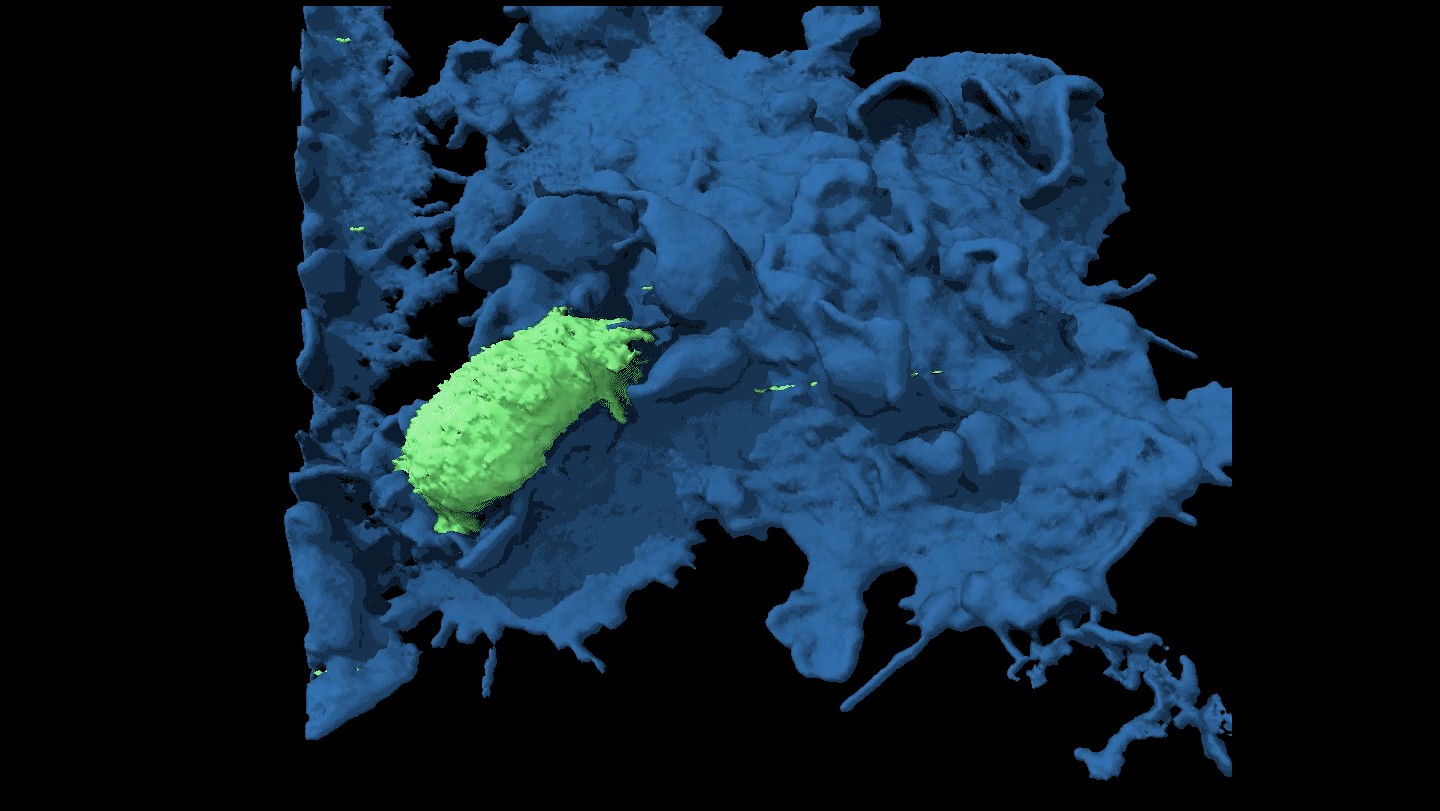
Cancer cells can actively evade destruction by immune cells through rapid movement, according to new research presented at the Cell Bio meeting. Researchers at South Dakota Mines observed cancer cells wriggling away from macrophages—immune cells that engulf and destroy threats—allowing them to survive attacks that would otherwise eliminate them.
How Cancer Cells Outsmart Immunity
The study, led by microscopist Brandon Scott, focused on B cell lymphoma and leukemia cells. The team used drugs to mark cancer cells with an “eat me” signal, prompting macrophages to target them. However, highly motile cancer cells exhibited evasive maneuvers. Instead of being fully engulfed, macrophages only nibbled at the edges, giving the cancer cell time to escape.
“We’re suggesting that motility plays a role in essentially saving the cell,” Scott says.
Microscopy videos revealed that as macrophages struggled to consume the cells, cancer cells stripped away the “eat me” signals by shedding their outer layers. This rendered them invisible to the immune system, allowing them to persist and potentially spread. The effect was so pronounced that when motility was disabled with medication, cancer cells were readily destroyed.
Implications of the Findings
This discovery highlights a new mechanism by which cancer cells survive immune attacks. The findings suggest that motility is not just a byproduct of cancer progression but an active defense strategy. This could inform new therapeutic approaches focused on reducing cancer cell movement to enhance the effectiveness of immunotherapies.
The ability of cancer cells to manipulate their environment, even at a microscopic level, demonstrates the adaptability of these diseases. Further research is needed to understand how common this evasion tactic is across different cancer types and whether it can be consistently exploited for treatment.