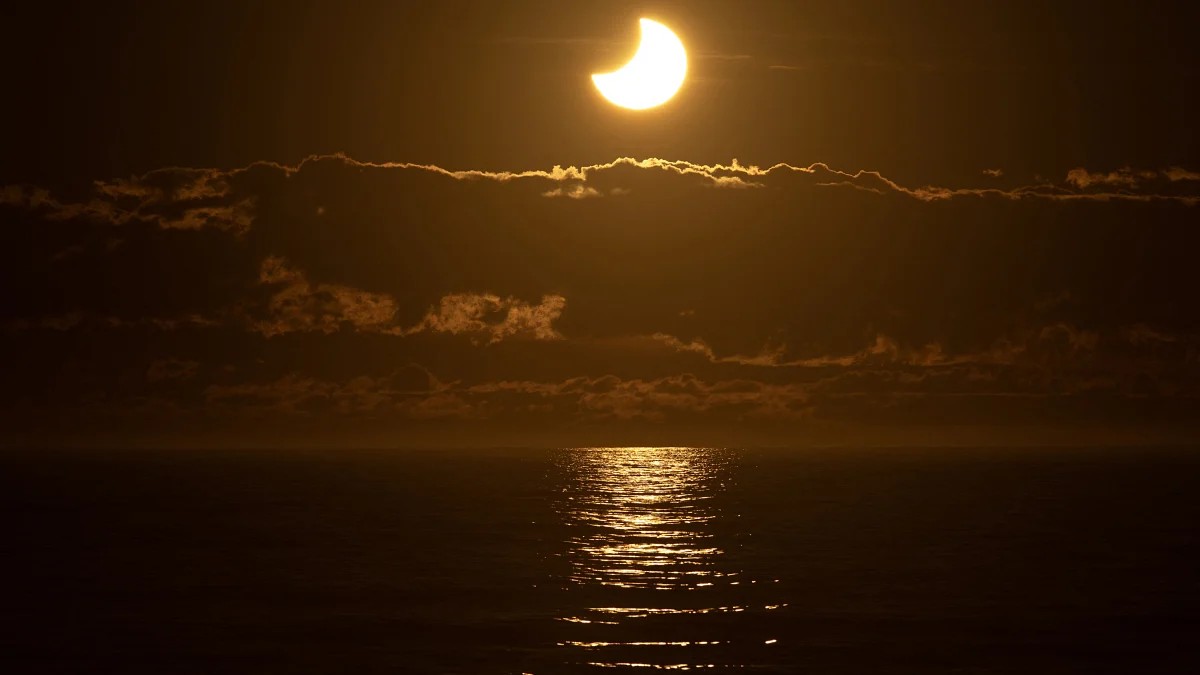
An annular solar eclipse – often called a “ring of fire” eclipse – will occur on Tuesday, February 17th, but viewing opportunities are extremely limited. While the spectacle promises a dramatic celestial event, only observers in Antarctica will see the full effect. Those in parts of the Southern Hemisphere may witness a partial eclipse.
What Makes This Eclipse Unique?
An annular eclipse happens when the Moon passes between the Earth and the Sun, but is too far from Earth to completely cover the Sun’s disk. This leaves a brilliant ring of sunlight visible around the Moon’s silhouette – hence the “ring of fire” nickname. This differs from total solar eclipses where the Sun is entirely blocked.
Where and When to Look?
According to Time and Date, the eclipse will first become visible at approximately 6:42 AM Eastern Time. The path of annularity (where the ring is visible) crosses over Antarctica, making it the prime viewing location.
- Full Annular Eclipse: Visible only in Antarctica.
- Partial Eclipse: Possible viewing in some regions of the Southern Hemisphere.
Safety First: How to Observe
Never look directly at the Sun during an eclipse without proper eye protection. Even an annular eclipse still emits dangerous levels of radiation. Safe viewing methods include using certified solar filters or eclipse glasses.
This eclipse is a reminder of the rare and awe-inspiring events that occur in our solar system. While access is limited, those in the right location will witness a truly unique astronomical phenomenon. The next chance to view an annular eclipse from a populated area will not come for some time, making this event especially valuable for scientific study and public observation.