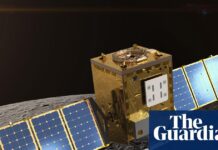
Rocket Lab successfully completed its 21st mission of 2025 on Sunday, launching a Japanese Earth-observing satellite into orbit from its New Zealand launch site. This mission marks the end of a record-breaking year for the company, solidifying its position as a key player in the small satellite launch market.
Mission Details: Sukunami-I and its Purpose
The Electron rocket deployed the QPS-SAR-15 satellite, nicknamed Sukunami-I, into a 357-mile (575-kilometer) circular orbit. This satellite belongs to iQPS, a Japanese company specializing in Earth observation using synthetic aperture radar (SAR) technology. Unlike traditional optical satellites, SAR can penetrate clouds and operate effectively day or night, providing consistent data regardless of weather conditions.
This capability is critical for monitoring changes on the ground, including infrastructure, disaster response, and environmental tracking. The demand for such constant, high-resolution imagery explains why iQPS has already contracted for five additional Electron launches in 2026.
A Year of Growth and Expansion
Rocket Lab’s 2025 performance represents a significant jump from its previous record of 16 launches set in 2024. The company’s success isn’t limited to orbital deployments; three of this year’s launches utilized HASTE, a suborbital version of Electron designed for testing hypersonic technologies.
This diversification highlights Rocket Lab’s adaptability and its increasing role in both commercial and defense-related space activities. CEO Peter Beck confirmed future plans include expanding Electron’s global footprint with more constellation deployments, missions for civil and international space agencies, and continued hypersonic technology testing.
Implications for the Space Industry
Rocket Lab’s rapid growth underscores the increasing commercialization of space. Small satellite launches, once dominated by larger players, are now accessible to a wider range of customers due to companies like Rocket Lab lowering costs and increasing launch frequency.
This trend is driving innovation in Earth observation, communications, and defense, as more organizations gain access to space-based capabilities. The company’s success signals a shift towards more agile and specialized space services, rather than relying solely on massive government-led projects.
Rocket Lab’s record-breaking year demonstrates the growing maturity of the commercial space sector, and its future plans suggest an even more significant role in shaping the industry in the years to come.