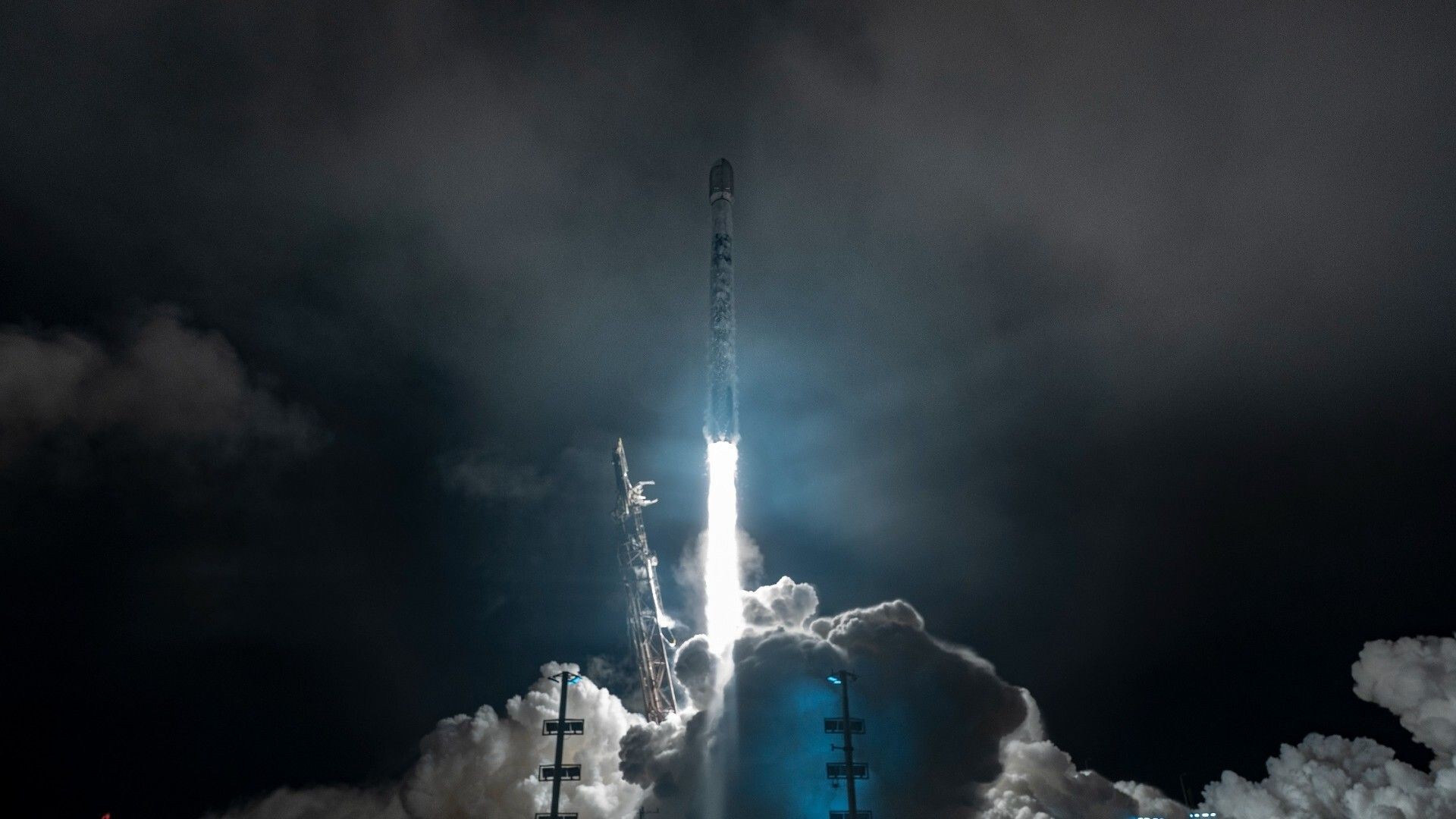
SpaceX successfully deployed 25 additional Starlink satellites into orbit early Monday morning, furthering its ambition to deliver global broadband internet access. The launch, carried out from Vandenberg Space Force Base in California, marks the company’s ninth orbital mission this year and its 592nd since 2010.
Mission Details
A Falcon 9 rocket lifted off at 12:47 a.m. EST, carrying the latest batch of Starlink satellites—designated Group 17-30—into a preliminary orbit. Roughly an hour after launch, the satellites were released as planned. This deployment brings the total number of active Starlink satellites to 9,500. The Falcon 9’s first stage, Booster 1093, completed its 13th flight before landing on the drone ship “Of Course I Still Love You” in the Pacific Ocean.
Expanding Global Connectivity
The Starlink network now provides internet access to remote areas worldwide, offering a solution for underserved populations and locations with limited connectivity. The service also caters to airlines seeking in-flight Wi-Fi and mobile carriers aiming to provide direct satellite-to-cell phone communication for emergency situations.
Why this matters: SpaceX is rapidly scaling its Starlink network, challenging traditional satellite internet providers and potentially reshaping global communications. The constant launches, coupled with reusability of rocket components like Booster 1093, demonstrates SpaceX’s aggressive expansion strategy. This rapid deployment raises questions about the long-term effects on orbital congestion and the balance between expanding access and environmental sustainability.
SpaceX continues to push the boundaries of commercial space operations, solidifying its position as a key player in the future of internet connectivity.