The vast wetlands of the Congo Basin, specifically in the Cuvette Centrale region, are now releasing ancient carbon into the atmosphere at a significant rate. A new study challenges the long-held belief that carbon stored in these tropical peatlands remains safely underground, revealing that millennia-old carbon is escaping through blackwater lakes and rivers. This finding raises critical questions about the stability of one of Earth’s largest carbon reservoirs.
The Discovery and Its Implications
For years, scientists assumed that the peatlands in the Cuvette Centrale – holding roughly 33 billion tons of carbon – were stable carbon sinks. Recent research, published in Nature Geoscience, demonstrates that a substantial proportion of the carbon dioxide escaping from lakes Mai Ndombe, Lake Tumba, and the Ruki River originates from peat deposits between 2,170 and 3,500 years old. This means that previously locked-away carbon is now being mobilized and released as carbon dioxide (CO2) into the atmosphere.
The study’s lead author, Travis Drake of ETH Zurich, describes the discovery as surprising: “We fully expected the carbon dioxide to be modern.” The team’s findings are based on field research conducted over four years, which included challenging expeditions to access remote waterways. They measured greenhouse gases and analyzed sediments, confirming that the CO2 is not from recent plant matter but from ancient peat.
How It Happens: The Role of Blackwater Ecosystems
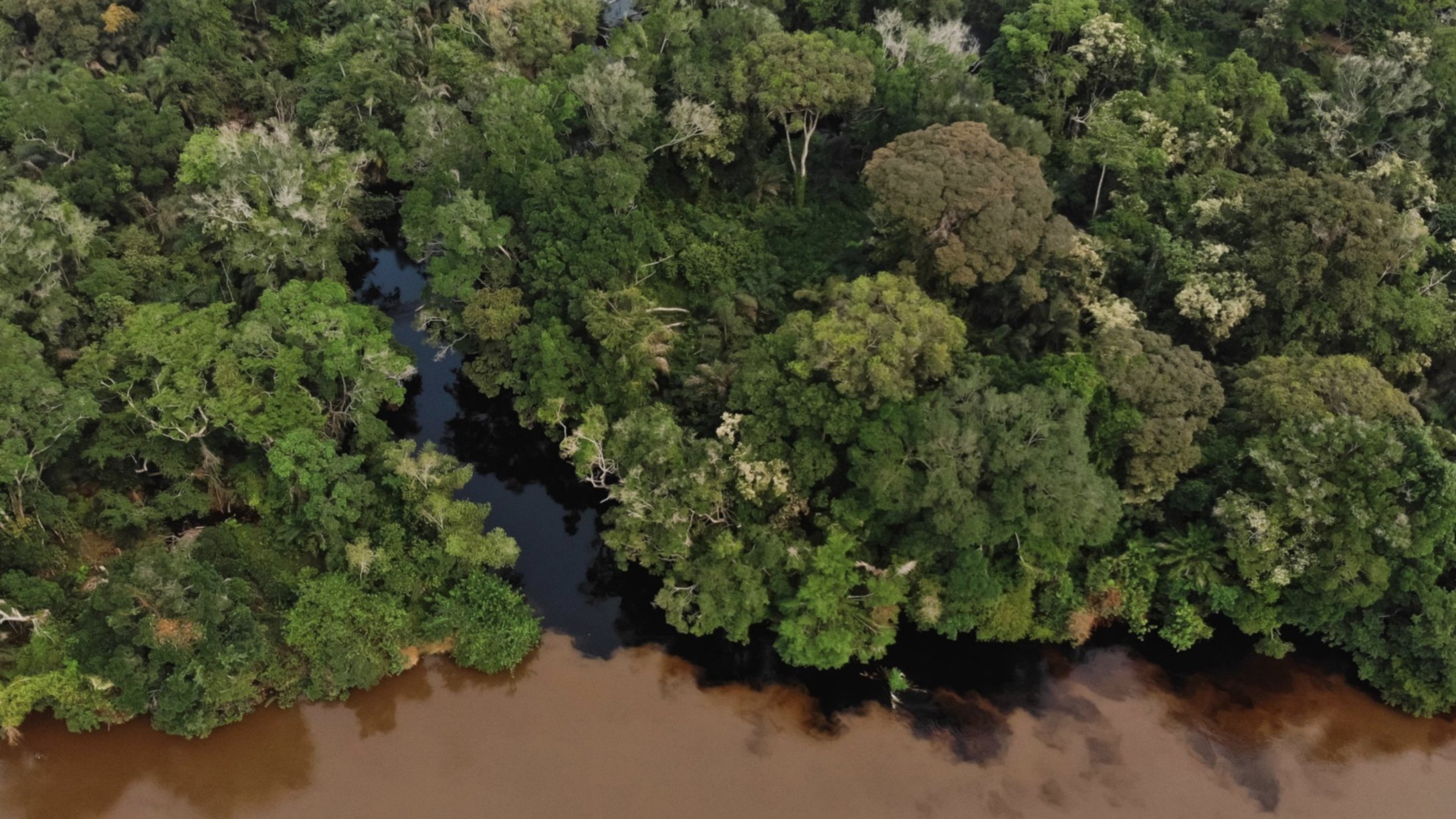
Blackwater rivers and lakes, common in the Congo Basin, contain high concentrations of dissolved organic carbon from decaying plant material. These ecosystems are naturally supersaturated with CO2, but the new research shows that this CO2 now includes ancient carbon. Microbes in the peatlands are breaking down the long-buried carbon into CO2 and methane, which then enters the waterways and is released into the atmosphere.
The study suggests that this process may be a natural part of peatland dynamics, with some leakage as new deposits form. However, it also raises the possibility that climate change is destabilizing these long-buried carbon stores. If the region experiences more frequent droughts, the rate of carbon release could accelerate dramatically.
The Global Carbon Budget and Future Research
The Cuvette Centrale holds one-third of the world’s tropical peatland carbon. If these peatlands transition from carbon sinks to major sources, it would have significant implications for global climate change. The researchers are now investigating whether this carbon leakage is a baseline process or a sign of broader instability. They plan to analyze water trapped in the peat to understand how microbes are releasing ancient carbon and assess oxidation rates across the entire region.
“This pathway highlights a critical vulnerability,” Drake explains. “If the region experiences future drought, this export mechanism could accelerate, potentially tipping these massive carbon reservoirs from a sink into a major source to the atmosphere.”
The ongoing research is essential for determining whether the Congo Basin’s peatlands are nearing a tipping point, with potentially far-reaching consequences for the global carbon cycle.