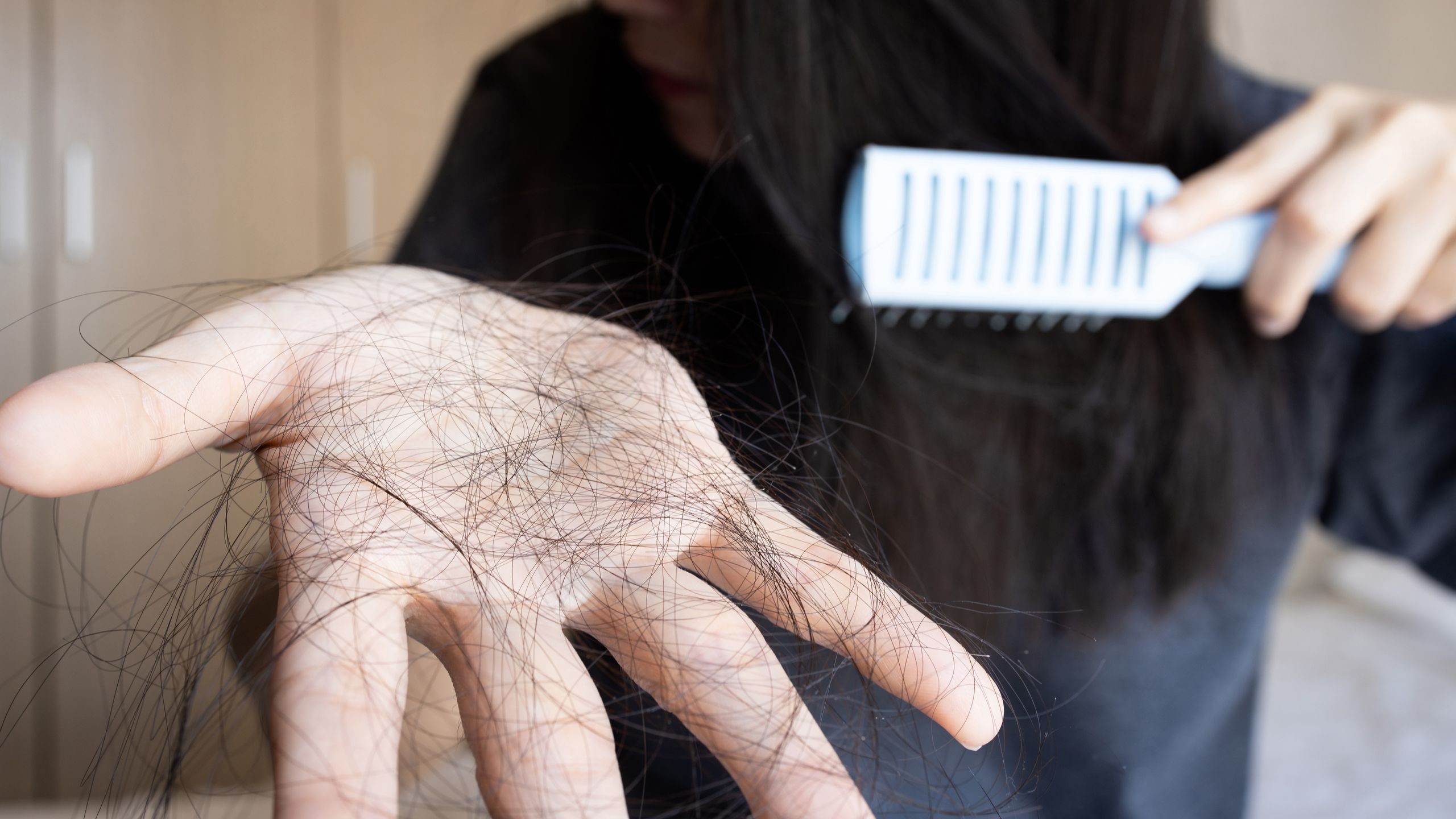
New research confirms that severe stress doesn’t just correlate with hair loss, it directly damages hair-producing cells and can prime the immune system to attack hair follicles, potentially explaining why conditions like alopecia areata can persist long after the initial stressor. Scientists at Harvard University have, for the first time, demonstrated a clear biological link between acute stress and hair loss in a series of experiments using mice. The findings, published Wednesday in Cell, suggest that the body’s fight-or-flight response actively damages hair follicles, making them vulnerable to autoimmune attack.
How Stress Directly Impacts Hair Growth
The human scalp contains roughly 100,000 hairs, none of which grow directly from stem cells. Instead, rapidly dividing “transit-amplifying cells” (HF-TACs) within hair follicles drive growth. Researchers suspected these HF-TACs were particularly vulnerable to stress, given that the body prioritizes survival over non-essential functions like hair growth when under pressure.
To test this, the team exposed mice to resiniferatoxin – a compound similar to the active ingredient in chili peppers – triggering an intense stress response. Within 24 hours, the mice lost 30% of their hair follicles. The researchers found that heightened sympathetic nerve activity (the system controlling fight-or-flight) was directly linked to HF-TAC death. Blocking these nerve signals prevented hair loss, and blocking receptors on HF-TACs that respond to stress hormones like norepinephrine had the same effect.
Mitochondrial Damage and Uncontrolled Cell Death
The core mechanism appears to be mitochondrial damage. Norepinephrine surges flood HF-TACs with calcium ions, overwhelming these cellular powerhouses and causing them to rupture. Unlike the regulated cell death (catagen) that occurs during normal hair cycles, this is uncontrolled necrosis: a destructive process that triggers inflammation.
This inflammation doesn’t just cause immediate damage; it primes the immune system. The study showed that stress-induced necrosis led to increased levels of self-reactive immune cells in the mice’s lymph nodes. These cells then attacked hair bulbs, mimicking the autoimmune response seen in alopecia areata.
Long-Term Autoimmunity Explained
The research also explains why alopecia areata can recur years after the initial stressor. Mice that had previously experienced stress-induced hair loss were more susceptible to immune attacks on hair bulbs when exposed to inflammatory signals (like those from an infection). In unstressed mice, this same inflammation did not lead to hair damage.
“This provides a possible explanation for why some individuals experience alopecia that recurs long after the initial stress episode,” said study co-author Ya-Chieh Hsu.
The findings may also shed light on milder, undiagnosed forms of stress-related hair loss, such as telogen effluvium, where excessive shedding occurs after a stressful event.
Future Implications
While the study was conducted on mice, it identifies potential intervention points for treating stress- and autoimmunity-related hair loss. Hsu’s team plans to explore these avenues further, as well as investigate how stress may contribute to other autoimmune conditions. The underlying mechanisms could be relevant across multiple organ systems.
This research represents a significant step forward in understanding the biological link between stress, hair loss, and autoimmune responses. It suggests that reducing the impact of acute stress on HF-TACs could be a viable therapeutic strategy for preventing or mitigating stress-induced hair loss.