Archaeologists have discovered a unique burial in Sudan dating back nearly 4,000 years, revealing the first known evidence of an unusual funeral ritual from the little-understood Kingdom of Kerma. The discovery, detailed in a recent study, presents a puzzle: the remains of what appears to be a funeral feast were deliberately placed within a ceramic vessel buried alongside a middle-aged man.
The Unexpected Contents of the Grave
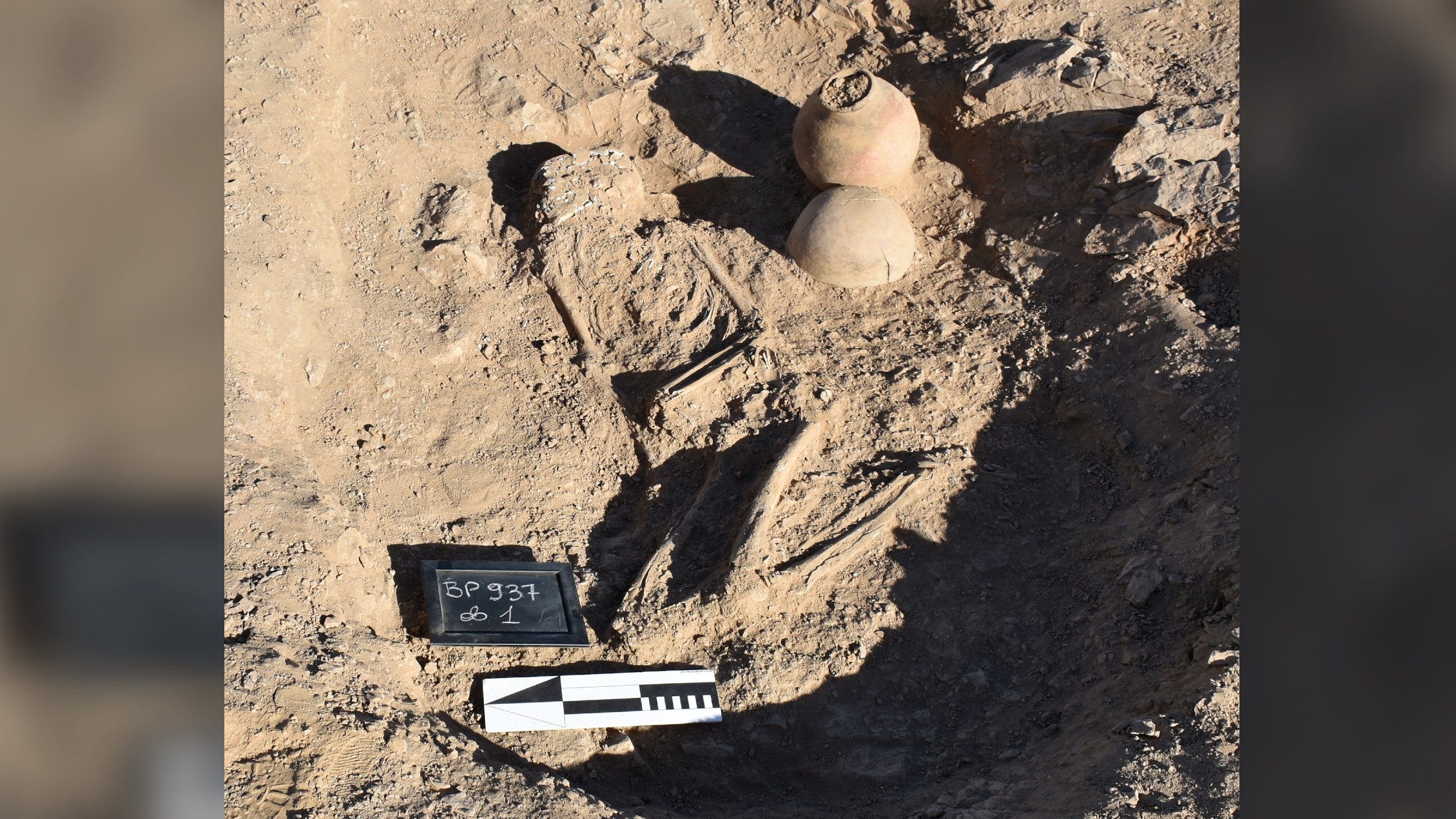
The burial, found during a 2018 survey in the Bayuda Desert, contained a standard grave mound, a male skeleton, and typical grave goods like ceramic vessels and blue-glazed beads. However, one vessel stood out: it held charred plant remains, wood fragments, animal bones, and even insect pieces. According to Henryk Paner, co-author of the study, this combination has never been seen before in similar burials.
The vessel’s contents included acacia wood, lentils, beans, and cereal grains, alongside the remains of ancient weevils. Researchers believe these were remnants of a funeral feast, with some bones likely discarded after consumption. The vessel itself shows no signs of burning, suggesting the remains were deliberately placed inside.
Kerma Kingdom and Cultural Exchange
The Kingdom of Kerma flourished as a Nubian civilization neighboring ancient Egypt between 2050 and 1750 B.C. The buried man wasn’t an elite individual, as evidenced by the modest burial site, yet his grave holds a crucial piece of the puzzle. This is the first discovery of its kind from Kerma, and its uniqueness points to either a rare ritual or a lack of preservation of similar practices elsewhere.
This lack of comparable finds suggests complex cultural exchange processes in ancient Africa, where trade and the spread of ideas may have been more dynamic than previously thought. The botanical remains also offer insights into the past environment: the area was once a humid savanna, unlike the desert it is today.
The discovery highlights how even seemingly insignificant sites can provide key evidence for understanding ancient climates and cultures. Further research is needed to unravel the mystery of this ritual and the broader context of cultural interactions in the region.
The unusual nature of this burial underscores how much remains unknown about ancient African civilizations, and why continued archaeological work is critical.