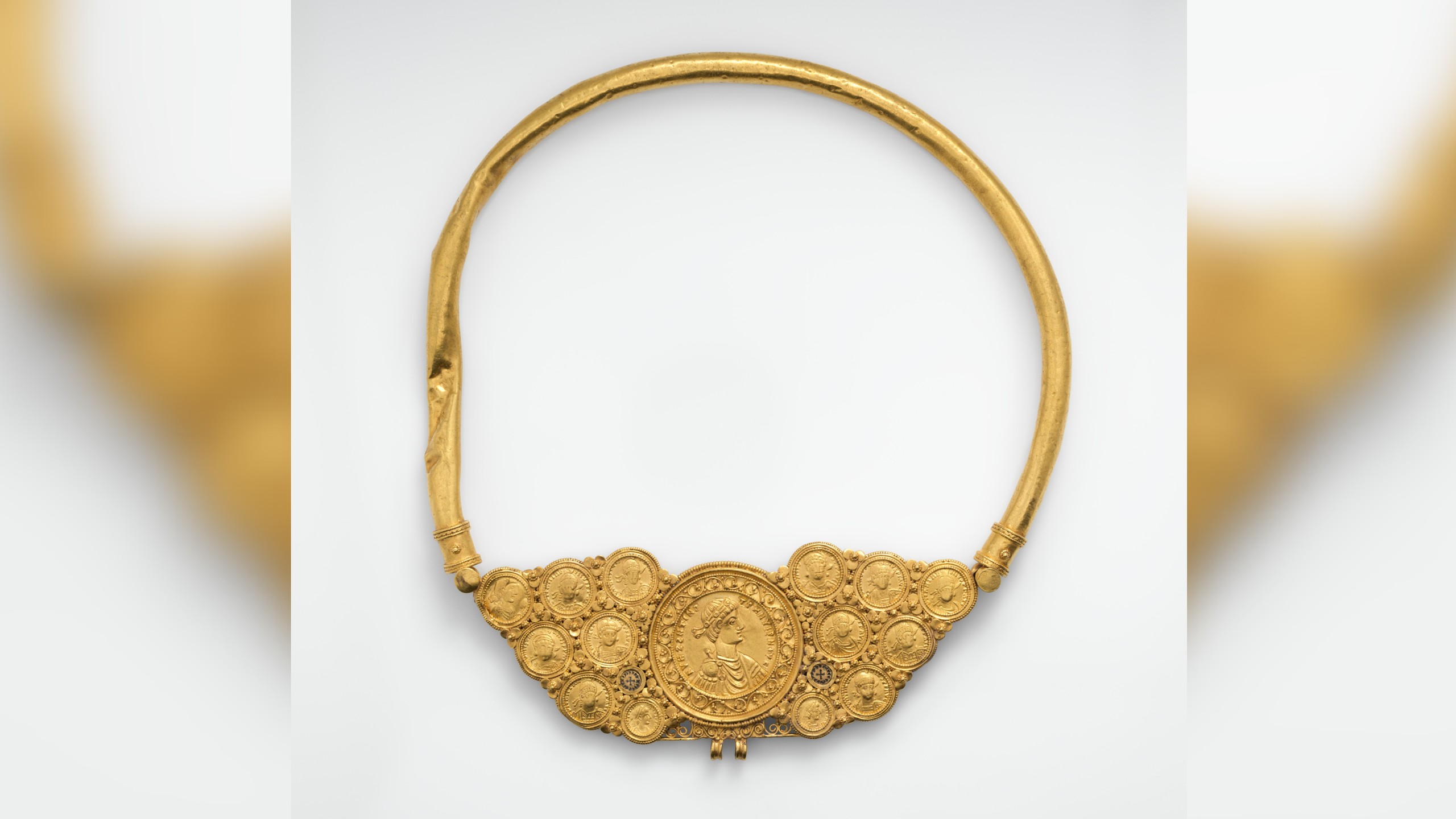
In the mid-6th century, the Byzantine Empire saw a unique display of wealth: gold jewelry crafted directly from coins. Found in Egypt but likely made in Constantinople, a recent study of one such pectoral – a type of ornate neck ring – reveals it as one of the most intricately designed pieces of its kind. The object isn’t just a luxurious ornament; it’s a statement about the wearer’s power, status, and even their perceived protection against ill fortune.
The Construction of Imperial Display
The pectoral in the Metropolitan Museum of Art consists of fourteen gold coins (solidi and one tremissis) and two discs, all set into a complex gold framework attached to a curved gold tube. Weighing approximately 340 grams and measuring 24 centimeters in diameter, the piece originally included a medallion – now held by the Smithsonian – that further emphasized its grandeur. The gold itself wasn’t just material; each solidus coin contained about 4.45 grams of pure gold, which would be worth around $580 today.
Coins as Currency, Status, and Talismans
While common citizens used bronze or silver coins daily, the elite repurposed gold coins into jewelry. This wasn’t merely about extravagance. Historical records suggest that coins were believed to ward off misfortune, making them powerful talismans. The pectoral’s creator combined coins spanning over 200 years, suggesting a deliberate collection rather than random selection. The central disc, though not an official coin, mimicked imperial currency with a fabricated emperor figure and inscription, symbolizing authority.
Imperial Connections: Beyond Wealth
The inclusion of an official commemorative coin from Theodosius I, the last emperor of a unified Roman Empire, hints at the pectoral’s original owner having direct ties to the imperial court. Byzantine iconography suggests such pieces were worn by military figures – potentially an emperor’s bodyguard or another high-ranking official.
“The main point of this elaborate gold necklace was asserting the wearer’s elite status and direct connection to the imperial court while simultaneously protecting against misfortune.”
The pectoral wasn’t just jewelry; it was a visible declaration of power, wealth, and a shield against perceived dangers. The intricate design and valuable materials ensured the wearer’s status was unmistakable, while the embedded coins offered a superstitious layer of protection.