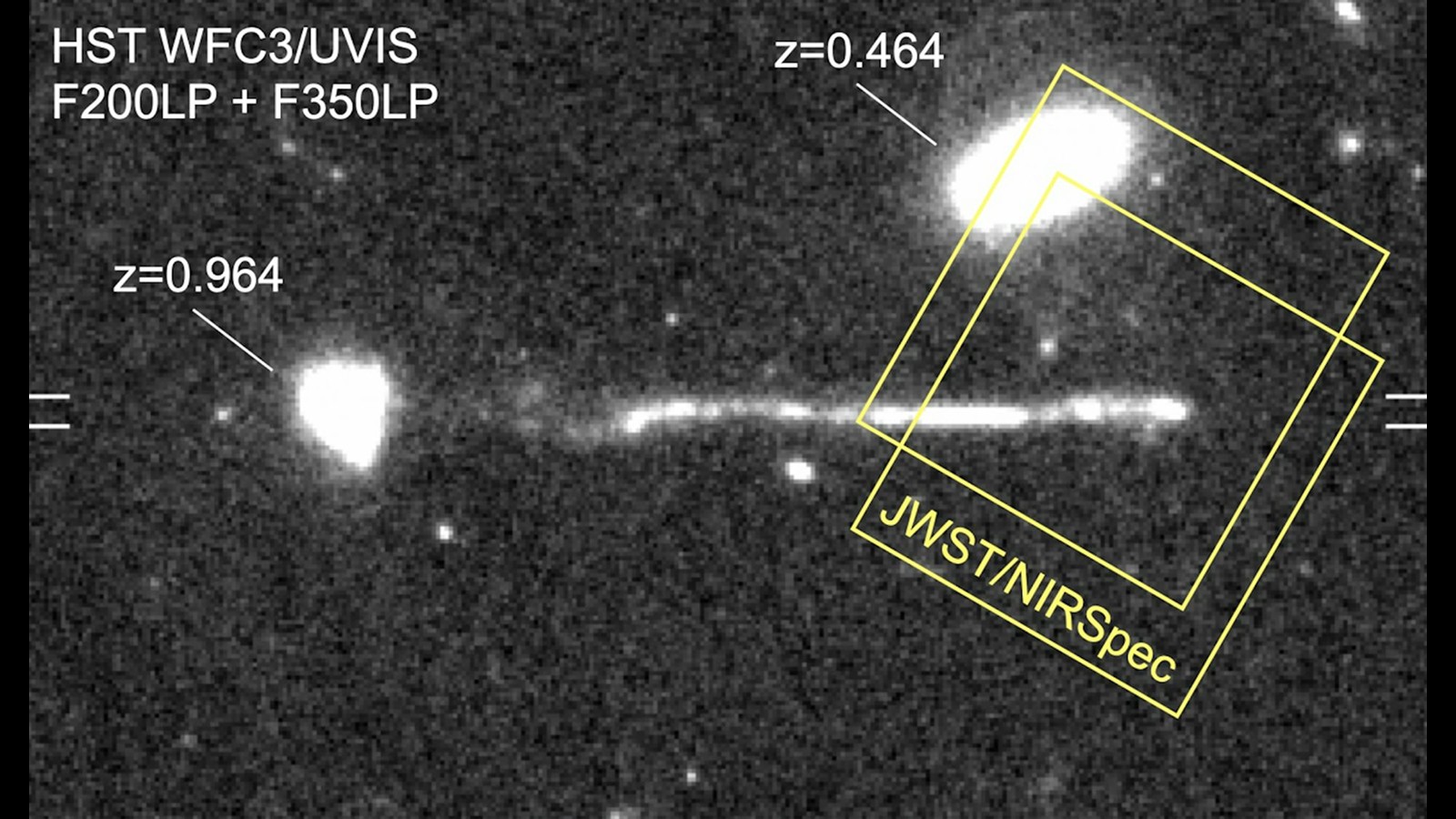
Astronomers have recently confirmed the existence of “runaway” black holes – supermassive objects ejected from galaxies at extreme speeds, reshaping our understanding of the universe. While the idea once seemed outlandish, accumulating evidence from gravitational wave observations and direct telescopic imaging now supports the reality of these interstellar projectiles.
The Theoretical Basis: Spinning Black Holes and Energy Release
The concept originates from theoretical work in the 1960s, particularly the solutions to Einstein’s general relativity equations by mathematician Roy Kerr. Kerr’s work revealed that spinning black holes can store vast amounts of rotational energy – up to 29% of their total mass. Physicist Roger Penrose later showed this energy can be released, meaning colliding black holes can act like a rocket, ejecting the merged remnant at incredible velocities.
Supercomputer simulations have confirmed that when two spinning black holes collide with misaligned axes, the resulting gravitational waves are emitted unevenly, propelling the final black hole at speeds reaching thousands of kilometers per second. This is not just theory; observations from LIGO and Virgo have detected “ringdowns” – the characteristic vibrations of newly formed black holes – confirming their high spin rates and potential for such kicks.
Evidence from Gravitational Waves and Telescopic Observations
Initially, runaway black holes were purely theoretical. However, gravitational wave observatories began detecting the signatures of colliding black holes in 2015, revealing pairs with randomly oriented spins and substantial rotational energy. This suggested the possibility of high-speed ejections.
The breakthrough came with direct observations. Runaway black holes disrupt stars and gas as they travel through galaxies, leaving behind “contrails” of newly formed stars in their wake. Images from the James Webb Space Telescope have revealed strikingly straight streaks of stars within distant galaxies, matching the predicted trails of passing black holes.
One study, led by Pieter van Dokkum, documented a 200,000-light-year-long contrail in a distant galaxy, consistent with a 10-million-solar-mass black hole traveling at nearly 1,000 km/s. Another discovery in galaxy NGC3627 suggests a 2-million-solar-mass black hole moving at 300 km/s, carving a 25,000-light-year trail.
Implications and Future Considerations
The confirmation of runaway black holes adds a new layer of complexity to our cosmic understanding. While the probability of one entering our solar system is extremely low, their existence means galaxies aren’t static structures; they can be dynamically altered by these high-speed intruders.
Smaller runaway black holes, propelled by similar mechanisms, may also travel between galaxies, contributing to the universe’s ongoing evolution. The discovery of these phenomena underscores that the universe is far more dynamic and violent than previously imagined.
The existence of runaway black holes is a testament to the unpredictable nature of extreme cosmic events, making the story of our universe richer and more exciting.