For decades, the skeletal remains of a Roman-era woman found near Beachy Head in England were at the center of a shifting scientific narrative. Initially hailed as the earliest known black Briton, then suggested to be of Cypriot origin, recent advancements in DNA sequencing have definitively revealed her ancestry: she was a local woman from southern England. This case underscores how scientific understanding evolves with technology and how easily assumptions can be overturned.
From “First Black Briton” to Eastbourne Local
The story began in 2012, when the skeleton was rediscovered in Eastbourne town hall archives. Radiocarbon dating placed her death between AD 129 and 311, during the Roman occupation of Britain. Early forensic analysis of the skull led to speculation about sub-Saharan African origins, a theory that gained public traction, including a commemorative plaque erected in 2016.
However, initial DNA tests cast doubt on this claim, suggesting a possible Cypriot origin. The evidence was inconclusive, but enough to raise questions. As Dr. Selina Brace of the Natural History Museum puts it, “She’s had quite a journey.” The plaque was eventually removed following a parish council vote.
The Role of Evolving Technology
The definitive answer came with the application of capture array technology, which allows scientists to recover tiny fragments of ancient DNA and reconstruct more complete genetic profiles. This method yielded over tenfold better DNA coverage than previous attempts. The results were unambiguous: Beachy Head Woman descended from the indigenous British population of Roman-era southern England.
This is not just a correction of historical misattribution but a demonstration of how science progresses. Early attempts at ancestry classification relied heavily on skull morphology, a method now recognized as unreliable due to overlapping facial variations across populations.
Beyond Identity: What This Means
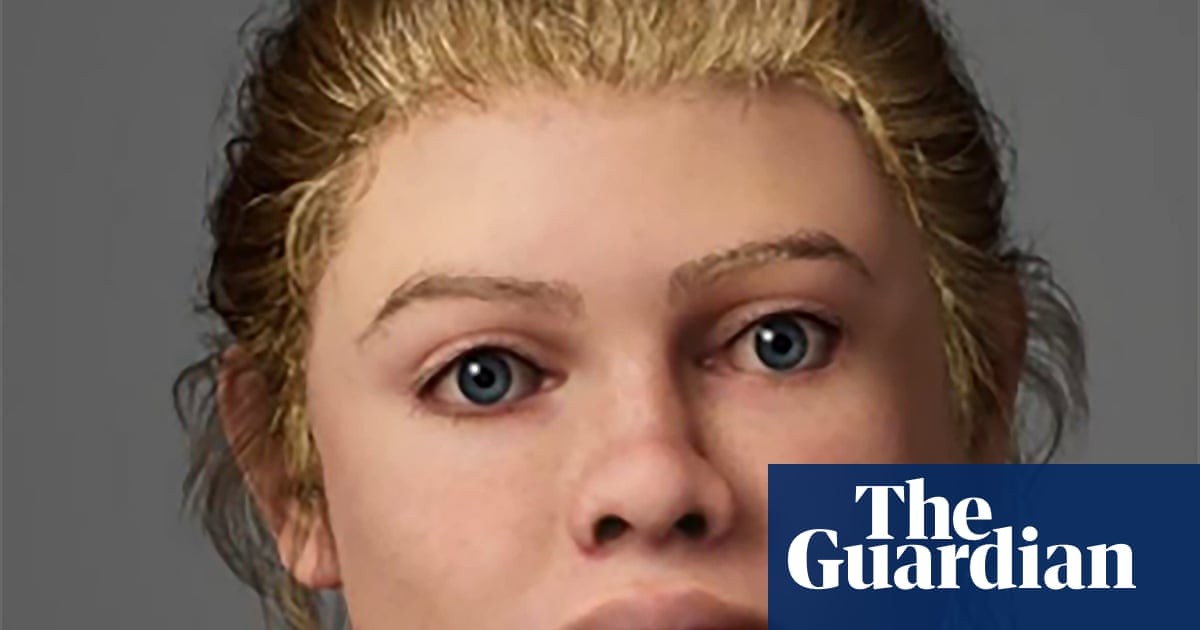
The woman was approximately 18 to 25 years old, stood at 5ft tall, and bore the healed fracture of a serious leg injury. Isotopic analysis suggests her diet consisted primarily of seafood, indicating she lived in the local area.
The case of Beachy Head Woman highlights that historical narratives are not fixed but subject to revision as new evidence emerges. More importantly, it underscores the need for scientific humility and the obligation to correct past errors. As Dr. Brace concludes, “It doesn’t alter the story of Britain. It just alters her story, and we owed it to her to put that right.”