


NASA’s Artemis program has one undeniable obsession: the lunar south pole. For years, that’s been the target. Water ice. Shadowed craters. A foothold for a future Mars mission. But Victor Glover, the pilot for Artemis II, is raising an eyebrow at the strategy. And frankly, his skepticism has merit.
Glover spoke at the NASA Exploration Science Forum in California recently. His takeaway? We’re moving too fast. Too reckless. “I think we need to be real,” he said. “Work our way to the south pole. Maybe not go there first.”
The logic isn’t just about safety; it’s about orbital mechanics and survival rates.
The case for the equator: Safety and evacuation
Landing at the moon’s equator solves a specific, terrifying problem. It’s called the orbital window.
If you land at the south pole to reach that precious ice, you’re likely dealing with the Lunar Gateway’s near-rectilinear halo orbit (NRHL). It’s a high, elliptical path. It’s convenient for docking. It’s not convenient for emergencies.
Here’s the hard fact: due to the orbit’s shape and length, a launch window from the surface to that orbit opens up just once a week.
“You’re stuck for a week,” Glover said. “That’s a big deal to me… The equator gives me opportunity to save [an] astronaut.”
Imagine a medical crisis. A fracture. Radiation sickness. Bleeding. You are alone on the lunar surface. The only ride home is locked in orbit above. You have to wait seven days for the geometry to align. In space medicine, a week is an eternity. It might be death.
Landing near the equator changes the math. The orbital mechanics there are simpler. The windows are wider. You aren’t waiting for the stars to align perfectly before you can retreat to safety.
Why the south pole in the first place?
It’s not just stubbornness driving NASA toward the lunar south pole. It’s science. Specifically, water ice.
The poles are dark. Cold. Permanently shadowed craters trap ice deposits. That ice isn’t just for drinking. It can be split into hydrogen and oxygen. Hydrogen and oxygen make rocket fuel. Oxygen makes breathable air. Hydrogen makes radiation shielding.
Building a sustainable base there is the stated goal. Use the local resources to extend missions. Reduce the payload launched from Earth. It’s a theory that makes sense on paper. The theory also collides with geopolitical pressure.
The China factor
China is coming. Fast.
Beijing has already landed robotic rovers on the far side and the near side. They’ve brought back samples. They are developing crewed landing hardware with a target of 2030. That timeline creates anxiety in Washington.
Officials worry that if China establishes a permanent presence at the south pole first, it shifts global influence. It impacts space law. It impacts economic leverage. Mike Gold, from Redwire, warned senators that being second back to the moon means “a global realignment” that hurts innovation and security.
This fear drives the urgency. It makes the south pole non-negotiable for some. But speed comes at a cost.
Artemis IV: A timeline under pressure
Artemis III was supposed to land astronauts first. Then Artemis IV was slated for late 2028. That’s the current, optimistic target. But look at the hardware.
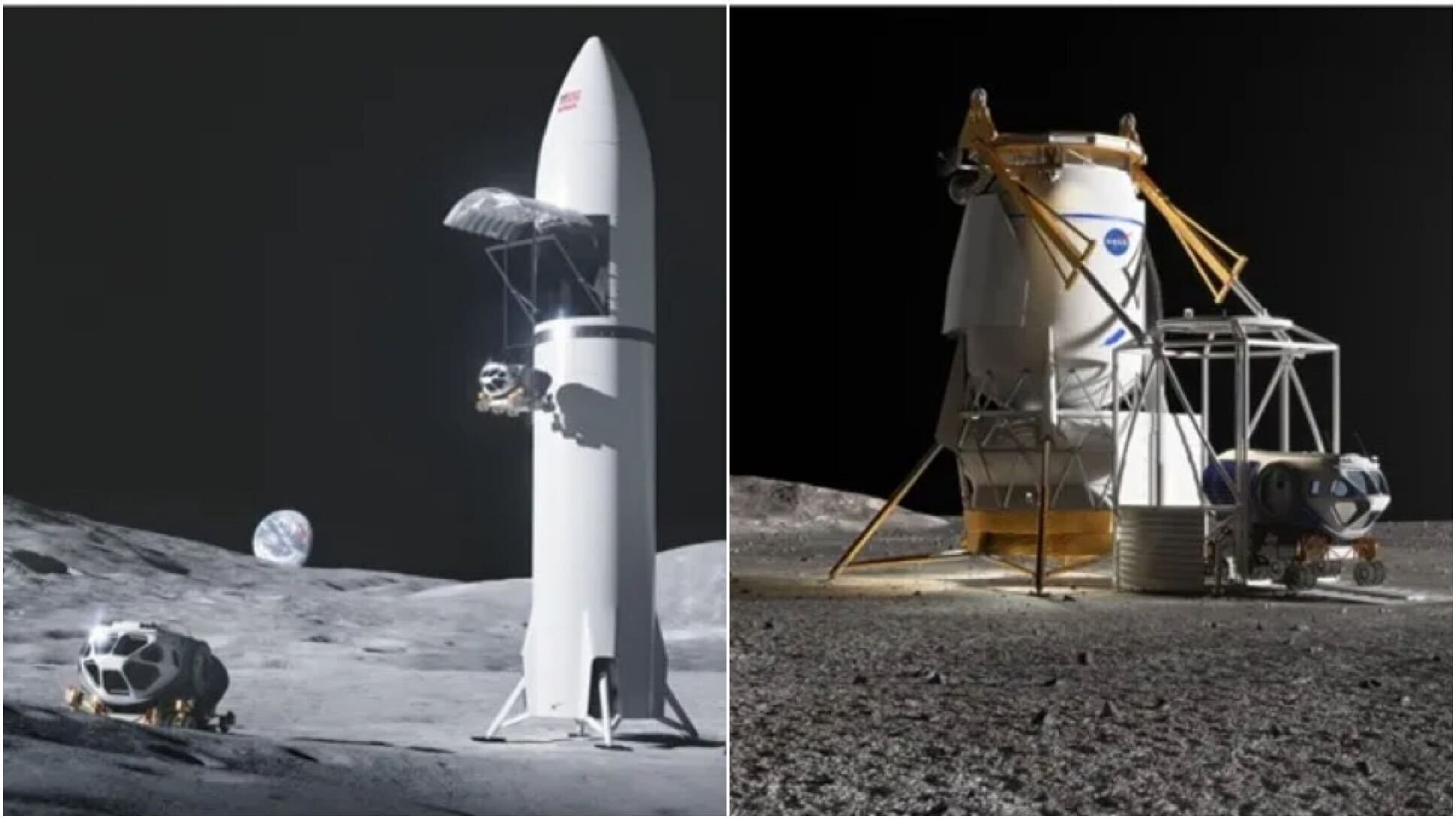
We have two landers. SpaceX’s Starship. Blue Origin’s Blue Moon. Both are behind schedule. Both are facing significant delays. NASA previously relied on the Lunar Gateway station to facilitate these landings from the south pole orbit. They’ve sidelined the Gateway to focus on the base itself. That changes the entire logistics chain.
SpaceX is already adapting. Jessica Jensen, Vice President of Customer Operations and Integration, outlined a new plan. Instead of docking in that difficult halo orbit, Starship would dock with Orion in Earth orbit. Then it pushes everything to the moon. It skips the complex transfer entirely.
Jensen highlighted the same benefit Glover mentioned: familiarity. Simpler orbits. Faster return options.
Realistic vs. Ambitious
Is Glover saying we should abandon the south pole? No. He’s saying we shouldn’t start there.
“If you want to go fast, go familiar,” he argued. “If we want to land soon, familiar, daytime, equator.”
It’s a pragmatic pivot. Use the equator to prove we can land safely. To test the suits. To validate the life support systems in broad daylight where visibility is clear and evacuation is rapid. Once we’ve done that, move north. Or rather, move to the pole.
NASA’s Artemis IV is already looking like it might skip the halo orbit. The shift in landing site latitude seems to be happening quietly in planning documents. The question remains whether the political pressure to put boots in the south pole ice will override the operational wisdom of Glover’s advice.
For now, the equator offers a chance to breathe. To live. The south pole offers glory.
We have to pick one.


