


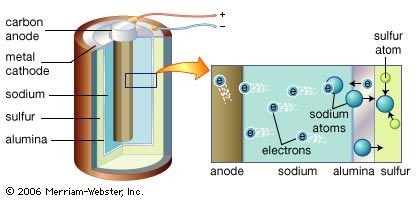
Batteries are often mistakenly thought of as one monolithic object, but they are actually a collection of small electrochemical cells working in tandem. These devices perform certain alchemy at their core. They take stored chemical energy and converts it into electrical current. Although the term “battery” technically refers to a set of cells, it is usually used to describe a single unit, such as the AA battery in a remote control or the module that powers a large electric car.
How the flow works
Magical things happen inside the cells. The two electrodes (negative and positive) are separated by an electrolyte. This electrolyte is the medium that allows ions to move between the electrodes. It can be a free-flowing liquid known as a wet cell, or a paste held in an absorbent material, and a dry cell.
Connecting the device to the battery completes the circuit. A chemical reaction occurs. Electrons are released from the negative terminal and travel through external circuits (device wires and components) before reaching the positive terminal. This flow of electrons is called electric current.
The voltage you get from a battery is determined by two things: the special chemistry used in the electrodes and the number of cells in series. Stacking the cells increases the voltage. However, the actual current flowing is determined by the total resistance of the circuit, including the internal resistance of the battery itself and the size of the electrodes.
Wet and dry: where the power lies
In general, batteries can be classified based on the state of the electrolyte. Wet cells contain free liquid electrolyte. They are very durable and are often used in applications where high current and durability are required. Think lead-acid batteries under the hood of your car or specialty batteries used in marine, mining and military environments.
Dry batteries, on the other hand, use absorbent materials to keep the electrolyte in place. This makes it safer to carry and easier to use with portable devices. Typical examples are zinc-carbon and alkaline batteries used in flashlights and watches.
Rechargeable and disposable
Not all batteries are the same when it comes to longevity. Some are designed for a single life. Regular dry batteries (like 4-packs bought at the grocery store) cannot be recharged. When the chemical reaction is finished and the starting materials are used up, the battery is discharged. These are often found in low-power devices, where the price of a rechargeable option does not make sense.
Other batteries are designed to be charged. This reversibility is the key to modern portable technology. The most obvious example is a car battery. It supplies the high starting current needed to start the engine and is charged by the alternator while driving. In addition, several rechargeable batteries work in cordless devices, from drills to vacuum cleaners. Special models are also used in military and aviation equipment, where reliability and performance cannot be compromised.
Wiring Matters
The way you connect multiple batteries affects their performance. Connecting them in series (connecting one positive terminal to the negative terminal of the next) increases the total voltage. This is useful when more “push” is needed to drive current through a high resistance circuit.
If you connect them


