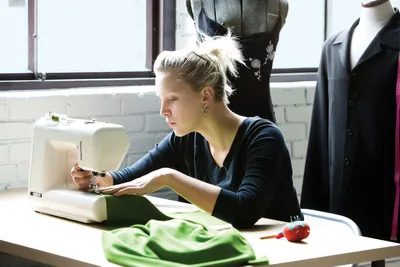
It sits in the corner of your closet, or maybe it’s gathering dust in a garage. But the sewing machine is not just a tool for mending hems. It was the first household appliance to truly take over domestic life. Before electricity became ubiquitous, before fridges and vacuums, there was just thread and needle. And then, suddenly, machines.
The invention did more than just speed up the creation of garments. It restructured entire economies. It turned fashion from a necessity into an industry. And it started with a simple mechanism: a needle, a shuttle, and a lot of mechanical ingenuity.
The Mechanics of Stitching
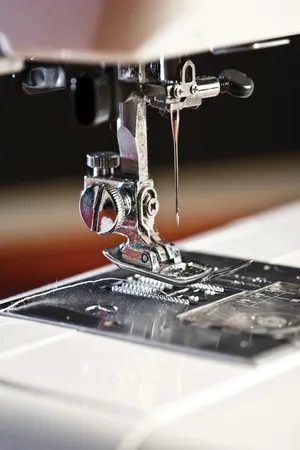
At its core, a sewing machine is a marvel of coordination. You have the needle, driving thread through fabric. You have the shuttle, interlocking that thread with a bottom thread. The result? A stitch. A secure, durable loop that holds material together.
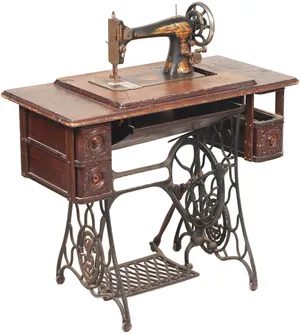
Early versions relied on human power. A foot treadle. Hands guiding cloth. The rhythm of the machine matched the rhythm of the operator. Later, waterpower entered the mix, especially in mills. But it was electricity that set the process free. No more pumping a foot. No more worrying about river levels. Just plug in. Press a button. Sew.
This shift wasn’t just about convenience. It was about scale.
From Home to Factory
Before the sewing machine, clothing was made by hand. A single garment could take days. Weeks, if you were making a coat for winter. Then came the machine. Speed increased dramatically. The barrier to entry lowered. More people could produce more goods.
The sewing machine became the first widely distributed mechanical home appliance. Why? Because everyone needed clothes. Everyone needed repair. And the machine made both affordable. It democratized tailoring. A mother could make a dress for her daughter at home, a task that previously required a professional tailor and a significant portion of the family income.
But the impact extended far beyond the home. Industrial applications exploded. Factories could now produce uniforms, shoes, and bags in quantities that hand-sewing could never match. The industrial revolution had its engines; the sewing machine was one of its most visible gears.
Why It Matters Today
We often think of technology in terms of screens and silicon. But the sewing machine reminds us that progress is also about mechanics. About gears. About thread. It changed how we dress. How we work. How we view our own labor.
The modern serger, the industrial lockstitch machine, the handheld mini-stitcher—they all trace their lineage back to those early designs. The principles remain the same. Needle. Shuttle. Thread. Fabric.
What happens when the next major shift in textile production arrives? Will it be digital? Automated at a molecular level? Or will it just be a faster wheel?
The sewing machine taught us that efficiency has consequences. Good and bad. It created jobs and destroyed others. It made clothing cheaper and waste higher. We are still living with those outcomes.
The violent birth of the automated stitch
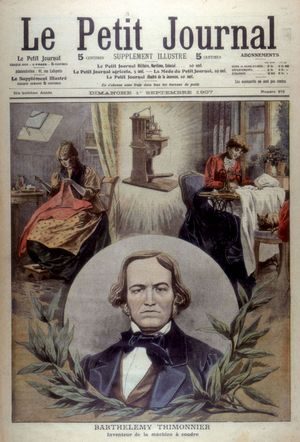
The story of the sewing machine didn’t start with a gentle hum. It started with a mob.
Barthélemy Thimonnier, a French tailor, had a vision. He built a machine in 1830 to mass-produce uniforms for the French army. He got the patent. He got the order. Then, roughly two hundred rioting tailors decided he was the enemy.
They smashed his workshop. They destroyed the machines.
Why? Simple fear. If a machine could stitch faster than a human hand, the tailor’s trade was dead. Thimonnier’s design was merely a mechanization of what they already did by hand. It didn’t change the fundamental action. It just removed the human variable.
The loop that changed everything
A real breakthrough didn’t come until a decade later.
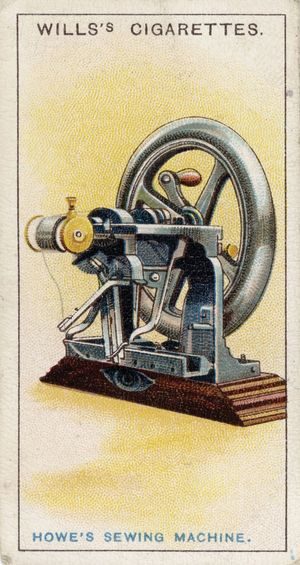
Walter Hunt in New York built a prototype around 1832. He never patented it. Why keep a secret that could be stolen? Instead, Elias Howe of Massachusetts watched the landscape, built his own version, and secured the patent in 1846.
Their design was decisive. It introduced the curved, eye-pointed needle.
Here is the mechanics of it. The needle carries thread through the fabric. On the other side, a shuttle runs back and forth on a track. The needle’s thread interlocks with the shuttle’s thread.
It created a locked stitch. Stronger. Faster. Indestructible.
This wasn’t just a tweak. It was a new category of movement. The loop formed the basis of all future machinery.
The patent war that built an industry
Howe’s machine worked. It worked so well that everyone copied it.
This led to a patent war. A messy, expensive, litigation-heavy war.
The industry was stuck in legal gridlock until a patent pool emerged. It included Howe’s core design and Isaac Merritt Singer’s improvements. Singer became the largest manufacturer. The conflict was resolved by cooperation among competitors.
The result?
In 1860, the United States produced more than 110,000 sewing machines. The factory model had won. The tailor’s fear had turned into a global standard.
How modern sewing machines work and where they’re made
You can still see the foot-treadle today.
It is not obsolete. It is still in wide use across much of the world. But the core engine has shifted.
Most modern machines are powered by electric motors. The basic operation remains unchanged since Howe’s loop. The needle still moves in an arc. The shuttle still interlocks the thread.
The variety has exploded. We now have specialized industrial machines for almost every textile task. But the fundamental geometry is the same.
Who makes the machines that make our clothes?
If you look at the global supply chain, the geography of sewing machines tells a story of industrial shifting.
China is now the world’s largest producer. They dominate volume. They make the workhorses that build our fast fashion and our basic garments.
Japan’s industry, however, pioneered innovation.
Japanese manufacturers developed the versatile zigzag machine. It is not just a straight line anymore. It allows for stretching, decorative stitching, and durability in synthetic fabrics.
The zigzag changed what could be sewn. It allowed materials