


You know the drill. You drag the ladder ball set out, grab a cold one, and try to hook the rung. Or maybe you’re hitting bean bags at a target while the charcoal grill sizzles. These games are fine. They are safe, predictable, and frankly, a little boring.
Then there is kubb.
It rhymes with “tube.” It means “block.” It is, on its face, a game where you throw wooden dowels to knock over other wooden pieces. Simple. Brutal. Ancient. If you want to understand why people are getting weirdly obsessed with this specific backyard activity, you need to look past the surface. This is not just another lawn game; it is a strategic battle of physics, luck, and nerve that has been played for thousands of years.
What exactly is kubb?
Kubb is a tactical lawn game played with three distinct types of wooden pieces. The setup is deceptively basic, but the execution gets complicated fast.
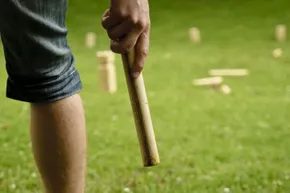
- Six batons: These are your weapons. They are cylinders, 12 inches (30.5 cm) long.
- 10 kubbs: These are the targets. Square blocks, 2.75 inches (7 cm) wide and 6 inches (15.2 cm) tall.
- The King: The final boss. A tall block, 3.5 inches (8.9 cm) square and 12 inches (30.5 cm) high. Many versions come with a little crown on top.
Two teams face each other across a rectangular pitch. One team places their kubbs on one end; the other places theirs on the opposite end. The King sits in the middle. Your job is to throw your batons to knock down the enemy kubbs. Once your opponent’s kubbs are gone, you turn your attention to the King. Knock the King down, and you win.
Why is this game so addictive?
You might expect a game about hitting wooden blocks to be mindless. It is not. Kubb sits in a weird sweet spot between horseshoes, bowling, and golf. It is simple enough for a kid to grasp in five minutes, but layered enough to keep adults arguing about strategy for an hour.
A match can last anywhere from a few minutes to over sixty. It depends entirely on how well you control your throws and how much the wind decides to interfere. It is a game of precision. Miss the angle, and your baton bounces off. Hit it wrong, and you might knock down your own King by accident. The tension is real.
“Kubb is a deft combination of simplicity, skill, fortune and strategy that no bean bag game can match.”
Where does kubb come from?
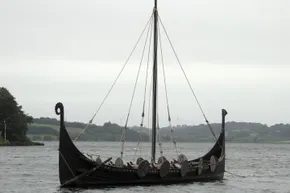
The history is arguably as wild as the gameplay. Kubb is often cited as having ancient Viking roots, played in Scandinavia for centuries. Some accounts trace it back even further, to the Bronze Age. The game has survived migrations, wars, and centuries of oral tradition.
This lineage matters. It gives the game a weight that modern lawn games simply do not have. When you pick up a baton, you are participating in a ritual that predates most modern sports. It feels primal. It feels right.
How do you actually play kubb?
The rules are straightforward, but the nuances decide the game.
- Setup: Teams divide the batons. One team sets up their kubbs at one end of the pitch. The other team sets up at the other end. The King goes in the center.
- The Throw: Players take

The Origins: More Myth Than Fact
Forget the romance. The idea that kubb was invented by bored Vikings scraping together scraps of wood to pass the time is folklore, not history. Some versions get darker, claiming the batons were made from human bones and the king piece was literally a skull. It’s a grim way to repurpose war spoils, sure, but it’s not how the game started.
Another theory points to Swedish King Gustav Vikstrom III in the early 1600s. Legend says he used kubb to settle disputes between factions. The penalty for losing? Your livestock got slaughtered. Your family got slaughtered too. The stakes were high. Today, the punishment for losing is usually just mild annoyance.
Historians can’t pin down exactly when kubb began. What we do know is that the game’s early supporters likely came from Gotland, an island off the east coast of Sweden. It stayed relatively local until the 1990s, when it spread to the mainland. From there, it found a foothold in Great Britain, Australia, and eventually the United States. You can find kubb kits in major U.S. chain stores now, which proves it’s not just a niche Scandinavian oddity.
Where and When to Play Kubb Tournaments
You don’t need a special venue. A sandy beach works. An ice-covered lake works. A flat patch of your backyard works. If you make the pieces out of foam, you can play inside. The versatility is part of the appeal.
The big leagues take place on Gotland. The world championship happens there annually, though the exact dates shift slightly each year. Expect nearly 200 teams, each with six players, to descend on the island for the title. It’s a serious competition.
How to Set Up a Kubb Pitch for Beginners
You can buy a kit online or at hardware stores, but be careful. Some sets sold in stores don’t look anything like the traditional game. Check the pieces before you pay. Alternatively, you can build your own from lumber you already have.
Once you have the pieces, mark the field. Use corner pins to define the pitch. In official championship rules, the field is 8 meters (26.2 feet) long by 5 meters (16.4 feet) wide. New players often shrink this to 6 meters (19.7 feet) by 4 meters (13.1 feet) to keep the game faster and less frustrating. Some players use chalk or non-slip tape to mark the out-of-bounds lines.
Placement matters. Each team sets up five kubbs at even intervals along their baseline, which sits between the corner pins. The king stands alone in the center of the pitch, on the centerline.
Determining Who Throws First in Kubb
Before the throws start, each team sends one player to the baseline. They toss a baton toward the king. The goal is to land as close to the king as possible without touching it. The team that lands closest goes first. Let’s call that team Team Stark.
The opposing team, Team Lannister, gets to choose which side of the pitch they want to play from. Then the action starts. Team Stark stands behind their baseline and throws their batons, one at a time, at the kubbs on Team Lannister’s side.
The technique is specific. Every throw must be underhand. The baton must spin end over end. Overhand throws are banned. Sideways throws are banned. Helicopter throws are banned. The motion is simple, almost like a gentle toss, but the spin is critical for stability and distance.
In a perfect scenario, Team Stark knocks down all five of Lannister’s kubbs and still has one baton left. They use that final baton to take out the king and win. That never happens. What actually happens is much messier, involving counter-attacks, repositioning, and the occasional dramatic failure to connect.
How the Game Actually Flips When the King Survives
The first six throws might end the match. Rarely. Usually, the Stark side exhausts their batons while the Lannister kubbs still stand. That’s when the turn shifts.
The basic rule set says toppled kubbs stay down. They’re removed. The game continues until the king falls. But most people play the version where fallen pieces go back into play. That’s where it gets interesting.
When the Starks run out of throws, the Lannisters pick up their own fallen kubbs. They toss them onto the Stark side of the pitch. The Starks then stand those pieces up exactly where they landed. These are now called field kubbs.
Before the Lannisters can attack the baseline or the king, they have to knock down every single field kubb. No shortcuts. Clear the field first. Then target the baseline. Only then can you go for the king.
Suppose the Lannisters throw everything they have and some Stark field kubbs are still standing. Team Stark picks up the fallen pieces and tosses them back to the Lannister side. Here is the twist: Team Stark leaves one standing field kubb exactly where it is.
That single piece changes everything. Team Stark advances to a temporary baseline formed by that remaining kubb. They are now closer to the Lannister side. Closer range makes overturning kubbs significantly easier. Physics favors the shorter distance.
If Team Stark knocks down all Lannister kubbs and then the king, they win the game. If not, Team Lannister tosses their fallen kubbs back to the Stark side. Another round begins. This back-and-forth continues until one team finally clears the field and topples the king.
People take pride in their Viking-style trash talk during this phase. Maybe it distracts the other team. Maybe they just want to speak in a funny accent. Lawn games like kubb often get interrupted by snacks and drinks. That part adds to the appeal.
Which Specific Rules Decide the Winner
There are detailed rules that make kubb more than just block bludgeoning. A few critical points separate casual play from competitive strategy.
The king is special. Like the 8-ball in billiards, the king must fall last. If you accidentally or deliberately knock down the king too early, you lose the game automatically. Some rule sets allow a resurrection king. In that version, knocking down the king early means you forfeit the rest of your turn. The king is righted. The other team gets to attack.
A match consists of three games, or sets. You need to win two of them to take the match.
When teams throw kubbs into the field, they sometimes bounce out of bounds. You get a second throw. If that second throw also goes out of bounds, the opposing team takes control of the piece. It becomes a penalty kubb.
A penalty kubb gives the defending team a strategic advantage. They can place it anywhere they want. The only restriction is that it must be at least one baton length away from the king or the corner markers. Position matters. You place it to block a path or create a difficult angle.
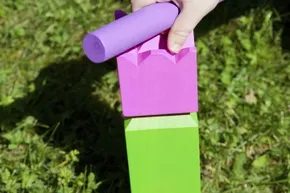
Stacking is another variable. In some versions, if thrown kubbs hit each other, they are stacked on top of one another like a Jenga tower. These stacks make field kubbs much easier to strike down. A single baton hit can bring down multiple pieces. That changes the momentum of the round.
Formal play requires at least two players per team. Championship play usually involves six players per side. Batons are distributed equally among team members. Teams with more skilled throwers have a substantial advantage. Skill distribution matters.
Informal play allows any number of team members. People can join or leave whenever they feel like it. Usually when it is time to grab another grilled hamburger or beer. No one keeps score strictly. It is easy for random people to enter or exit the game at any time. The social aspect is part of the design.
How Strategy Shifts Based on Player Count and Conditions
The number of players changes how you approach the game. With six players in a championship setting, you have more batons. You have more chances to clear the field. But you also have more chances to mess up.
In casual backyard play, the rules relax. You might have two on one side and three on the other. The goal isn’t strict competitive integrity. It is about the rhythm of the game and the conversation happening around the pitch.
Weather affects play. Wind changes trajectory. A strong breeze makes long throws difficult. Teams might choose to throw shorter, more controlled shots. Stacking becomes more common in windy conditions because precision throws are hard.
The pitch layout matters. If you place your field kubbs too close to the baseline, you give the opposing team an easy shot. If you scatter them, you force them to make multiple precise throws. But scattering also risks pieces landing out of bounds. That creates penalty kubbs for the other team.
Understanding the penalty kubb rule is key. If you get a penalty kubb, place it strategically. Block the line of sight. Force the opponent to throw around it. Do not place it near the king unless you have a specific plan to use it as a shield later.
The temporary baseline advantage is the biggest tactical shift in the game. When you leave one field kubb standing, you move closer to the enemy side. That proximity makes the remaining kubbs easier to target. But it also means the opposing team can potentially use that same proximity against you in the next round if they manage to clear your remaining pieces.
The game is about momentum. If you clear the field quickly, you get a better angle on the baseline. If you struggle with field kubbs, you fall behind. The back-and-forth nature means you never fully recover from a bad round. You have to keep attacking.
Viking trash talk is optional but common. It fits the theme. It keeps energy high. It distracts. It makes the game feel like a ritual rather than just a lawn activity. The snacks and drinks break up the intense moments. They give you time to think about your next throw.
Kubb is simple to learn. It is complex to master. The rules about the king, penalty kubbs, and stacking add layers that keep experienced players engaged. The casual version remains accessible. The competitive version rewards precision and strategy. Both versions work. The difference is how much you care about the final score.
Defensive Strategy in Kubb: Placement and Footprints
Unlike bean bag toss or ladderball, where the defense is basically powerless unless someone starts screaming or physically blocks a throw, kubb demands tactical thinking from both sides. You can’t just throw and hope. Positioning is everything.
If you place your kubbs near the centerline and fail to overturn them, you’re handing your opponent a massive advantage. They can move forward to a temporary baseline and crush your field from close range. But if you push those kubbs deep into enemy territory, you might struggle to knock them down yourself. The trade-off? Your opponents lose good field position. It’s a risk calculation you make every single turn.
How to Drill Kubbs for Precision
You throw kubbs underhanded, just like batons. But you can spin them any direction you want. That spin is your best friend when trying to fit pieces into tight spots.
This precision placement is called drilling. It’s the skill that separates casual players from the really dangerous ones. You’re trying to group field kubbs so tightly that a single throw knocks down more than one. Miss, and you’ve just cluttered your own strategy.
Raising Kubbs and Controlling Space
When you raise a kubb, the rules are strict. Two corners must stay touching the ground. Since kubbs are four-sided, each piece has only two possible orientations, or footprints.
Think ahead before you lift it. If you have multiple field kubbs, space them out horizontally as much as you can. Why? Because it makes it incredibly hard for an attacker to take them down in a domino effect. Clumped together, they fall easily. Spread apart, they survive.
Using Penalty Kubbs to Rattle Opponents
Penalty kubb placement is where you get to be a little mean. Put a penalty kubb right next to the king and watch your opponent sweat. They’ll have to worry about accidentally hitting the king while trying to clear your field.
You can also manipulate the angle. Flat face toward the enemy? Easier to overturn. Turn a corner toward them? A little trickier. Small adjustments, big consequences.
The Role of Luck in Kubb
No matter how sharp your throwing skills are, luck still plays a role. Playing surfaces vary. A lucky or unlucky bounce can flip a winning game into a heartbreaking loss in seconds. You can’t control that.
The variation of playing surfaces means a lucky — or unlucky — bounce can turn a bloody rout into a heartbreaking defeat in an instant.
This mix of strategy, precision, and chance is what makes kubb stick. It’s not just a lawn game. For a lot of people, it’s a full-on obsession. A weirdly named, worldwide game that’s definitely coming to a yard near you.

