


We have our rituals for spiking our adrenaline. You might queue up a slasher flick on a Friday night or strap yourself into the wildest rollercoaster at the local theme park once a year. But let’s be honest, you probably don’t seek out reality TV for a jolt of fear. The genre is usually defined by its lack of talent, its endless, grinding competitions, and its willingness to air the family’s dirty laundry in 4K resolution. The scariest thing about most reality shows is just how persistent they are.
But that’s a misconception. If you look closely, the scares are real. They’re hiding in plain sight, even on the shows you’d least expect to terrify you. To prove it, we are digging up 10 of the most terrifying moments in reality television history. From the season opener of a decades-old hit that still haunts viewers to a beloved star’s brush with mortality, we’re chronicling the episodes that broke the internet and broke us.
When Snooki Was Attacked on Jersey Shore
Whatever your take is on Jersey Shore, your heart rate will spike when Nicole “Snooki” Polizzi gets punched in the face. The victim is a female cast member. The aggressor? A male high school gym teacher.
The actual impact isn’t on screen. The show editors chose to keep the violence off-camera, focusing instead on the aftermath and the details provided in the episode. Yet, the facts alone are enough to make your blood boil. Unprovoked violence is always unsettling. But this assault is particularly chilling because of the sheer physical disparity. Snooki stands at 4 feet 9 inches. Her attacker, identified as Brad Ferro, is a tall, muscular man. He doesn’t just argue with her; he knocks her to the floor after stealing her drink.
Jersey Shore was never accused of being high-brow entertainment. But it doesn’t take a genius to recognize that what happened to Snooki was wrong. It’s frightening whenever an event like this happens, regardless of whether the violence itself makes the final cut. The power imbalance is the horror story here.
Man vs. Wild: The Alligator Crossing
Bear Grylls makes a living off fear. It’s literally his job to place himself in situations that could end his life. He uses his survival skills to educate and entertain the audience of Man vs. Wild. He has faced countless dangers on camera. But one segment stands out as a genuine nail-biter.
The scene involves crossing a murky, alligator-infested river. Grylls explains the mechanics of the threat clearly. Alligators often mistake swimming humans for turtles or other common prey. If one strikes, he would be virtually powerless. You can see the fear in his eyes as he dives into the water. He keeps a knife tightly clenched in his hand, a futile defense against a creature that has remained largely unchanged for 65 million years.
These reptiles are remnants of the late Cretaceous period. They are essentially living dinosaurs. Grylls makes it to the other side in one piece, but for those watching, it feels like a near-miss with prehistoric death. It is perhaps the scariest segment in a show built entirely on outdoorsy thrills.
The Rolling Stones of Danger
Beyond the river and the nightclub brawls, reality TV has a history of ignoring basic safety protocols. We’re about to look at episodes where the producers prioritized drama over survival. The question isn’t whether they survived, but why they were put in danger at all.
Next up, we tackle a season opener from a show that has been running for decades. It’s the kind of premiere that leaves you questioning the sanity of both the contestants and the network executives. And yes, there is more snow involved.
Steady Wheels Through Surging Snow
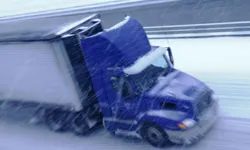

Driving a semi-truck down an ice road isn’t just a job. It’s a gamble with gravity.
The Alaskan routes featured in Ice Road Truckers don’t forgive mistakes. We’re talking 1,000-foot drop-offs. Winding paths slick with ice. Environments that want you dead. It’s easy to dismiss a show about logistics as boring. But throw in the threat of avalanches, and the stakes change. Suddenly, it’s not about freight. It’s about survival.
Mix heavy steel with frozen earth, and you get horror. Real, unscripted horror.
The Avalanche Zones
Picking the single most frightening moment from the series is nearly impossible. The danger is constant. But some scenes stick in your throat longer than others.
Picture this: drivers trapped in the path of an avalanche. Powerless. Swallowed by a white tide carrying their rigs down the mountain. You can see the crosses lining the road. Markers for those who didn’t make it. They serve as grim reminders of nature’s indifference.
The stars have survived. Thanks to luck and skill, none have been caught yet. But watching them navigate these kill zones? That’s heart-stopping. The tension is palpable. You’re leaning forward, waiting for the crack that signals the end.
Hoarding Pit Bulls
Reality TV isn’t always about external threats. Sometimes the monster lives inside the house.
Take Confessions: Animal Hoarding. The episodes featuring dozens of animals are grim. Filth. Disease. Malnutrition. Standard fare for the genre. But Shane’s story hits different.
Shane is a single dad. He has full-time custody of his daughter. And he has 19 pit bulls.
Most of these dogs are chained. Separated 24/7. Why? Because they’re aggressive. Dangerous. Shane believes he’s on a divine mission. He’s saving the breed. But the dogs he’s “saving” pose a direct threat to his family. They’ve killed other pets. They fight each other constantly.
The scary part isn’t just the dogs. It’s the hierarchy. Shane prioritizes the animals over his child. He spends his limited funds on kibble, not on fixing the underlying issues. The disregard for everyone’s health—human and canine alike—is chilling.
The Data Behind the Breed
It’s easy to point to stereotypes. Pit bulls have a bad rap. But does the data back up the fear?
Studies from the Centers for Disease Control and Prevention (CDC) offer a stark look at fatal attacks. When the breed is known, “pit bull-type dogs” account for 32 percent of fatalities. That’s a significant chunk of the statistic. Along with German shepherds and rottweilers, they top the list for unwarranted aggression.
Loving pets? Yes. Some are gentle giants. But the breed carries a reputation for a reason. In Shane’s case, that reputation is weaponized. The danger isn’t theoretical. It’s sitting in his living room, chained and snarling.
Medical Emergencies in Isolation
Then there’s the medical side of extreme living.
When you’re miles from civilization, a minor injury becomes a major crisis. An Emergency Medical Evacuation in these shows strips away all pretense. There’s no ambulance waiting. No hospital down the road. Just you, the injury, and the elements.
The fear here is different. It’s not the sudden shock of an avalanche. It’s the slow dread of realization. You’re hurt. You’re alone. Help is days away.
The most terrifying moments aren’t always the loudest. Sometimes they’re the quiet ones. The look in a driver’s eyes when they realize they’re too far gone. The silence before the storm hits.
We tune in for the spectacle. The crashes. The drama. But it’s the vulnerability that hooks us.
We see ourselves in their peril. Would we handle it better?
Probably not.

A Dangerous Mile
Why do people watch reality TV when it gets this real?
You watch for the drama, sure. But sometimes you hit a moment where the script disappears and the only thing left is raw, unfiltered danger. That is the line “Survivor” crossed with Russell Swan.
It wasn’t just a stumble. It wasn’t a typical player quitting because they were tired or hungry. This was a medical emergency that made viewers hold their breath for minutes.
During a team challenge in Survivor: Samoa, Swan started wobbling. He was standing still, then suddenly he wasn’t. He collapsed. Medical teams rushed onto the beach immediately. The diagnosis? Extremely low blood pressure. They laid him down. They waited.
Nothing changed.
Then, he tried to sit up.
That small movement triggered a crisis. His eyes went glassy. He lost focus completely. He became unresponsive. The monitoring equipment screeched warning sirens, a sound that still gives fans chills. It lasted only seconds, but it was terrifying. The show’s production had to make the call. Swan was evacuated off the island.
He made a full recovery, thank god. But for those few minutes, his fate was genuinely uncertain. That is the peak of reality TV fear. Not a twist in the game. The fear that someone might not wake up.
Whale Wars and the Sinking of the Ady Gil
If Survivor is slow-burn terror, Whale Wars is immediate, violent shock.
The Sea Shepherd Conservation Society has been fighting the Japanese whaling fleet for years. It’s been loud. It’s been chaotic. But until the third season, it was mostly nonlethal. You had water cannons on one side. Noise disruptors, spud guns, and paint on the other. It was dangerous, sure. But nobody was dying.
Then came the episode “Sliced in Two.”
The whalers got tired. They decided to stop playing games. They rammed the Sea Shepherd’s small stealth ship, the Ady Gil, directly.
The boat was cut in half.
For several minutes, there was silence. Radio contact was lost. The crew of the Ady Gil was gone, swallowed by the Antarctic waters. The whalers moved in, lowering an inflatable boat with the apparent intent to capture survivors. It looked like a hostage situation.
But the Sea Shepherds acted fast. They scrambled to rescue their crewmates from the freezing water. Everyone survived. Miraculously, everyone survived. But seeing a boat literally sliced apart and the fear in the crew’s eyes changed the tone of the show forever. It wasn’t just activism anymore. It was life or death.
And it worked. In February 2011, Sea Shepherd successfully deterred the Japanese fleet from its annual whaling operation. The Japanese government even hinted at committing to more sustainable fishing practices. Sometimes, you have to cross the line to change the conversation.
Cops: The Real Danger Behind the Badge
We love the reggae theme song. “Bad boys, bad boys, what’cha gonna do?” It’s catchy. It’s iconic. But it’s also a lie.
The suspects on Cops aren’t just “bad.” They are desperate, armed, and willing to kill. And the officers are the ones with the most to lose.
The season 20 premiere of Cops opens with in-dash footage of a suspect shooting an officer. Just like that. The episode doesn’t tease it. It doesn’t build up to it. It starts with the chaos.
We follow Officer Caleb Lenz. He is on foot, chasing a man who just shot a cop. A trained police dog is with him. Other officers are closing in. It is efficient. It is terrifying.
You can see the fear in Lenz’s face. But you also see the resolve. He isn’t thinking about ratings. He isn’t thinking about the audience. He is thinking about getting home alive.
Chasing down a brazen shooter is as real as it gets. There is no camera crew in the line of fire. There is no director yelling “action.” There is just Lenz, his team, and a man with a gun.
When the suspect is finally apprehended, it is gratifying. But it is also a reminder. This groundbreaking show stays on the air not because of the arrests. It stays on the air because it shows us what happens when the law meets the absolute worst of human behavior.
The Fine Line Between Entertainment and Horror
Reality TV walks a tightrope. On one side, entertainment. On the other, genuine trauma.
Russell Swan’s collapse. The Ady Gil sinking. The officer shooting on Cops. These aren’t staged. They aren’t scripted. They are moments where the veil was pulled back and we saw the machinery of real life grinding underneath the TV screen.
We keep watching. We keep clicking. Why?
Maybe because we want to believe we’d act differently. Maybe because we want to know that when the sirens scream, someone is coming. Or maybe just because the alternative is boring.
But every time we see a player pass out, or a boat break, or a gun go off, we are reminded of the cost. The crew gets back on the plane. The survivors swim to safety. The suspect goes to jail. The cameras keep rolling.
And we sit there, safe in our living rooms, wondering if we’d have the guts to do the same.
Probably not.

The premise sounds harmless enough. Fighting the battle of the bulge. But during the eighth season premiere of “The Biggest Loser,” the show’s signature optimism curdled into something far more terrifying. This isn’t just about willpower. It’s about physical limits breaking under extreme pressure.
The opening challenge asks new recruits to run the final mile to the ranch. For veterans, it’s a warm-up. For these fresh faces, it’s a death march.
One woman hits the finish line on her hands and knees. She collapses just 100 feet short. After crossing, she goes completely unresponsive. The show cuts to black as medics rush in. She’s airlifted to a nearby hospital. Another contestant, an older man, suffers severe health complications. The medical staff doesn’t suggest. They demand he go to the hospital. He obeys. Both return eventually. The tone, however, never fully recovers. The glamour of transformation is replaced by the sobering reality of human fragility.
The Ocean’s Indifference
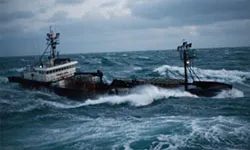
You need steady nerves to watch “The Deadliest Catch.” The Bering Sea doesn’t care about your ratings. It doesn’t care about drama. It just wants to kill you.
Season three, episode “The Unforgiving Sea,” strips away the adventure. What remains is pure horror. The Coast Guard launches a search-and-rescue mission for a sunken vessel. Four men are missing.
They find an empty survival suit. A life raft bobs in the freezing black water. Then, a single survivor clings to debris. Hypothermic. Barely conscious. Dying.
The rescuers pull him in. He survives. But the ocean takes its toll. Two dead crewmen are spotted floating. The fourth man? Never found.
Commercial fishing remains the deadliest job in the United States. The mortality rate is eight times that of police officers. Nineteen times that of firefighters. The stats aren’t abstract here. They’re personal. They’re the friends who didn’t make it back to port.
The Rattlesnake in the Grass
Steve Irwin didn’t shy away from danger. He courted it. The Crocodile Hunter built a career on poking, prodding, and agitating venomous beasts across the globe. He made fear accessible. He made it educational. And he made it incredibly dangerous.
His most terrifying moment wasn’t in Africa. Or Australia. It was in the Appalachian Mountains, dealing with a timber rattlesnake.
Irwin uses a stick. Bare hands. He pulls the reptile from under a rock. Squats down. Educates the camera on mating habits. Then he hears it.
A second rattle.
It comes from between his legs. He looks down. Another snake. Poised to strike. Holding the first specimen at arm’s length, Irwin retreats. Slowly. Cautiously.
The scene is hilarious. It’s also terrifying. You laugh at his wide-eyed shock. You cringe at the thought of what happens if he slips. He’s good-natured. Likeable. Unarmed. And completely exposed.
Irwin’s relationship with danger was inherited. His parents rescued wild animals. By age nine, he was already wrangling crocodiles. But even experts have limits. Even the brave can freeze.
The line between entertainment and tragedy is thinner than we like to admit. We watch for the thrill. We stay for the story. But sometimes the story ends with a helicopter ride. Or a body floating in the sea. Or a snake waiting in the grass.
Does the spectacle justify the risk? The answer isn’t clear. Not when the cameras keep rolling.


