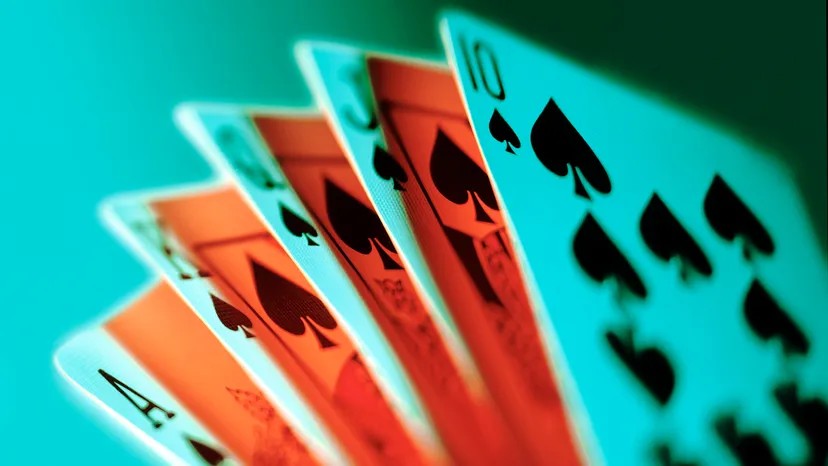
You don’t need a degree in linguistics to understand what’s happening at the poker table, but you do need to speak the language. Card games have their own dialect. Some terms are so ubiquitous you probably say them without thinking. “Deal.” “Hand.” “Trash.” But then there are the obscure ones. The words that make a casual player look at a seasoned veteran with a mix of confusion and respect. “Void.” “Talon.” “Make.”
Understanding these terms isn’t just about trivia. It’s about not getting played. It’s about knowing exactly when you’re on the hook and when you’re holding all the cards.
The Setup and the Deal
Every game starts with the deal. This is the act of portioning out cards to the players. It’s also the period of play between one deal and the next. When you receive your cards, you have a hand. That’s your current inventory. It’s also the round of play itself.
Sometimes, cards aren’t dealt directly. They might go into the stock or the talon. These are portions of the pack reserved for later use. In some games, you’ll see an upcard. That’s the first card turned up after a deal, often to begin play or initiate a discard pile.
If you’re playing solitaire, the layout matters. You’ll have a tableau, which is the layout of cards on the playing surface, excluding the foundations. The foundation is the starting card on which other specific cards are played. There’s also a reserve, a group of cards available to be played later.
Betting and Declarations
Card games often involve risk. You might make a bid. This is a spoken declaration to win a specified number of tricks or points. It’s also the act of making that declaration. If the bid succeeds, you’ve met the contract. That’s the agreement to win a certain number of tricks or points in a game or round.
The person who takes on this specific obligation is often called the maker. They’re the one responsible for the trick or points, often with the right to choose the trump suit.
But what if you don’t want to play? You can pass. This is a spoken declaration not to make a bid. In Hearts, passing means something different entirely: three hidden cards exchanged among the players.
Suits, Sequences, and Sets
Cards have hierarchy. A face card is a king, queen, or jack. Below them are the plain cards : any 10, 9, 8, 7, 6, 5, 4, 3, 2, or ace. Specific ranks have their own names too. A two is a deuce (or two-spot). A three is a trey (or three-spot).
The value of a card is its face value. It’s the numerical worth.
How cards interact depends on the suit. If you have a set of cards all of the same suit, you have a flush. If you play a card of the suit led, you follow suit.
Sometimes you hold just one card in a suit. That’s a singleton. If you hold none at all, you’re void.
Melds and Matches
In games like Rummy or Gin, you want to form combinations. A meld is a combination of cards with scoring value. It’s generally three or more cards in sequence in one suit or all of the same rank. You can also lay off cards, which means playing one or more cards according to allowable plays to add to existing melds.
A marriage is a specific type of meld consisting of a king and queen.
A match happens when you equate cards by being of the same rank or another criterion. A sequence is two or more cards in consecutive order.
Play and Scoring
The action happens in tricks. A trick is a round of cards played, one from each player’s hand. The player who plays the first card to a trick is said to lead.
If you want to remove trumps from your opponents’ hands, you draw trumps. You lead high trumps to deplete their hand of them.
The end game is often about going out. This is playing, melding, or discarding your final card.
What constitutes winning? A game is the total number of points to achieve. It’s also what defines winning or ending the game.
Sometimes you play alone. In cutthroat games, each player plays on his or her own.
Money or chips change hands too. A pot is a pile of chips or counters to be collected by the winner. A kitty is a common chip pool, though in some card games, it refers to cards available for exchange.
Special Cards and Conditions
Not all cards are fixed. A wild card is a card or cards, established before the game begins, that can be designated by the holder to stand for any other card.
In trick-taking games, you might play no-trump. This is the condition when no suit is trumps. Every card played counts equally based on rank, not suit.
When you draw, you take a new card or cards from the stock.
When you declare, you make a statement to fulfill a contract.
And when you table a meld, you lay it down on the playing area.
Why It Matters
Knowing these words changes how you hear the game.