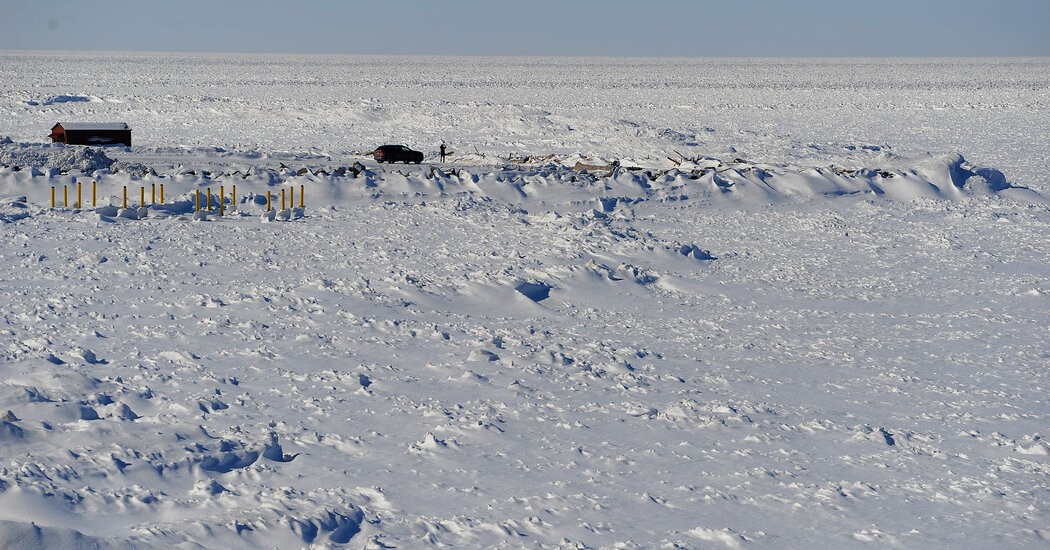
Lake Erie is experiencing an unusually severe winter, with nearly complete ice cover and record-breaking ice formations along its shores. This year’s rapid freeze, though not entirely unprecedented, contrasts sharply with a decades-long trend of declining ice cover due to warming temperatures. The extreme conditions are amplifying the risk of dangerous storm surges that can flood coastal areas while simultaneously lowering water levels on the western shoreline.
The Big Freeze: A Rare Phenomenon
Recent satellite imagery from NOAA shows an 80-mile crack across the lake’s frozen surface, caused by strong winds. These same winds are driving waves of fragmented ice—known as brash ice—onto nearshore areas, creating hazardous conditions. Ice researcher James Kessler of the National Oceanic and Atmospheric Administration notes that while the current ice coverage is above average, its rapid formation is striking.
The severity of this freeze is particularly notable because it arrives despite a consistent decline in Great Lakes ice cover over the past 50 years—roughly 5% less ice each decade. This means the lake is more vulnerable to intense storm surges when ice is minimal, but the current extreme conditions are also creating new risks.
Why This Matters: Storm Surge Amplification
The decline in ice cover has historically led to higher water levels during storms because less ice means less resistance to waves. As a result, inland flooding has become more common. The current extreme freeze is an anomaly that shifts the dynamic: solid ice can both intensify surges by acting as a rigid barrier and cause rapid drops in western shoreline levels due to ice accumulation elsewhere.
The paradox is this: the very trend that has been reducing ice cover is now being temporarily reversed, creating a dangerous situation where extreme cold is exacerbating the same storm surge problems that warming temperatures have made more frequent.
The Future of Great Lakes Ice
The rapid freeze of Lake Erie highlights the complex interplay between short-term weather patterns and long-term climate change. While this winter’s conditions are exceptional, they serve as a stark reminder that extreme weather events will continue to challenge coastal communities. The unpredictability of Great Lakes ice—whether too little or too much—demands continued monitoring and adaptation measures to mitigate flood risks and protect vulnerable areas.
The current conditions underscore that the Great Lakes region is not immune to extreme weather volatility, even as long-term trends point toward continued warming.