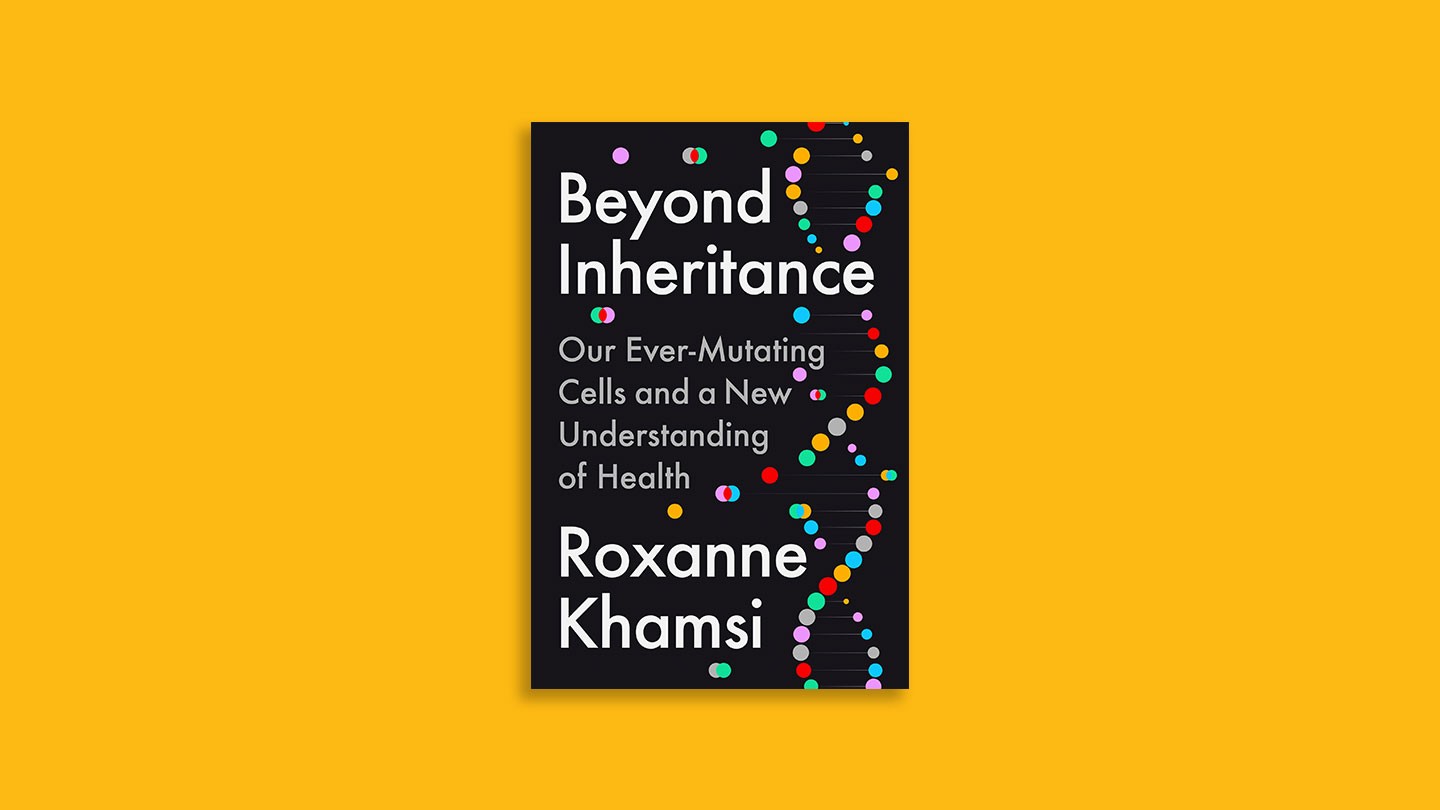
In the common imagination, the human body is a singular, unified machine. We feel a stubbed toe in our brain; we coordinate muscles to jump; we breathe in unison to speak. However, as science writer Roxanne Khamsi explores in her new book, Beyond Inheritance , this unity is a surface-level illusion.
Beneath the skin, we are a collection of 30 to 40 trillion individual worlds. Each cell possesses its own DNA, and each cell undergoes its own constant process of change. Khamsi’s work shifts the narrative of genetic mutation from a fixed, inherited destiny to a dynamic, lifelong process that occurs within every one of us.
Redefining Mutation: Beyond Birth and Disease
Most people view mutations through two narrow lenses:
1. Inheritance: The traits passed down from parents (like eye color or hereditary disorders).
2. Catastrophe: The sudden onset of disease, most notably cancer.
Khamsi challenges this binary view. She argues that mutations are not just something we are born with or something that kills us; they are a continuous, internal evolution. While many mutations are “silent” and have no effect, others act as the primary drivers of both our health and our aging processes.
The Dual Nature of Cellular Change
The book excels at humanizing complex biological concepts. Khamsi avoids dense, academic jargon, instead using accessible language to explain high-level ideas like tumor suppressor genes and cellular competition.
Crucially, she presents a more nuanced view of the “harmful” mutation. While she does not shy away from the grim realities of dementia or genetic disorders, she introduces a concept that is often overlooked in medical discourse: mutation as a mechanism for healing.
The “Beneficial Weed” Phenomenon
Khamsi highlights how certain mutations can actually act as a corrective force. She cites tyrosinemia —a condition where protein buildup can be fatal to infants—as an example where clusters of cells have been observed mutating back toward a healthy state.
“We so often think of mutation in a negative light,” Khamsi writes. “But sometimes it can be a force for healing. Sometimes, mutation is what saves us.”
This perspective suggests that the next frontier of medicine may not involve fighting all mutations, but rather learning to harness the “cellular heroes” that spontaneously correct defects.
The Ethics of Genetic Engineering
As biotechnology advances, the ability to intervene in our genetic makeup is growing. Khamsi notes that some companies are already working to combat aging by targeting and eliminating highly mutated cells. However, she raises a vital philosophical and scientific question: Just because we can intervene, should we?
The book warns against the hubris of attempting to “fix” our genetic destiny without sufficient precision. Because mutation is an inevitable and fundamental part of life, the goal should not be the total eradication of change, but rather a sophisticated understanding of which changes to welcome and which to manage.
Conclusion
Beyond Inheritance serves as a vital reminder that our bodies are not static blueprints, but evolving ecosystems. Khamsi concludes that rather than viewing mutation as an enemy to be conquered, we must recognize it as a fundamental force of life that holds the key to both our vulnerabilities and our potential for recovery.