You type the question into your browser: “What is a group of jaguars called?”
It is a trapdoor question. You click through, expecting a tidy, biological fact. Like a “pride” of lions. Or a “pod” of dolphins. Instead, you hit a wall of ambiguity.
The short answer is blunt. There is no official collective noun for jaguars.
Some poetic sources suggest a “shadow of jaguars.” It sounds cinematic. It fits the animal’s stealth. But in the rigid world of zoology, it doesn’t exist.
Jaguars are solitary hunters. They do not walk in packs. They do not form prides. To label them with a specific group name feels like forcing a square peg into a round hole.
The Myth of the “Shadow”
Language is messy. It is not a scientific database.
While “a pride” for lions is widely accepted, “a shadow” for jaguars is merely a suggestion found in internet lists and casual literature. It lacks the historical weight of terms like “a murder of crows.”
Why? Because jaguars simply do not hang out.
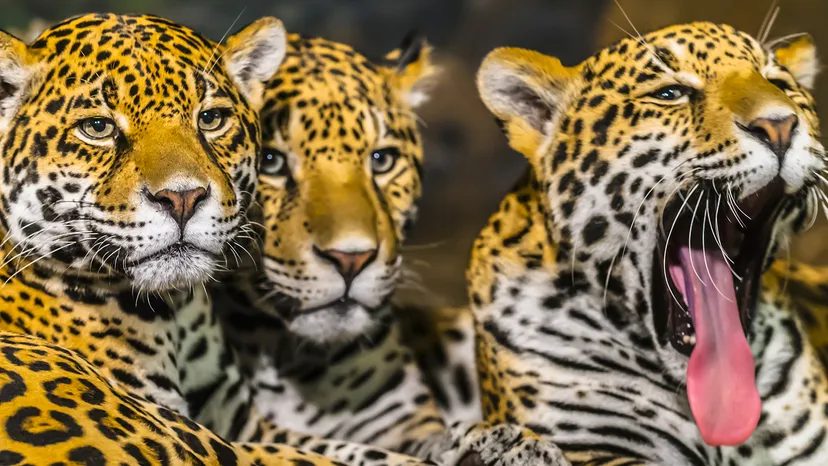
In nature, these massive cats prowl alone. They rule over dense forests and riverbanks as solitary monarchs. You might see two near a waterhole, but they are not a “group.” They are two individuals sharing a resource.
This solitary behavior removes the need for a social label. We don’t call a “herd” of elephants. We call them a herd only because they travel together. Jaguars do not.
The History of Weird Animal Names
If jaguars don’t have a name, why do so many animals?
English is full of bizarre collective nouns. It is a linguistic parade of creativity.
- Parliament of owls
- Murder of crows
- Skulk of foxes
- Pandemonium of parrots
- Clowder of cats
Many of these originate from medieval hunting manuals. They were fanciful terms designed to sound poetic or witty. A “gaggle” of geese comes from the sound they make. A “pride” reflects the social hierarchy of lions.
These sticks because they are fun to say. They give personality to the wild. But they are not rules. They are cultural artifacts.
Where Do Jaguars Actually Live?
Jaguars (Panthera onca ) are apex predators. They are related to lions and tigers but evolved differently.
Lions hunt in teams across open plains. Jaguars hunt in the thick cover of the Amazon and Central American jungles.
Their strategy relies on surprise, not cooperation. They ambush prey from the shadows. Solitude is their greatest asset.
A mother jaguar may raise a litter of kittens for up to two years. During this time, you might see a small family unit. But once the kittens mature, they disperse. They carve out their own territories. They leave the mother alone.
This life cycle ensures they rarely gather in large numbers. Without a group, there is no need for a formal noun.
How Language Shapes Reality
We crave order. We want to categorize everything.
When we hear “a pack of wolves,” we visualize a coordinated team. When we hear “a school of fish,” we see synchronized movement.
Jaguars defy this pattern. They are solitary. Therefore, the language does not provide a standard term.
The idea of a “shadow” is a workaround. It is a poetic concession to their elusive nature. It acknowledges that while they are not a “group,” they are a presence.
Eventually, language evolves through use. If enough people start using “a shadow,” it might stick. But for now, it remains a curiosity.
The safest answer is not a fancy word. It is a biological fact. Jaguars roam alone. Any name you assign them is more about human creativity than animal behavior.
We created this article in conjunction with AI technology, then made sure it was fact-checked and edited by a HowStuffWorks editor.