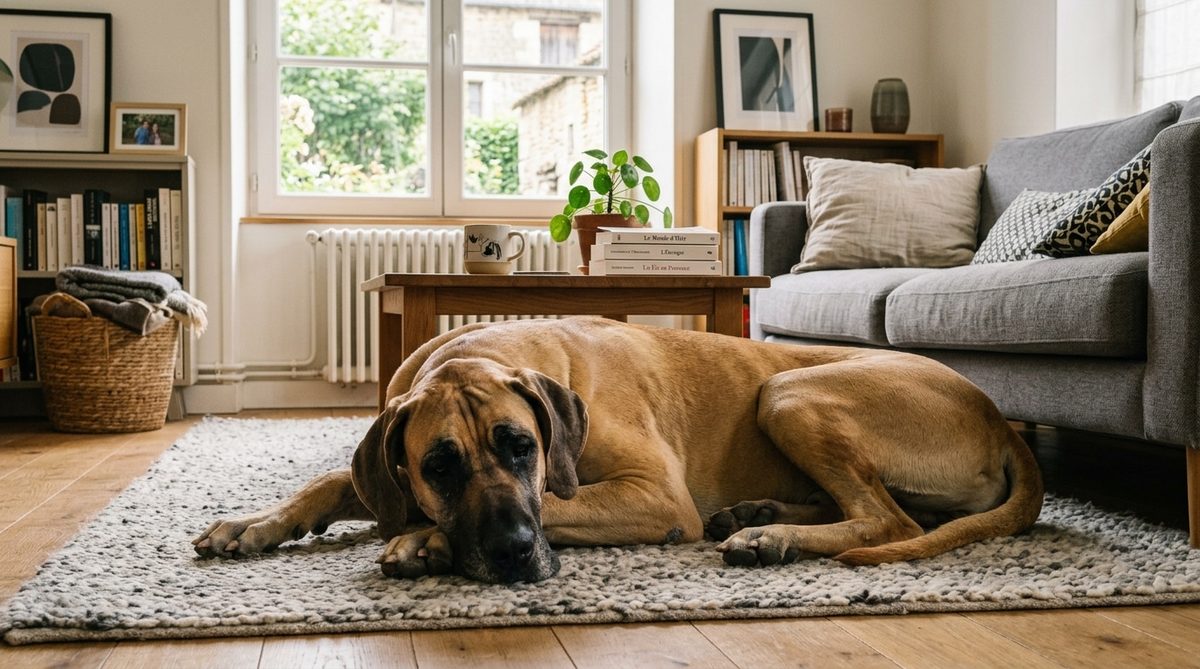
We’ve all heard it. That heavy, theatrical exhale. It happens right before the dog curls up, head hitting the cushion. For years, we treated it like background noise. A familiar lullaby. We assumed it was the canine equivalent of a human stretching after work and saying, “Finally.” Pure satisfaction.
Then, one night, you actually look. You stop listening to the sound and watch the face.
Everything changes.
The sigh is not a single note. It is a complex signal. And without reading the eyes, you are misinterpreting the message entirely.
The Myth of the Single Meaning
Attributing one meaning to a dog’s sigh is like summarizing a novel in one sentence. It ignores the plot, the characters, and the context. The noise you hear is just the punctuation. The sentence is the whole body.
Many owners assume the sigh always equals happiness. They assume the dog is just glad to be home. This is a dangerous oversimplification. Dogs communicate through a silent repertoire. Muscle tension. Ear position. Jaw drop. And eyes.
The sigh alone tells you nothing. It is a variable. It depends entirely on what else is happening in the room.
The Eyes That Reveal Relaxation
When a dog sighs with genuine contentment, the body language is specific. Look at the eyes.
They close slowly. Half-lidded. Soft. Sometimes slightly wet.
This is parasympathetic dominance. The nervous system shifts into rest mode. Heart rate drops. Muscles go limp. The dog is literally unloading the stress of the day.
Signs of this true relaxation include:
- Soft, half-closed eyes with a gentle gaze
- A relaxed jaw, often slightly open
- A limp body, fully supported by the bed or floor
- Slowing breath that follows the sigh
This is the “let go” moment. It signals total safety. It means the environment is secure. It means the dog trusts its pack.
The Sigh of Resignation
Here is where it gets complicated.
What if the dog sighs? But the eyes stay open?
Or worse, they stay open but fixed. Staring. Not blinking.
This is not satisfaction. This is resignation.
The body is tired. But the mind is still running. The dog is lying down because it has no other choice. It is not resting. It is waiting.
This sigh is a symptom of unmet needs. Lack of stimulation. Boredom. Frustration. The dog is physically present but mentally unengaged. It is a cry for more. More walk. More sniffing. More interaction.
It is not dramatic. But it is a clue.
If you see this open-eyed sigh, the routine needs adjusting. A longer walk. A sniffari. A game before lights out. You can turn the sigh of disappointment into a sigh of fulfillment.
Decoding the Night
Every evening is now a reading exercise. The sigh is no longer just noise. It is data. The eyes are the key.
Why does this matter? Because we share their space. We share their lives. If we ignore the signal, we miss the message.
Next time the lights go out, don’t just listen. Look.
What is your dog trying to say?