


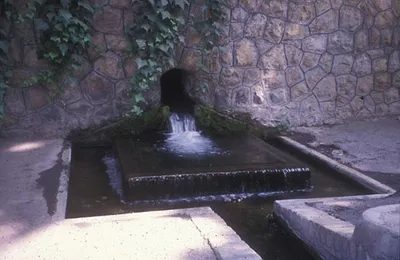
Beneath the dust of Iran’s arid landscape lies a silent, subterranean lifeline. It isn’t a modern pipe or a high-tech desalination plant. It’s a qanat, an ancient engineering marvel that has moved water across dry terrain for millennia. These systems don’t rely on pumps or gravity-fed surface channels that evaporate in the sun. Instead, they tap into hidden reservoirs trapped in alluvial fans—the fan-shaped deposits of sediment at the base of mountains.
The concept is simple but demanding. Engineers dig a gently sloping tunnel from a mountain source down to the valley floor. The slope is calculated with precision. Too steep, and the tunnel collapses. Too flat, and the water won’t flow. The result is a gravity-fed conduit that carries groundwater kilometers underground. This keeps the water cool and clean, shielding it from the relentless heat of the surface.
Why Qanats Still Matter Today
You might think such old technology would have been replaced by deep wells and electric pumps. In many places, it has. But in Iran and Afghanistan, qanats remain active. They are not museum pieces. They are working infrastructure.
The primary reason for their survival is sustainability. Modern wells often drain aquifers faster than they recharge. Droughts become catastrophic. Qanats, by contrast, limit extraction. They only take what the mountain naturally provides. This prevents the land from sinking and the water table from crashing. For farmers relying on these channels, this isn’t just history. It’s survival.
Where the Technology Spread
Originating in Iran roughly 2,500 to 3,000 years ago, the qanat system didn’t stay local. It traveled.向东 (eastward), it reached Afghanistan, adapting to different geological conditions. Westward, it crossed into Egypt and North Africa. The Persians perfected it, calling it qanāt, but the Romans knew similar systems as foggara or karez. The core principle remained the same: moving water through the earth to save it from the sky’s harshness.
How It Works in Practice
A typical qanat involves a main tunnel that slopes downward. Along its length, vertical shafts are dug. These serve two purposes. First, they allow workers to excavate the tunnel from multiple points simultaneously. Second, they provide ventilation and a way to remove debris. The water emerges at the lowest point, usually near a village or field. There, it is distributed for irrigation or domestic use.
The maintenance is constant. Silt builds up. Roots invade. Families or communities often share the responsibility of cleaning the tunnels. This social structure reinforces the value of the water. It isn’t just a commodity; it’s a shared heritage.
The Future of an Ancient System
New qanats are rarely constructed today. The cost of labor is higher, and the knowledge is less common. Yet, the existing networks persist. They offer a lesson in low-impact engineering. In an era of climate crisis and water scarcity, the qanat’s passive, gravity-driven model is gaining renewed attention. It proves that sometimes, the most sophisticated solution is the oldest one.
The water still flows. Quietly. Underground. Where you can’t see it, but where it matters most.


