



If you remember the glow of an Apple IIe or the clunky whir of a laser disc player in the 90s, you recall a time when tech in schools was a novelty act. It was a curiosity. A party trick. Today, that novelty has calcified into infrastructure. We aren’t just talking about gadgets anymore. We are talking about a fundamental shift in how knowledge is delivered. By 2009, American classrooms had hit a rough five-to-one computer-to-student ratio. Five kids to one machine. That’s not a luxury. That’s a baseline.
But quantity doesn’t equal quality. Adding more screens to a desk doesn’t automatically teach anyone how to think. The real question is how the speed of technological change is actually altering pedagogy. How are teachers using material? How are students engaging? And more importantly, who gets left behind in the digital dust?
The Great Digital Divide in Education
Let’s get real about the starting line. Not every classroom has the means to leverage the technology of the future. And this isn’t just a problem for developing nations. Look at Bronzeville Scholastic Institute in Chicago. A few years ago, that entire school had 24 computers. Shared among one thousand students. One computer for forty kids. Try learning algebra in that environment. Try learning anything.
While we cannot ignore this stark inequality, we have to acknowledge that the discussion of “cutting-edge” tools usually assumes you have the funds to support them. We are largely looking at well-resourced districts and forward-thinking schools. If you are in a underfunded school, this article might feel like a distant dream. But for the systems that can afford it, the landscape is changing fast.
From Lecture Hall to Learning Management System
Where do we see the future today? Look at college. University students are practically born with laptops. But it’s not just the hardware. It’s the ecosystem. Learning Management Systems (LMS) like Blackboard have become the nervous system of higher education. Papers are posted. Instructions are distributed. Debates happen in digital threads.
This is trickling down. You are seeing this in lower grades now. It’s not just about homework. It’s about transparency. Parents can log in and keep tabs on grades, progress, and missing assignments. The wall between the classroom and the home is dissolving. And with that comes a new kind of pressure.
The Customization Revolution: Time to Know
This brings us to the hottest, most debated topic in ed-tech: customization. Can technology actually tailor education to the individual? Harvard professors Chris Dede and John Richards think so. They’ve proposed a digital teaching platform called Time to Know. The idea is ambitious. It aims to allow teachers to formulate large group learning, small group work, and individual education plans simultaneously.
Imagine a classroom where every student has a device. The teacher presses a button. All screens freeze. Attention is captured. The lesson moves to the whole group. Then, the teacher releases the students back to their individual tasks. But here is the twist. The system uses big-group lessons to help each child find an individual understanding of how that lesson impacts them personally.
“Our classrooms don’t lack content… what teachers now need is a system to assess what content is going to be most valuable to their class.”
The internet has drowned us in information. We have access to resources around the world. The bottleneck is no longer access. It’s relevance. Digital teaching platforms promise to solve this with real-time assessments. Theoretically, these systems help teachers determine the best curriculum for their community, their classroom, and each individual student. It’s data-driven education.
Tools, Warnings, and the Human Element
Customization through digital platforms sounds efficient. It sounds smart. But it also raises alarms. As we dig into the specific tools that might define the next decade of education, we have to ask: at what cost? There are warnings to consider. Warnings about how technology might impact education negatively. About screen fatigue. About data privacy. About the loss of the human touch in a hyper-connected room.
The tools are ready. The infrastructure is being built. But the human element? That’s still up for debate.

The Biometric Classroom: Measuring More Than Just Grades
The future of education isn’t just about swapping textbooks for tablets. It’s getting invasive. Imagine a system that monitors your child’s breathing, tracks micro-expressions on their face, and analyzes the rhythm of their typing. All to tell the teacher how well they are actually absorbing the lesson. It sounds like science fiction, but biometric monitoring in schools is no longer a distant hypothetical. It’s the next logical step in a push for hyper-personalized data.
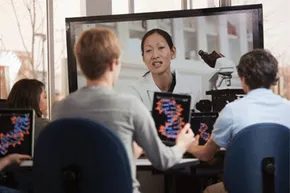
Then there is the hardware. Augmented reality glasses are being pitched as the next big leap. Instead of staring at a flat map, a student sees a 3D model of the Earth hovering over their desk. The glasses act as a dynamic overlay, supplementing physical books with digital layers. Some proposals even suggest these devices could project a live video feed of the teacher directly into the student’s field of view, creating a one-on-one tutorial session for every kid in a room of thirty.
Why Tech Spending Doesn’t Mean Better Scores
But here is the catch. We are pouring billions into ed-tech while student achievement flatlines.
The reality is stark: technology in the classroom has had no real impact on student achievement or test scores. That is not an opinion. It is the consensus emerging from years of data. We bought the computers. We installed the broadband. The grades didn’t budge.
So why are we still chasing the next gadget?
There is a legitimate fear that districts are choosing shiny objects over pedagogical substance. Money that should fund research into how humans actually learn is being diverted to upgrade hardware with little evidence that it works. We risk implementing tools we don’t understand, at the expense of the basics. Reading. Writing. Math. These skills are getting crowded out by screens.
“Having a broad, easily accessible wealth of knowledge might harm the deeper understanding that comes from a careful analytical research process.”
This brings us to the erosion of critical thinking. When answers are a click away, why dig deeper? Students are collecting information faster than they are processing it. The friction that once forced a mind to wrestle with a problem is being removed. We are trading depth for speed.
The Fear of Obsolescence
Underneath all this is a darker anxiety: that teachers will become obsolete.
The classroom is trending toward an entirely automated experience. If an AI can monitor a student’s engagement via facial recognition and deliver personalized instruction via AR glasses, where does the human educator fit in? The worry isn’t just about job security. It’s about the soul of education.
Technology will play a large part in the education system. Whether you like it or not. The question is not if it arrives, but what we sacrifice to make room for it.
We are building a system that measures everything. Breathing. Typing speed. Eye movement. But who is measuring what is being lost?


