


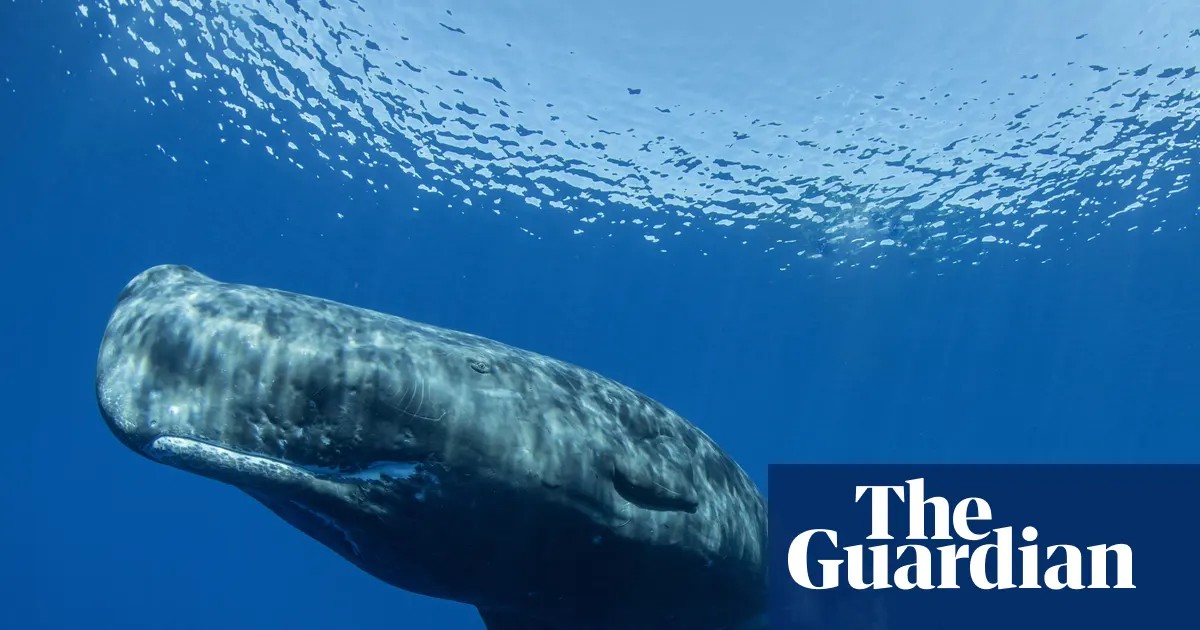
New research has revealed that the vocalizations of sperm whales are far more sophisticated than previously understood, exhibiting structural complexities that closely mirror human speech. By analyzing the rhythmic “clicks” these marine giants use to communicate, scientists have identified patterns that function much like an alphabet and a system of vowels.
Beyond Simple Clicks: The “Phonetic” Discovery
For decades, sperm whale communication was perceived as a simple series of staccato bursts known as codas. However, a new study published in Proceedings B suggests these sounds are not merely repetitive signals, but a highly organized linguistic system.
Using advanced technology to bridge the gaps between individual clicks, researchers discovered that whales manipulate their vocalizations in ways that resemble human phonology:
– Vowel-like variations: Much like humans shift vocal fold positions to transition from an “A” sound to an “E” sound, whales alter the duration and tone of their clicks.
– Tonal shifts: Whales use rising and falling tones to differentiate meanings, a feature found in complex human languages such as Mandarin, Latin, and Slovenian.
– Layered structure: The communication is not just a sequence of sounds but involves multiple interacting layers of structure, suggesting a depth of information transfer previously unrecognized.
The Role of Technology and Project CETI
The breakthrough is largely credited to Project CETI (Cetacean Translation Initiative), an organization dedicated to decoding the language of whales off the coast of Dominica. By applying Artificial Intelligence to massive datasets of underwater recordings, the team is able to see patterns that are invisible to the human ear.
This technological leap is essential because sperm whales are notoriously difficult to study. They spend up to 50 minutes diving deep into the ocean to hunt squid, surfacing only briefly. Interestingly, most “socializing” occurs near the surface, where whales press their heads together to communicate—a behavior researchers describe as a “sophisticated conversation” that requires close proximity.
A Shared Social Complexity
The linguistic findings provide a new lens through which to view the social lives of these animals. The research highlights a striking parallel between human and cetacean cultures:
– Communal Care: Whales engage in collaborative births and “babysit” each other’s calves.
– Generational Knowledge: Experts suggest these whales may have been passing complex information down through generations for over 20 million years.
– Relatable Intelligence: Despite living in a completely different environment—sleeping vertically and floating in a three-dimensional world—their social structures feel remarkably familiar to humans.
“It’s another humbling moment that we’re not the only species with rich, communicative, communal, and cultural lives,” says David Gruber, founder of Project CETI.
The Path to Translation
While we are far from having a “conversation” with a whale, the goal of Project CETI is to move from mere observation to comprehension. The project aims to identify at least 20 distinct vocal expressions related to specific actions—such as sleeping or diving—within the next five years.
Currently, researchers describe our understanding of whale language as being akin to a two-year-old human: we can recognize a few “words,” but the full grammar remains a mystery. However, with continued funding and AI development, the possibility of truly decoding their world is becoming increasingly realistic.
Conclusion: This discovery shifts our understanding of marine life from seeing whales as mere animals to recognizing them as highly intelligent, culturally complex beings with a linguistic depth that rivals our own.


