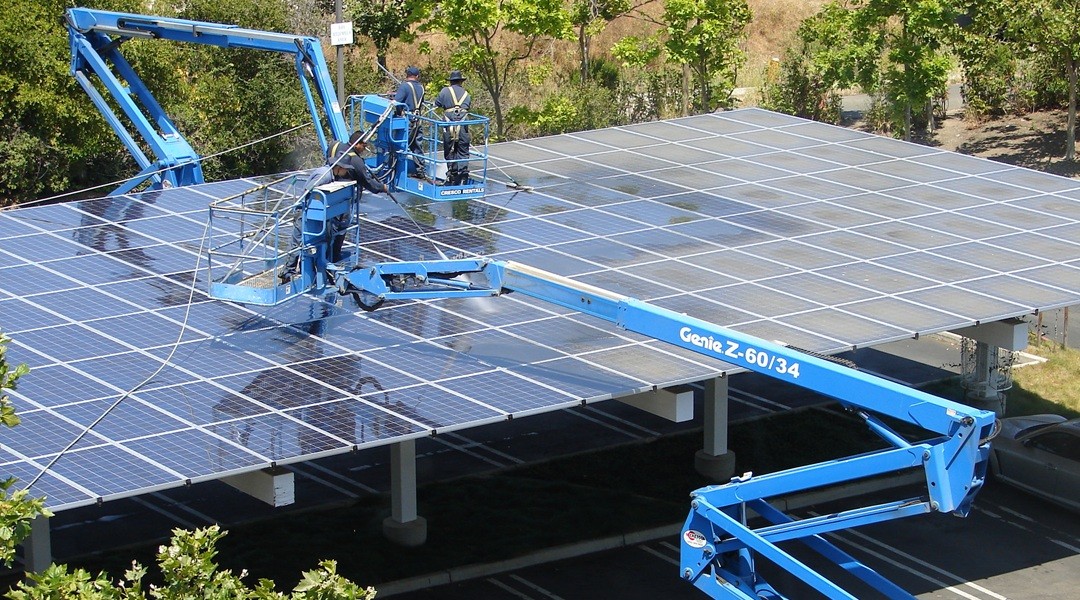
Dust ruins solar efficiency. Simple fact. The bigger problem is the fix. Currently, the industry blasts panels with high-pressure jets. It works. It’s also a waste. Twelve billion gallons a year. Globally. That water goes straight down the drain, taking environmental sanity with it.
Current methods leave the worst grime behind because physics isn’t on their side. Heavy particles cling. Water splashes away. It’s inefficient by design.
So a team from City University of Hong Kong, Imperial College London, and Beijing’s CAS decided to stop shouting and start whispering to the dirt. Led by Professor Steven Wang, they looked at how nature handles cleanup. Butterfly wings. Rain-kissed leaves. They don’t need fire hoses. They use tension. Recoil. Targeted force.
Wang’s team calls it liquid droplet mopping. It sounds gentle. It’s not soft, just precise.
Most people think harder impact means cleaner results. They are wrong. Lo Wai-kin, the PhD student who actually hit panels with sand until her arm probably ached, found the truth. Too much energy and the water just flies off. Surface vibrations shake it loose before it does any work. The sweet spot isn’t maximum force. It’s moderate.
Non-monotonic is the fancy word for that curve. It means the middle path wins.
When droplets hit at that specific, moderate energy level, they coalesce. They drag. They lift. Instead of spraying randomly, the water acts like a tiny mop, sweeping contaminants into a cohesive group before wiping them away.
The results were startling. Up to 99.9% removal efficiency on superhydrophobic coatings. They even handled heavy dust—the nasty stuff six to ten times denser than water. That usually stays put. This method shakes it loose.
Imagine the water bill for the planet. Twelve billion gallons drops to two billion. That is an 80% reduction. For arid regions, places that need the solar power but lack the water to keep the machines clean, this isn’t just convenient. It’s the difference between a viable grid and a parched one.
Professor Wang calls it a simple outcome. High impact, though. It validates a new mechanic for cleaning and forces engineers to rethink their spray nozzles. Why blast when you can pull?
We’ve spent decades trying to conquer nature with volume. Maybe it was always about touch. The water still runs. The panels still shine. But now they do it with a fraction of the cost, leaving more rivers to flow and fewer reservoirs to dry up.