A recent interdisciplinary study has revealed a fascinating biological phenomenon: many bird species have evolved feather structures that act as thermal regulators, allowing them to shed excess heat directly into the cold void of space.
By combining the expertise of biologists and engineers, researchers have uncovered how avian thermodynamics—specifically the way feathers interact with invisible infrared radiation—plays a critical role in survival as global temperatures rise.
The Science of Invisible Heat
While we perceive the world through visible light, much of the energy exchange happening on Earth occurs in the infrared spectrum. This “invisible” radiation is responsible for how organisms absorb heat from the sun and, crucially, how they release it back into the environment.
To understand this process, a team of researchers analyzed museum specimens from five distinct species:
– Great horned owl
– Common raven
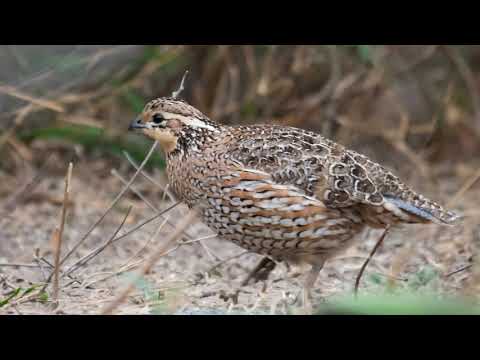
– Northern bobwhite
– Steller’s jay
– Song sparrow
Using a UV-Vis spectrophotometer, the team measured how these feathers react to different wavelengths. This method allowed them to track how much light is absorbed, reflected, or emitted, providing a blueprint of the birds’ thermal management strategies.
Adaptive Strategies: From Forests to Grasslands
The study found that bird physiology is not uniform; instead, it is finely tuned to the specific environments these animals inhabit.
1. Latitude and Climate Adaptation
Birds living in warmer, equatorial regions showed a marked ability to reduce absorptance (the amount of energy they soak up) across ultraviolet and near-infrared wavelengths. This suggests a specialized evolutionary adaptation to prevent overheating in tropical climates.
2. The “Open Sky” Advantage
One of the most striking findings involves birds that live in open habitats, such as the northern bobwhite. Because these grassland birds lack the “ceiling” of a forest canopy, they are constantly exposed to the sky.
“Because space is so cold compared to Earth, heat is being emitted into space,” explains Allison Shultz, curator of ornithology at the Natural History Museum of Los Angeles County.
To manage this, bobwhites exhibited high emittance in mid-infrared radiation, effectively using the open sky as a heat sink to dump thermal energy.
3. The Raven Paradox
The study also uncovered unexpected results regarding the common raven. Despite living in open areas, ravens in warmer climates actually showed higher radiation absorptance. Researchers suggest this may be a functional trade-off: darker plumage absorbs more solar radiation, but it may also keep that heat trapped near the surface of the feathers where it can escape more easily, rather than allowing it to penetrate the bird’s core.
Why This Matters: Biomimicry and Conservation
This research is more than just a study of bird biology; it has significant implications for two major fields:
- Conservation Biology: As climate change shifts thermal landscapes, understanding these evolutionary “safety valves” helps scientists predict which species might struggle to adapt to rising temperatures.
- Thermal Engineering: Engineers are increasingly looking to nature for “passive cooling” solutions. By studying how birds manage heat without active energy expenditure, humans may develop new materials and structures that can cool themselves by venting heat into the atmosphere.
Conclusion
By mastering the balance between camouflage, communication, and thermal regulation, birds have developed sophisticated biological technologies to survive diverse climates. These findings highlight how nature’s optimized designs can provide a roadmap for both protecting wildlife and advancing human engineering.