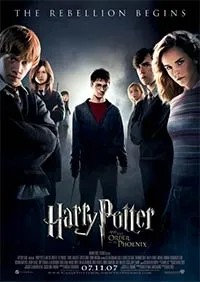
The clock was ticking. The seventh and final book in J.K. Rowling’s saga was just days away from hitting shelves, and the film franchise was trying to keep up. Enter “Harry Potter and the Order of the Phoenix,” the fifth installment and the one that finally forced the movies to grow up. David Yates took the director’s chair, replacing the established rotation with fresh eyes and a screenplay by Michael Goldenberg. The result? A shift in tone that wasn’t just subtle. It was darker. Heavier. Visually spectacular in a way that demanded new creative and technical solutions to get it on screen.
The Weight of Teenage Angst
This isn’t the whimsical adventure we saw in earlier films. Harry, Ron, and Hermione are in a darker place. They are grappling with the undeniable return of Lord Voldemort, a figure who is now less of a myth and more of a tangible threat. But the external danger is only half the problem. Hogwarts has a new head of Defense Against the Dark Arts, and her name is Dolores Umbridge. Played by Imelda Staunton, she is a sadistic martinet who turns education into a bureaucratic nightmare.
Harry is isolated. Accused of lying about Voldemort’s return, he finds himself ostracized by his peers and the Ministry alike. Add in the typical turbulence of adolescence, amplified by a worldview that is rapidly crumbling, and you have a protagonist who is emotionally frayed. It’s not just about spells and wands. It’s about pain.
“It’s the most emotional of the stories,” says veteran producer David Heyman. “The actors have grown, not just age-wise but in the depths of their portrayals. We experience both Harry’s first screen kiss and some of the pain that comes with that. It’s a really moving story full of thrills, adventure, and visual effects and great new characters and creatures. I think we’ve upped the ante on this one.”
A Shift in Tone and Texture
Yates agrees. He describes the film as “more emotional, intense and a bit edgier” than its predecessors. This isn’t a stylistic choice made for marketing. It’s baked into the narrative DNA. The film doesn’t shy away from the “violent and scary” wizard battle that concludes the story. But it also lingers on the quieter, more unsettling moments.
Consider the detention scene. Umbridge doesn’t just punish Harry. She tortures him. Yates notes that the sequence is “quite scary and unsettling. It’s magical but it feels very uncomfortable.” That discomfort is the point. The magic no longer feels like a wonder. It feels like a weapon. Or a trap.
The visual language of the film reflects this shift. The colors are muted. The lighting is harsher. The camera work is less polished, more handheld, more immediate. It’s a deliberate move away from the fairy-tale aesthetic of the early films. You can feel the weight of the world pressing in on Harry. It’s not just about saving the wizarding world anymore. It’s about surviving it.
Why did it take five films for the series to mature? Maybe the audience demanded it. Maybe the source material forced the hand. Whatever the reason, “Order of the Phoenix” stands as a pivot point. It’s the bridge between the
David Yates has gained a reputation as a down-to-earth, award-winning British television personality. He directed State of Play and The Girl in the Café. He had never read a Harry Potter book. He had no experience with special effects. Replacing heavyweights like Chris Columbus, David Newell and Alfonso Cuaron was a risky bet. But the producers weren’t looking for magic tricks. They seek the truth.
“He’s very good at making everything seem very real, and that was very important to us because the world itself is very magical, but this story is about the beginning of a rebellion and we wanted someone who could approach that with a lot of believability and realness,” said producer David Heyman. The fifth chapter marked a change in tone. The students didn’t just learn spells; They organized resistance. The atmosphere had to reflect this tension. Yates brought a documentary realism that suited the darker story.
Heyman also emphasized Yates’ ability to work with talent. “And he’s a great director of actors,” he added. “The kids love him. That’s really important.” The actors were young, often nervous and suddenly thrust into a global franchise. Trust was the currency. Yates won quickly. The director responded to the compliments, calling the opportunity to work with the young ensemble “the greatest joy.” It wasn’t just work. It was a privilege.
Actor and character dynamics
The script for Harry Potter and the Order of the Phoenix demanded more from the actors than previous entries. They were no longer children. They were teenagers struggling with trauma, political disillusionment and first love. Yates told him to find the grit under the cloaks. He didn’t treat them like props. He treated them as the heart of the story.
“The kids love him. That’s really important.”
This dynamic allowed for performances that felt raw. Daniel Radcliffe’s Harry was angrier and more isolated. Emma Watson’s Hermione was sharper and more politically aware. Rupert Grint’s Ron was trying to keep it together. Yates coached them through the emotional toll without the scene losing momentum. He kept the camera close. He let the silence settle. It wasn’t a spell. It was all about the look on their faces before they cast it.
The logistics of rebellion
Depicting a rebellion requires scale. It requires chaos that looks controlled. The Order of the Phoenix scenes required large groups of extras who moved with purpose. They had to look like a secret army, not a crowd waiting for a bus. The logistical challenge was huge. Coordinating the filming of hundreds of people, dozens of stunt performers and complex visual effects in one day is a nightmare.
Yates took a different approach. He focused on the individual in the crowd. By keeping the camera focused on Harry, the chaos around him felt more threatening. The audience experienced confusion. The production design also helped. The scenes in the Ministry of Magic were cramped, industrial and oppressive. The Department of Mysteries was cold, vast and scary. Yates used these environments to isolate the characters. The rebellion wasn’t just a plot point. It was a physical space where they had to fight for survival.
Technical barriers and practical effects
Special effects were not Yates’ forte. But he did
Mr. Yates has been brokering movie deals for years. The script simply didn’t live up to the standards he set for television. That changed when he landed “Harry Potter.” The characters, the world, he was fascinated. He signed a two and a half year contract.
Preparation is everything. He spent for 18 months on the script. By the time the cameras were rolling, he had almost made the movie in his head. The storyboards are very detailed. He imagined every shot. Rehearsed it mentally. Three times over.
“We made this movie before we shot a single frame movie. We prepared it for a really long time.”
This careful preparation paid off. The studio and producers were happy with his process. They gave him room to work. When filming started, there was no micromanaging. Just do it.
But the real test is not the script. It’s the scale. About 1,300 visual effects. That number alone is a logistical nightmare. Yates’ challenge was to make sure the effects worked in the story. It’s not just about looking cool. Served the narrative.
He didn’t try to do it alone. He leaned on his creative team. Tim Burke was in charge of visual effects. Stuart Craig is in charge of production design. John Richardson was in charge of special effects. Nick Dudman was responsible for the creature effects. Together they realized his vision. Without them, the magic wouldn’t work.
The Hall of Prophecy wasn’t just a backdrop. It was a logistical nightmare.
For director David Yates, it was high on the list of complications. The sequence is pure CG, a digital void consisting entirely of green screen footage over several weeks. But time was the enemy. Child actors are subject to strict labor laws. They get four hours. That’s it.
“We had to shoot it very episodically,” Yates explains. “It was quite difficult because of the availability of certain actors.”
John Richardson, who oversaw a team of 35 visual effects artists, had his own headaches. The final battle required blowing up the set, choreographing magic effects and rigging the Ministry of Magic. Then there was a scene in the great hall. The Weasley twins leave Hogwarts for good. They throw magical fireworks. Chaos ensues.
“What makes it complicated is the cooperation with the visual effects department – who does what and where the joints will be.”
Richardson’s team didn’t just react. They pre-prepared. They worked out what Yates wanted before the cameras started rolling. Then they made it happen.
Filmmakers are also fans
The filmmakers have actually read the books.
Producer David Heyman remembers where he was when he read each part. He sees Harry as an everyman. A normal kid with problems at home. In Ron and Hermione, he finds the family he never had. We relate to them. Harry makes magic possible for all of us. We all want to go to Hogwarts.
Yates credits J.K. Rowling to create real characters. They explore emotional issues in a magical, heightened environment. It’s a warm place. There is little not to like.
Heyman, Yates and their colleagues are betting that audiences will feel the same way about “Harry Potter and the Order of the Phoenix.”
The visual effects of the Harry Potter series didn’t just happen. They have evolved. Tim Richardson, who has been in every movie, sees the difference in every frame. Early movies couldn’t do what they do now. Why? Technology developed quickly. Computer processors got faster. This speed allowed for things that were far too risky or complicated in the first or second film.
Take the battle in the Hall of Prophecies. That’s a great example. The bar has been raised. The characters have been computer generated since day one, but the realism is now sharper. According to Richardson, flying on a broomstick looks better in the later films than in the first. It’s not just about adding pixels. It’s about control.
Hydraulic control with code
“We’ve improved all of our mechanics and electronics, and all the equipment we build is now controlled by computers,” Richardson explains.
The old school hydraulics are still there. They are complicated. But now they are controlled by a computer. This creates a better interface between the physical set and the digital world. The real world merges with the CG work. No guessing. When the stunt performer is in the air, the device moves exactly as the digital environment expects. That’s accurate. It’s seamless.
That precision means more images against a blue or green screen. You can’t always build the set. Sometimes you build a screen. If you make someone fly on a broomstick, they will fly in front of a blue screen. Later, the computer transports them to a magical environment. The actor is acting. The computer paints the world around them.
Bigger actors, stronger equipment
The biggest change wasn’t technology. It was the cast.
“When we first developed broomstick flying rigs, they were designed for kids weighing 100 to 120 pounds, and now they’re almost double that weight,” Richardson says.
The actors have grown up. They became heavier. The devices had to catch up. They completely redesigned almost everything. The goal was simple: to ensure that the machines are strong enough. A broken rig in a stunt is not just a delay. It’s a danger. The team made sure the mechanics could handle the extra load. Flying still seems effortless. But the technology behind it is brutal.
Imprisoning Voldemort in water
Richardson’s job is to capture elements that can later be manipulated by visual effects. He prepares the pieces. Digital artists combine them.
In Order of the Phoenix, he shot spell effects in the Room of Requirements. It’s a chaotic space. Spells are flying everywhere. He also created sphere of water. Dumbledore uses it to trap Voldemort for Voldemort. That sphere is not real water. It’s a practical element that was shot on set and then improved upon. Water reacts to light. CG adds to the magic. Together they make the impossible seem real.
Technology is constantly changing. The cast continues to grow. The magic remains the same. But how do we see it? This is constantly changing. What happens if processors get even faster? The line between real and digital is blurring.
Impossible creation: water spheres and shattering glass
Making Voldemort float in a sphere filled with water wasn’t just a visual trick; it required serious mechanical ingenuity. Solution? A hydraulically actuated system built into a modified broomstick frame. The computer could program the movement and let Ralph Fiennes sit on top of the device while the crew took care of the physics. They used Plexiglas spheres two meters in diameter and projected water onto and into them to simulate the appearance of a stormy, floating bubble. It had to look real. It had to hold the actor. It worked.
Then there was the Ministry of Magic. In one particular sequence, the group had to blow out 250 curved glass windows at once. The idea was that Voldemort’s spell would generate enough power to shatter them all at once. There was no room for error. “We’re getting better,” admits Richardson, noting that these complex effects are now mostly achieved the first time. But this scene? It had to work right away. And it did. Relief followed quickly.
Child actors and controlled chaos
Working with minors changes the equation completely. Richardson points out that the effects of fires and explosions require control that adults don’t necessarily need. You have to be 110 percent sure. Nothing can go wrong. The planning is meticulous because safety is non-negotiable.
Still, the young cast surprised everyone. They were ready for anything. Broomstick devices? They hopped on. Being thrown around in water? They handled it. Flamethrowers blasting nearby? They stayed in character. “They were always a lot more professional than you would expect a lot of kids to be,” Richardson said. It’s easy to underestimate their abilities until you see them hold their own as the special effects go off around them.
Grawp and other creatures come to life
The creation of Grawp, the 16-foot-tall half-brother to Hagrid, stands as one of the most intricate challenges on the Harry Potter and the Order of the Phoenix set. David Yates didn’t just want a big puppet; he wanted a believable giant. The team spent an entire year refining the character’s design before rolling camera. It wasn’t a solo effort either. The final result emerged from a tight collaboration between the Creature Effects unit and the Visual Effects department, starting with a single, crucial element: a sculpted head.
The Economics of Practical vs. Digital
Why start with a head? Because building a full 16-foot body was, in the words of Creature Supervisor Nick Dudman, a “nightmare.” Instead of wrestling with a massive mechanical body, the team focused on a full-size head. This approach offered distinct advantages. Real hair could be used, allowing for impossible levels of detail in the eyes, eyebrows, and even visible veins.
“Then the director can decide if he likes it before it’s passed on to the effects house, where it gets expensive. It makes economic sense, and everyone knows what it will look like.”
This workflow saved money while ensuring consistency. By locking in the look early, the studio avoided costly revisions later in the digital pipeline. Dudman, who started as a makeup artist on the very first film and rose to lead his department, has watched the industry shift dramatically. Powerful computers changed the game. Full-scale animatronics and massive practical builds are largely a thing of the past. Now, the process is more digital. They sculpt and paint a reference model, scan it, and hand it off.
From Clay to CGI
The balance of skills in Dudman’s crew has shifted to match this new reality. On Order of the Phoenix, his team of 55 included far fewer engineers and significantly more painters and sculptors. Their job was to bridge the gap between the Art Department’s 2D concept art and the final 3D digital creature.
The process usually begins small. The team creates a range of tabletop models for each creature. These miniatures sit on a table where directors, designers, and effect artists can gather and critique. They argue over details until the complaints stop. Only then do they scale up the model and pass it to the Visual Effects house for the heavy digital lifting.
Handling the Heavy Lifting
Even with this hybrid approach, physical production remained tricky. The Grawp head alone measured 4 feet 6 inches by 3 feet 6 inches. It was described as “heavy but delicate.” Moving it from the workshop to the set required careful planning. The team had to figure out how to winch the massive head into the ceiling rigging without cracking the fragile sculpted surface. It was a delicate operation, balancing the need for practical presence with the fragility of the materials.
The result was a character that felt grounded in physical reality, even when the camera angles leaned into digital enhancement. It wasn’t just about size; it was about making a giant feel like he belonged in the world, down to the last vein in his forehead. One wonders if the animatronics of the early films could have achieved that same level of nuanced expression, or if the digital shift forced a different kind of intimacy. The head alone suggests the latter, a small piece of clay holding the weight of a massive story.
The Thestrals presented a specific visual paradox. They are dark, translucent creatures visible only to those who have witnessed death. Recreating them for the screen required more than just slapping a black texture onto a model. If the creatures were too dark, they vanished into the background. If they were just painted black, they looked flat and dull.
“You can’t just paint the thing black because it will look dull. You’ve got to put a color scheme into it. It can’t be so dark so you can’t see it clearly,” explains VFX supervisor Dudman.
The solution lay in subtlety. The team had to balance the creature’s inherent darkness with a color palette that allowed the audience to actually see the form without losing the eerie, shadowy quality that defines them.
On-Set Interactions with CGI
Actors cannot perform effectively against empty space. Dudman’s team needed to bridge the gap between digital creation and live performance. A simple ball on a stick for eye lines was insufficient for the scale of the production.
For Grawp, the giant character, the solution involved a hybrid approach. A puppeteer in a blue suit operated a rig that lifted him up to 16 feet in the air. This allowed the actor to manipulate Grawp’s massive arms in real time. It wasn’t just about providing a visual reference for the child actors. It served a technical purpose as well. By having a physical presence on set, the crew could accurately gauge the reach of Grawp’s arms during scene blocking. This data was crucial for the subsequent CGI animation.
The Centaur Fur Problem
The centaurs introduced a different set of hurdles. The primary technical challenge was the fur. The design called for a pelt that looked like the gleaming, sweaty coat of a thoroughbred racehorse. Achieving that specific wet, shiny aesthetic through digital means was incredibly difficult.
Before the fur could be finalized, the centaur models went through multiple iterations. The proportions were adjusted continuously based on how the creatures moved. Dudman had to navigate a tightrope. He needed to keep the concept artists happy to preserve the original aesthetic. Simultaneously, he had to satisfy the VFX department’s technical requirements. And above all, he had to meet the expectations of the director and producers. It is a constant negotiation between art and engineering.
Prosthetic Makeup, Organic Props and More
Nick Dudman didn’t just take care of prosthetics. He owned the entire physical transformation of the actors. It meant everything from subtle to weird. Death Eater masks? His department. A potted plant that actually moves? Also his call.
The work varied from complex to character-defining. Take Mad-Eye Moody. Brendan Gleeson wore a large multi-piece silicone suit. The eye was animatronic, radio controlled and kept everyone on their toes. Then there was Voldemort. Ralph Fiennes’ nose was digitally added in post-production, but the rest of the monster was real. The team sculpted prosthetics on his forehead. They shaved off his eyebrows. They covered his visible skin with a network of transferred veins.
These were not random drawings. They were accurate maps. The temporary tattoo system printed them on a computer. Each row was aligned the same way day after day.
Getting into the Dark Lord took four hours. Moody’s makeup was faster, it took two and a half hours. Time is money in film, especially when it comes to union contracts.
“If the actor is well-known, their contract usually dictates the hours,” Dudman explains. “It limits the time for makeup.”
So Dudman had to be smart. He spent the first few days figuring out how to shave hours off the routine. They could have airbrushed Voldemort’s veins every morning. It would have been tedious. Instead, they first airbrushed the veins on the model. The result was photographed. Scanned it to the computer. Map the lines. Printed them as coded temporary tattoos.
Attach the tattoos. Combine them together. Done.
The trick cut two hours out of the daily makeup process. Two hours saved in a day add up quickly on a long shoot. It also saves money.
Nobody would confirm the budget. Rumors hovered around $150 million, although the dollar/pound exchange rate certainly played a role in the tally. David Heyman refuses to cut corners, but he knows how to spend wisely.
“A lot of times the scene gets stronger because you have to analyze it and get it down to its essence,” says Heyman. “Look at the ways you can get more for your money.”
John Richardson backs this up. Sometimes it’s cheaper to pull a prop with wire than to wait weeks for a computer generated version. Practical effects are not always more expensive. Sometimes they are a budget’s best friend.
The workshop at Leavesden Studios was not just a laboratory. It was a kind of museum and attracted visitors. Kids came through on tours. Dudman welcomed them.
“What do you think? Does it look like a Thestral to you?” he would ask.
It’s a strange idea to bringing in people who know nothing about the process. But they see it with fresh eyes. The team is so engrossed in the details that they might miss something basic. A child’s honest reaction cuts through the noise.
The on-site workshop also helped. Director David Yates might visit three or four times a week. Look at the designs. Change what needed to be changed. Show it back to him. It was an evolutionary process. Constant checking. Constant being checked.
The look of the films was not only looking scary. It was about building a world that felt tangible, even if the veins were printed on skin.
Adapting a popular book series into a major movie series is a minefield. The brief is simple but overwhelming: Don’t let your fans down. The stakes are highest in “Harry Potter and the Order of the Phoenix,” where the gap between the source material and the screen seems especially wide. Director David Yates admits with brutal honesty that the task is impossible. “It would be impossible to include everything,” he says. “It would be an eight-hour movie.” The goal is not replication; it’s a translation. You keep the spirit. You salvage the favorite details. But you’re using a medium that follows a completely different rhythm than a novel.
Perspective problem
The cut is the first casualty of adaptation. David Heyman points out that the films are anchored by Harry’s point of view. This narrative limitation means that scenes involving Hermione or Ron often fall short if they don’t serve Harry’s immediate story. The loss of parts is real. Some character moments are completely lost. But the team insists that capturing the soul of the books is more important than preserving every page. If the emotional truth remains, the cuts are justified.
Veterans like Nick Dudman know that this is a battle that cannot be won. The man who created Yoda in Star Wars learned that certain fans have a rigid, black-and-white view of how things should look. You can’t please everyone. The only defense is to respect the essence of the text and ensure that every visual choice is consistent with the artistic direction of the project. Obsession doesn’t care about your artistic integrity.
Rowling’s Hands-Off Approval
Then there’s J.K. Rowling. The author made herself available and provided a level of security that few franchises enjoy. Yates describes her as “wonderfully supportive”. She read multiple script drafts. She was positive every step of the way. Her feedback was listened to carefully, but never followed blindly. Her notes were suggestions, not commands. She remained hands-off, even after visiting the set a few times. The crew showed her edited sequences. She was kind. She was complimentary. This approval didn’t change the film’s shape of the film, but it removed the fear of betrayal.
Beyond the Visual Effects
The world of Order of the Phoenix feels denser, darker and more alive. New faces such as Dolores Umbridge and Luna Lovegood (played by Evanna Lynch) join the core trio: Harry, Ron and Hermione. The wizarding faculty is expanded. The visual effects are more complex. But Heyman insists the spectacle isn’t the driving force. The characters are. The scenes that resonate are the quiet ones between Harry and Sirius Black. The magic isn’t in the explosions. It’s in relationships.
For director David Yates, the film’s emotional backbone isn’t spells or fights, but rather the quiet moments of awkward teenage romance. It was right after Harry kissed Cho Chang. When his friends asked him to describe the experience, he sat with Hermione and Ron looking very depressed. Yates says he likes this intimate pace, but admits it’s immediately followed by a giant wizard duel. He loved the duality of the series and its combination of great scene-driven action and small personal character moments. The upcoming IMAX 3-D re-release brings this epic battle to full 3D depth, bringing the chaos even closer to the audience.
Meanwhile, Richardson mentioned the Weasley family’s fireworks display. Although it’s a fleeting scene that lasts only a minute or two on screen, it required weeks of rigorous testing, preparation and filming. The set was technically complex and required precise coordination to make the chaotic explosion feel magical and safe to the actors.
ダッドマンスタジオの内部
ジョン・ダドマンのスタジオは映画史の墓場であり、数十年にわたる映画製作の思い出の品でいっぱいです。 スーパーマン II のミニチュア スーパーマンは、フィフス エレメントの モンドシャワン ウォリアー ロボットと棚のスペースを共有しています。 ダドマンがティム・バートン監督のバットマンのジャック・ニコルソンのメイクをしているときに作ったジョーカーの像があります。 これらの遺物は、ヒポグリフやポッターの世界で生まれた他の生き物と共存しています。
ダドマンは、シリーズが1本の映画を超えるとは予想していなかった、と認めた。 彼はこの映画に参加できることに興奮しており、7 番目で最後の映画に貢献したいと考えています。 彼には正式な契約はありません。 仕事は非公式で、毎回監督に戻ってきてもらうように頼らなければなりません。 彼が決勝に進出できるという保証はない。 もし第7弾が新しい監督によって指揮される場合、完全に別の人を起用することを選択するかもしれない。
混血王子及其他
Preparing for Half-Blood Prince
The production of Harry Potter and the Half-Blood Prince is already underway, but the script is still in progress. Producer David Heyman and special effects supervisor Tim Burton colleague Richardson (note: correction, the text reads Richardson, probably Stuart Craig or something similar, but let’s stick with the source text “Richardson”) manage the difficult process of deciding what to keep and what to cut. The sixth part is heavily based on a combination of practical stunts and digital visual effects.
Richardson sees the climax as a key technical hurdle. In particular, the sequence where Dumbledore and Harry enter the underground cave presents significant logistical challenges. Heyman agrees, citing this scene and the subsequent fight at Hogwarts as the main pain points. This film takes on a slightly lighter, comedic tone and delves deeper into the origins of the villain.
Casting Young Tom Riddle
One of the most difficult parts of Half-Blood Prince is portraying a younger version of Lord Voldemort. Heyman admits that finding the right actor to portray the character at such a formative age is not easy. Meanwhile, props master Stuart Dudman (referred to as Dudman) prepares for unusual demands, including the creation of a giant dead spider.
Filming is scheduled to begin in September. The schedule is tighter than the previous installment, “Harry Potter and the Order of the Phoenix,” which was shot over a longer period of time. David Yates returns to direct and notes that his knowledge of the wizarding world makes the workflow smoother, even though the production time is a year shorter. The film is scheduled for release November 2008 and the final chapter Harry Potter and the Deathly Hallows is scheduled for release in 2010.
The end of an era
By the end of the saga, the core team has spent more than a decade together. For Heyman, the end of the franchise means the loss of a tight-knit community that acts as a family. He reflects on the privilege of watching young actors – Daniel Radcliffe, Rupert Grint and Emma Watson – grow from pre-teens to adulthood.
“I’m incredibly sad when it’s over… I watched Dan and Rupert and Emma and the other kids grow up since they were 10 or 11 and it was amazing to see,” says Heyman. “I feel blessed. But I’m looking forward to filling the void with other things.”
Moving On
Heyman is already diversifying his portfolio. He produced Will Smith’s vampire horror film I Am Legend, released in December 2007, and is currently working on The Boy in the Striped Pajamas. The film explores the complicated relationship between the son of a Nazi concentration camp commandant and a Jewish boy who lives on the other side of the fence.
For Richardson, the long run of “Harry Potter” provided rare stability in an industry known for its volatility. He compares the experience to a “proper job”. A veteran of major franchises such as James Bond, Aliens and Rollerball, Richardson followed his father into the special effects industry, working on classics such as “Lawrence of Arabia” while still in school. Now his son works alongside him in the Potter movies. As the series draws to a close, Richardson hopes this experience will give him the freedom to choose his next projects more selectively.
Why Pigs Might Fly’s Nick Dudman loves creating fake blood
After years of bringing the wizarding world to life, Nick Dudman admits he’s ready for a change. Working on the Harry Potter series is more than just a job. This is a community. He will miss the relationships he built and the physical space of his studio. However, they feel relief when they are away from their familiar surroundings.
“I can also tackle something completely different,” Dudman said. He is eyeing a musical. Or maybe it’s a project that needs to be shot entirely outside the UK. He even mentions a genre that is far removed from Hogwarts: something with an awful lot of blood in it.
This passion for gore is no accident. This is directly related to his side job, but not many people know about it. Dudman manufactures theatrical blood that doesn’t stain. It sounds like a simple product, but the chemistry behind it is special. There are several older formulations of phase blood that have been used for decades. Most Sources traces.
Dudman and his team changed the traditional formula. Removes certain substances that cause permanent discoloration. The result is a liquid that looks real on camera, but washes away quickly. Demand is growing rapidly. Requested by a friend. Then professionals asked for it. So, they scaled up production.
The name of his company Pigs Might Fly reflects the dichotomy of his work. It pays homage to the fantasy element of his profession that makes the impossible possible. But it also keeps a sense of silliness intact. That humor is essential in this industry.
“We laugh and say we get paid for this.”
It’s a reminder that while screen magic is serious business, the process behind it is often full of absurdity and joy. For Dudman, leaving the Potter world meant replacing his wand with a knife, or at least a fake knife that left no trace.
Related Articles on Magic and Movies
- 隐形衣的工作原理
- 蛇是如何工作的
- 巫术如何运作
- 命理如何运作
- 工业光魔如何运作
- 纳尼亚传奇如何运作
- 哈利波特测验
More Great Links
- Harry Potter, Official Website
- JK Rowling, Official Website
- Harry Potter and the Order of the Phoenix
- The Harry Potter Dictionary
- Harry Potter Companions
Sources
- Personal interview with David Yates, May 14, 2007
- Personal interview with John Richardson, May 25, 2007
- Personal interview with David Heyman, June 13, 2007
-Personal interview with Nick Dudman, June 25, 2007