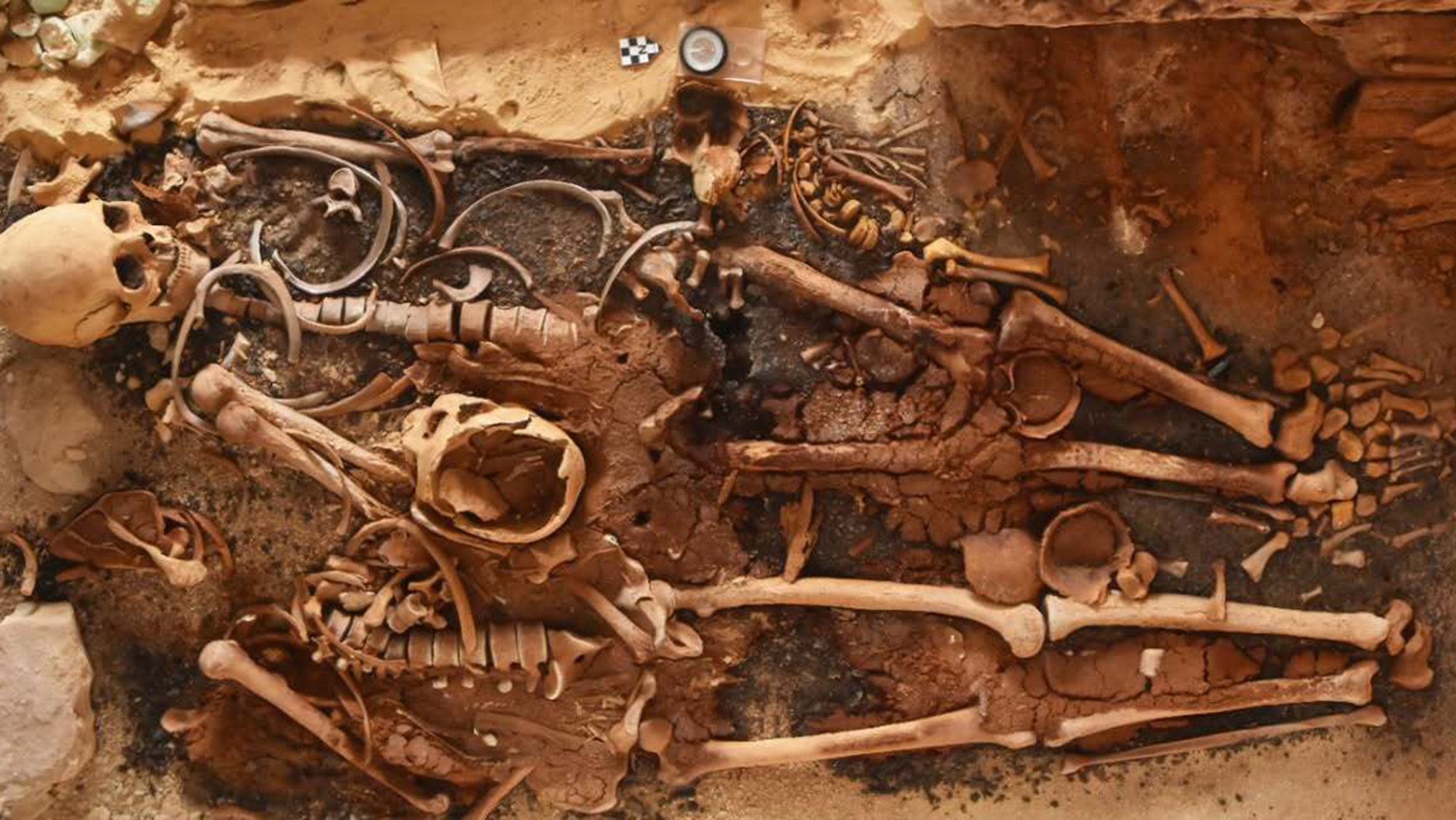
Archaeologists found eighteen tombs.
They sit along the Mediterranean coast near Marina el-Alamein. About sixty miles west of Alexandria. The Egyptian Ministry of Tourism and Antiquies confirmed the date range: Ptolemaic to Roman. Think 322 B.C. down to 495 A.D. That covers the end of Alexander’s generals and the start of Roman provincial rule. Cleopatra died in the gap between these worlds.
The ground told a mixed story.
Eleven tombs were carved deep into the earth. Seven sat closer to the surface. Inside, the artifacts speak. Mostly quiet. Then the tongues hit you. Twenty-four gold ones. They likely rested in the mouths of mummies. There was also an altar with a base looking like a false door.
False doors are old news in Egyptian funeral rites.
They represent a portal. Between living and dead. The spirit crosses it to take offerings from family members still breathing. Hesham Hussein from the ministry sees the altar design as a sign of lasting power. The symbolic weight remained even if the architecture shifted.
Why put gold in a dead person’s mouth?
Gold is the flesh of gods. The ancients believed in this. They wanted their dead to talk to the divine after death. Specifically during the judgment by Osiris. Or just to recite sacred texts. It’s a well-documented feature. This batch adds to the list.
One tongue looked different.
It resembled the Eye of Horus. A falcon-headed god linked to the sky. Usually an amulet to ward off evil. Not just a tool for speech.
But experts push back.
Attilio Mastrocinique isn’t part of this dig. He retired from teaching in Italy. He looked at the ministry’s photos and squinted. Is that tongue really gold? One looks suspiciously like a wheat ear. Wheat means fertility. Popular image in the Roman world. He notes it looks similar to silver ears found in European shrines.
Then there’s the altar again.
False doors are common near offerings. So linking them seems logical. But Krzysztof Jakubiak from the University of Warsaw wants caution. He worked in this area before. He thinks we might be jumping to conclusions.
The altar might not be finished. The resemblance could be accidental. Or maybe it isn’t a door at all. Hala Mostafa suggests it depicts a hieroglyph. The sign for “offering.” Simple as that.
Bigger finds exist.
One tomb held a granite coffin. It stood 2.5 meters tall. The lid was still sealed when they found it. Skeletal rests inside. They’re being checked now.
Outside the coffin sat a statue. Aphrodite.
She’s Greek. Love and beauty. During the Ptolemaic era Greek culture bled into Egypt. It wasn’t just trade. It was life. Mastrocinique asks where she was standing. Was there a cult site nearby? A shrine? He wants context. A statue alone tells you what was valued. The placement tells you who was watching.
Dorota Dzierzbicka runs the Polish mission here.
She sees the blending. Egyptian tradition meeting Greco-Roman daily life. They coexisted. The finds prove it. All discovered by Egyptian teams working on site.
So what does it mean?
It’s another layer in a place already buried deep.
We keep digging. We find objects. We guess at intentions. Sometimes a wheat ear looks like a tongue. Sometimes a door is just a sign. The dead stay silent. The artifacts don’t.