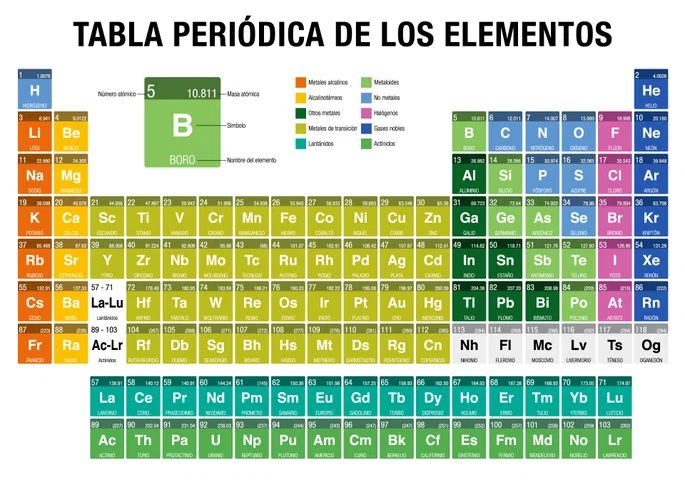
The periodic table is not just a chart. It is the master map of chemistry. This organized registry of chemical elements arranges matter by atomic number, properties, and characteristics. Scientists use it to decode the building blocks of the universe.
The current standard includes 118 confirmed elements. The International Union of Pure and Applied Chemistry (IUPAC) validates this list. But not all these elements are found in nature.
Here is the breakdown of what makes up our chemical world:
- 94 elements exist naturally. They are the stuff of stars, planets, and life.
- 24 elements are synthetic. Humans created them artificially in labs.
Why the Periodic Table Matters
This tool is fundamental for studying chemistry. It allows researchers to spot patterns. You can see differences and similarities between elements at a glance.
The logic behind the table relies on atomic mass and periodic properties. These relationships helped shape the modern version of the chart. Without this structure, chemistry would be a chaotic list of facts. Instead, it is a coherent system.
Mendeleev’s 1869 Breakthrough
We owe the periodic table’s creation to Dmitri Mendeleev. In 1869, this Russian scientist arranged elements by their properties. He noticed trends. His arrangement allowed him to predict elements that had not yet been discovered.
Since then, the table has evolved. New elements are discovered or synthesized. Each update refines our understanding of matter. The chart we use today is a living document. It grows as science advances.
Beyond the Basics
The distinction between natural and synthetic elements is crucial. Natural elements have been here since the earth formed. Synthetic ones often do not exist outside of high-energy experiments. They help us test the limits of nuclear stability.
Why does this matter for real life? The periodic table dictates how materials behave. It guides the development of new medicines, electronics, and energy sources. Understanding these elements helps us solve practical problems.
The chart is more than ink on paper. It is a reflection of how the universe is structured. Every element has a place. Every property tells a story about atomic structure.
How we organize these building blocks changes how we interact with the world. From smartphones to life-saving drugs, the periodic table is behind the scenes. It sets the rules for matter.
And we are still writing the next chapters. New discoveries keep pushing the boundaries. The story of the periodic table is far from over.
Think of the periodic table not as a static chart, but as a dynamic map of matter. Every element has a specific address based on how its atoms behave. They aren’t just sitting there. They are grouped. Perioded. Categorized by their electron configurations and chemical habits. It’s a system built on patterns.
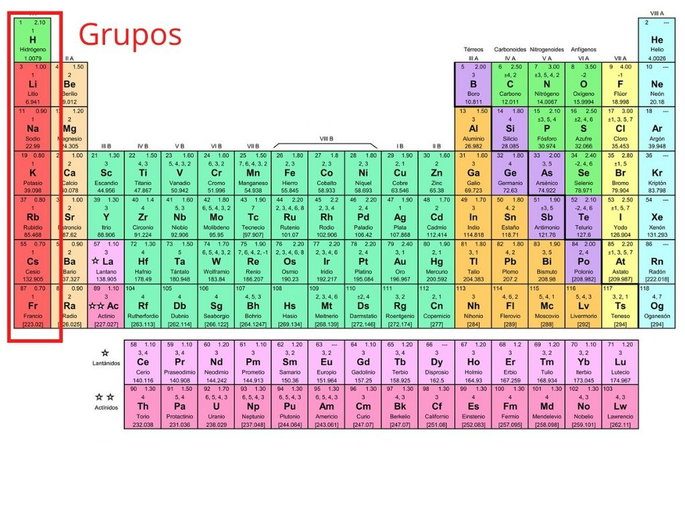
Groups in the periodic table
Groups are the vertical columns. There are 18 of them. Elements in the same group share similar chemical properties because they have the same number of valence electrons. This is the key. It’s why alkali metals act alike. It’s why noble gases resist reacting.
Take Group 1. The alkali metals. Lithium. Sodium. Potassium. They all have one electron in their outer shell. That single electron is eager to leave. They react violently with water. They are never found pure in nature. You have to isolate them.
Then look at Group 17. The halogens. Fluorine. Chlorine. Bromine. They need one electron to complete their shell. They are aggressive oxidizers. They steal electrons. They form salts with metals. Sodium chloride is the classic example. Table salt. You use it every day. But the reactivity changes as you go down the group. Fluorine is the most reactive non-metal. Iodine is much milder. The size of the atom matters. The electron shielding matters.
Group 18 is different. The noble gases. Helium. Neon. Argon. Their shells are full. They don’t want to gain. They don’t want to lose. They sit on the sidelines. For a long time, scientists thought they were completely inert. Unreactive. But we’ve proven that wrong. Under extreme pressure or with the right catalysts, they can be forced to bond. Krypton difluoride was synthesized in the 1960s. It shattered the dogma.
Why does this grouping matter? It predicts behavior. If you know where an element sits, you can guess how it will react. You don’t need to run every experiment from scratch. The table does the heavy lifting. It’s a predictive tool. A shorthand for chemistry.
But groups are only half the story. You also need to look at the horizontal rows. The periods.
Períodos en la tabla periódica
If groups are the vertical columns defining chemical personality, periods are the horizontal rows. They tell a different story. A story about size, energy, and the shell structure of the atom.
While groups share traits, periods reveal how elements change as you move across the table. There are seven periods in total. Each period corresponds to a new principal energy level—or electron shell—being filled.
When you move from left to right across a period, something consistent happens. The number of protons in the nucleus increases. So does the number of electrons. But these electrons don’t just pile up anywhere. They fill the same outer shell.
This creates a subtle but massive shift in behavior.
How electron shells define a period
The key is the valence shell. The outermost layer of electrons.
In Period 1, only the first shell is filled. Hydrogen has one electron. Helium has two. That shell is full. The period ends.
Period 2 starts with lithium. It adds a third proton and a new electron shell. This shell can hold up to eight electrons. As you move across to neon, each step adds one proton and one electron to that second shell.
This progression explains why elements in the same period don’t share the same chemistry, unlike those in a group. In a group, the outer shell configuration is identical. In a period, it changes with every step.
Think of it this way:
- Group 1 (Alkali metals): One valence electron. Highly reactive.
- Group 2 (Alkaline earth metals): Two valence electrons. Reactive, but less so than alkali.
- Groups 3-12 (Transition metals): Filling inner d-orbitals. Valence electrons remain relatively stable.
- Group 17 (Halogens): Seven valence electrons. Desperate to gain one more.
- Group 18 (Noble gases): Full valence shell. Stable. Inert.
This progression isn’t just theoretical. It dictates reactivity. It determines bonding. It explains why carbon (Group 14) can form four bonds, while oxygen (Group 16) typically forms two.
Atomic radius and ionization energy
As you traverse a period from left to right, atomic radius shrinks. Why? More protons pull the same number of electron shells tighter. The nucleus wins the tug-of-war.
Conversely, ionization energy rises. It takes more energy to remove an electron because that electron is held more tightly by the increasingly positive nucleus.
This trend is predictable. It’s consistent. It’s the rhythm of the periodic table.
The lanthanides and actinides: The exception
Not all periods follow this simple pattern. Periods 6 and 7 are where the table gets crowded.
To keep the table from stretching too wide, two rows of elements are pulled out. The lanthanides (Period 6) and actinides (Period 7).
These elements fill f-orbitals. Their chemistry is similar. Their differences are subtle. Placing them inline would break the visual logic of the periods. So they sit below, separate but integral.
This separation highlights a limitation of the table. It’s a 2D representation
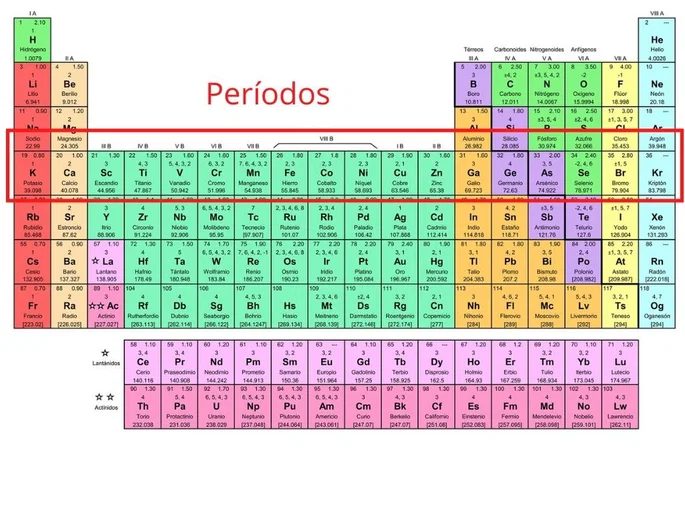
The rows in the periodic table are called periods. There are seven of them. Each row groups elements by their electron shell count. The period number matches the number of shells an atom has.
Hydrogen and helium sit in the first row. They have one electron shell. Move to the second period. Eight elements there. All possess two shells. The third row follows suit with three shells. This pattern holds true as you go down.
Period six contains elements with six shells. It also includes the bottom row of the lanthanides. Period seven goes higher. Seven shells. And the actinide row sits there too.
How to Identify Metals, Metalloids, and Nonmetals
Chemists split the table into three main categories. This split relies on physical and chemical properties. You have metals. Metalloids. And nonmetals.
Metals dominate the left side. They are solid at room temperature. Mercury is the exception. It remains liquid. Metals conduct heat and electricity well. They are also malleable. You can beat them into sheets. You can draw them into wires.
Nonmetals hang out on the right. Most are gases. A few are liquids. They resist electricity. They are poor conductors compared to their metallic counterparts.
Metalloids sit in the middle. Specifically between metals and nonmetals on the right side. These are semimetals. They borrow traits from both sides. Some are shiny. Others look opaque. They lack the ductility of pure metals. Their electrical conductivity falls in the middle ground. It is higher than nonmetals but lower than metals.
Periodic Table Blocks Explained
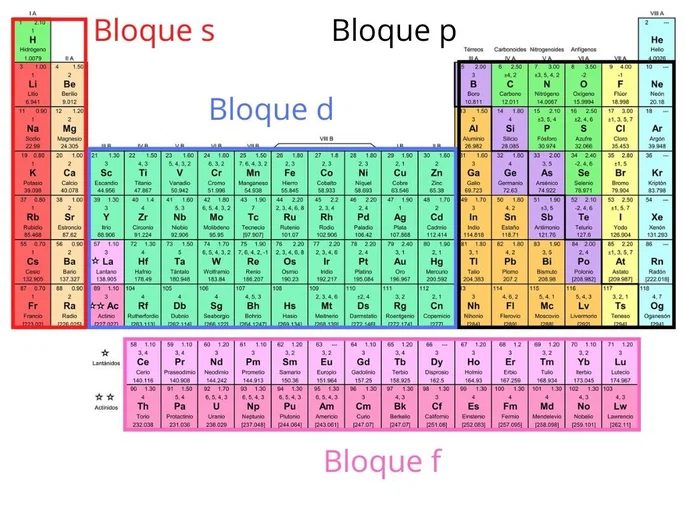
The periodic table is more than just a grid of symbols. It is a map of electron behavior, sliced into four distinct sections based on where an element’s outermost electron settles in. This isn’t arbitrary categorization. It defines how atoms interact. Each block takes its name from the atomic orbital holding that final electron.
The s-block grabs groups 1 and 2. You have your alkali metals and alkaline earth metals here. Hydrogen hangs out at the top, playing both sides. Helio sits in group 18 but belongs here, defying the noble gas trend with its filled first shell.
The p-block covers the right side of the table, groups 13 through 18. This is where most nonmetals live. Metalloids are sprinkled in along the “staircase” line, acting as the boundary between metallic and non-metallic behavior.
The d-block houses the transition metals. Groups 3 through 12. These elements are all about variable oxidation states and colored compounds. They are the structural backbone of industrial chemistry.
The f-block is the oddball. It has no group numbers. These are the lanthanides and actinides. Because they don’t fit neatly into the main grid, they are pulled out and placed below the table to keep the layout clean.
Tendencias de la tabla periódica
Why do elements behave differently as you move across the table? It comes down to trends. These patterns predict everything from atomic size to reactivity.
Atomic Radius shrinks as you move left to right. Why? Protons are added to the nucleus, pulling the electron cloud tighter. The shell stays the same, but the grip gets stronger. Going down a group, however, atoms get bigger. New electron shells are added. The distance between the nucleus and the outer electrons increases.
Ionization Energy is the energy needed to strip an electron away. It climbs as you go up and to the right. Small atoms hold their electrons tightly. Large atoms, like cesium, let them go easily. This is why alkali metals explode in water. They give up that outer electron without hesitation.
Electronegativity measures how badly an atom wants another electron. Fluorine sits at the top right, screaming for electrons. It is the most electronegative element. Metals on the left side have low electronegativity. They prefer to lose electrons rather than gain them.
These trends aren’t just academic exercises. They explain why sodium explodes in water while gold sits quietly at the bottom of the ocean. They determine how batteries store energy. They dictate how drugs interact with proteins in your body.
The periodic table is a predictive tool. If you know where an element sits, you can guess its behavior. You don’t need a lab to see the patterns. They are built into the structure of matter itself.
But what happens when the trends break? When relativistic effects kick in for superheavy elements? The rules start to blur. The map becomes more complex. And that is where the real science begins.
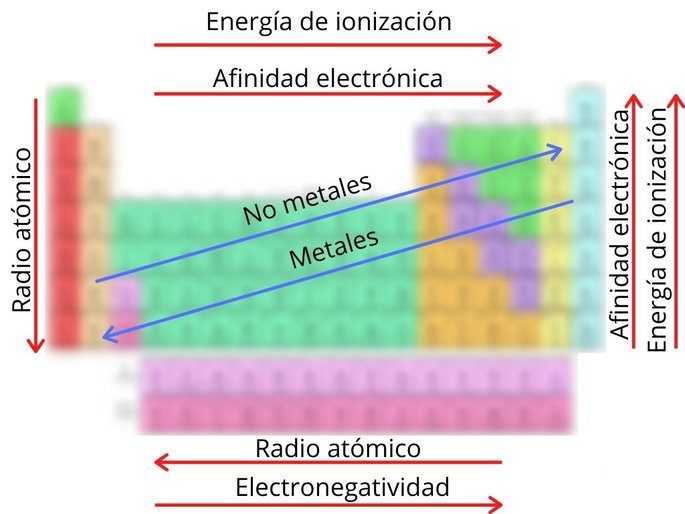
We tend to look at the periodic table as a static grid. A checklist of facts. It’s actually a map of forces. These forces dictate how atoms interact, bond, and react. The patterns aren’t random. They stem directly from atomic structure. Specifically, how protons pull on electrons.
Understanding these trends explains why sodium explodes in water while gold sits quietly on a shelf. It’s not magic. It’s geometry and charge.
Atomic Radius and Size
Atomic radius is simply the distance from the nucleus to the outermost electron shell. It defines how big an atom appears in a chemical reaction.
This size changes predictably.
- Moving right across a period, atoms shrink. The nucleus gains protons. The pull on electrons strengthens. The cloud contracts.
- Moving down a group, atoms grow. New electron shells are added. They sit further from the core.
So, fluorine is tiny. Francium is massive.
Electron Affinity and Energy
Electron affinity measures the energy released when an atom accepts an extra electron. Some atoms love electrons. They want them badly. Others don’t care much.
The trend runs diagonally in a way.
- Across a period (left to right), affinity generally increases. The nucleus is more positive. It attracts negative charges more effectively.
- Up a group, affinity increases. Smaller atoms hold added electrons tighter. The energy release is greater.
Chlorine has a higher affinity than iodine. It grabs that electron faster and with more force.
Valence Electrons and Group Identity
Valence electrons are the ones in the outermost shell. They are the ones that matter for bonding. Core electrons stay put. Valence electrons do the work.
Their count determines chemical personality.
- In any given group, elements share the same number of valence electrons. That’s why lithium, sodium, and potassium behave similarly.
- Across a period, the count increases one by one. From one in Group 1 to eight in Group 18 (except helium).
This is why the table is grouped. The vertical columns are families of chemical behavior.
Ionization Energy
Ionization energy is the cost to remove an electron. It’s not free. You have to pay energy to overcome the nucleus’s hold.
High ionization energy means the atom is stubborn. It holds on tight. Low ionization energy means it’s easy to strip an electron away.
- Across a period, energy increases. The nucleus pulls harder. The atom shrinks. It’s harder to pull something out.
- Down a group, energy decreases. The outer electrons are further away. They are shielded by inner shells. Easier to remove.
Fluorine resists losing electrons. Sodium gives one up almost instantly.
Electronegativity and Non-Metals
Electronegativity is the tendency to attract shared electrons in a bond. It’s the tug-of-war power of an atom.
Fluorine wins. It’s the most electronegative element. It drags electrons toward itself with immense force.
- Increases from left to right.
- Increases from bottom to top.
This explains why non-metallic character peaks in the upper right corner. These elements want electrons. They steal them or share them on their terms.
Why Your Chemistry Cheat Sheet Actually Matters
You might remember the Periodic Table as a colorful wall chart from high school, but it is far more than decoration. It is a map. And knowing how to read it changes how you understand everything from the air you breathe to the phone in your hand.
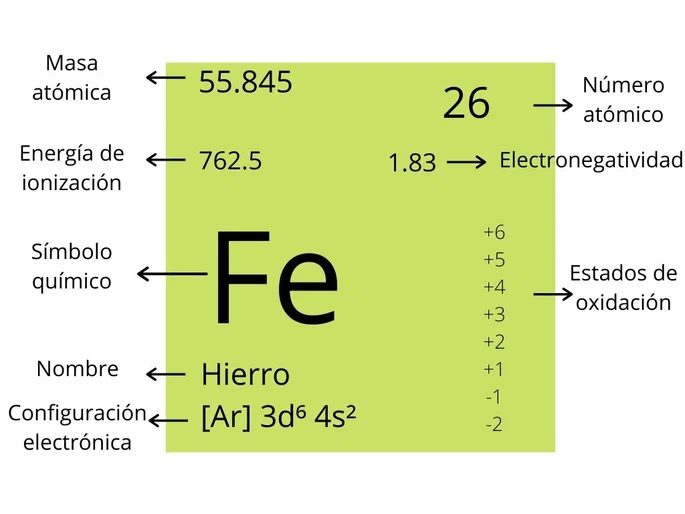
Let’s strip away the jargon for a second. When scientists talk about an element’s atomic mass, they aren’t just giving you a random number. They are talking about the combined weight of the protons and neutrons in the nucleus. It’s the bulk of the atom. Then you have ionization energy. This is the price tag for pulling an electron away. High price? The atom holds on tight. Low price? It’s ready to bond.
And those little chemical symbols? They are just shorthand. H for hydrogen. O for oxygen. But the real story is in the electron configuration. This is the blueprint. It tells you how electrons are arranged in shells around the nucleus. Because electrons do the work. They form bonds. They create reactions.
How Atomic Structure Dictates Behavior
The atomic number is the anchor. It’s the count of protons. Change the protons, and you change the element entirely. Helium is two. Lithium is three. Simple. But what makes elements act the way they do?
Look at electronegativity. This is the atom’s greed for electrons. Fluorine is the most greedy. It yanks electrons toward itself with violent enthusiasm. Cesium? It barely holds onto its own. This tug-of-war is why water is wet and why iron rusts.
Then there are oxidation states. Think of this as the atom’s social score when it’s part of a compound. Is it giving up electrons or hoarding them? This status tells chemists how stable a molecule will be. It predicts whether a reaction will explode or fizz gently.
These aren’t just abstract concepts. They are the rules of engagement for matter.
Reading the Trends, Not Just the Rows
So, why do we still use the table? Because it allows you to predict behavior without running a single experiment.
If you know an element’s position, you know its electronegativity. You know its atomic mass. You know how it likely to bond. The table groups elements by similarity. The column on the far right? Noble gases. They don’t want to bond. They are happy alone. The column on the far left? Alkali metals. They are desperate to lose an electron. They are dangerous in water.
This structure lets scientists predict the properties of new elements. When we synthesized Tennessine (element 117), we didn’t guess blindly. We looked at what came before it. We knew where it sat in the electron configuration. We predicted its behavior based on its neighbors. It worked.
“The table is not just a list. It is a logical framework that reveals the underlying order of the universe.”
It also bridges disciplines. Biologists need it to understand why calcium strengthens bones. Engineers need it to build better batteries. The number of protons defines the identity, but the number of electrons defines the interaction.
The Human Backstory Behind the Grid
We didn’t just stumble upon this order. It took decades of messy, brilliant work.
Dmitri Mendeleev, a Russian chemist, is the name most people know. In 1869, he arranged the 63 known elements by increasing atomic mass. He noticed patterns. Periodic patterns. When the properties repeated, he started a new row.
But Mendeleev was bold. He left gaps. Big gaps. He predicted that elements existed that no one had found yet. He predicted their properties with startling accuracy. He said there would be an element like aluminum but heavier. He called it eka-aluminum. It showed up later as Gallium. His prediction held.
Julius Lothar Meyer, a German chemist, was working on a similar idea around the same time. He focused more on physical properties like volume. But Mendeleev’s chemical predictions gave his version the edge.
The table evolved. It wasn’t finished. The structure we use today owes a lot to Alfred Werner, a Swiss scientist who helped clarify how atoms bond in three dimensions. But the final major shift? That came much later.
Glenn Seaborg, an American Nobel laureate, reorganized the bottom of the table. He moved the actinides below the lanthanides. Before him, the periodic table was cramped and awkward at the bottom. Seaborg’s adjustment cleaned it up. It made the periodic law visible in a way it hadn’t been before.