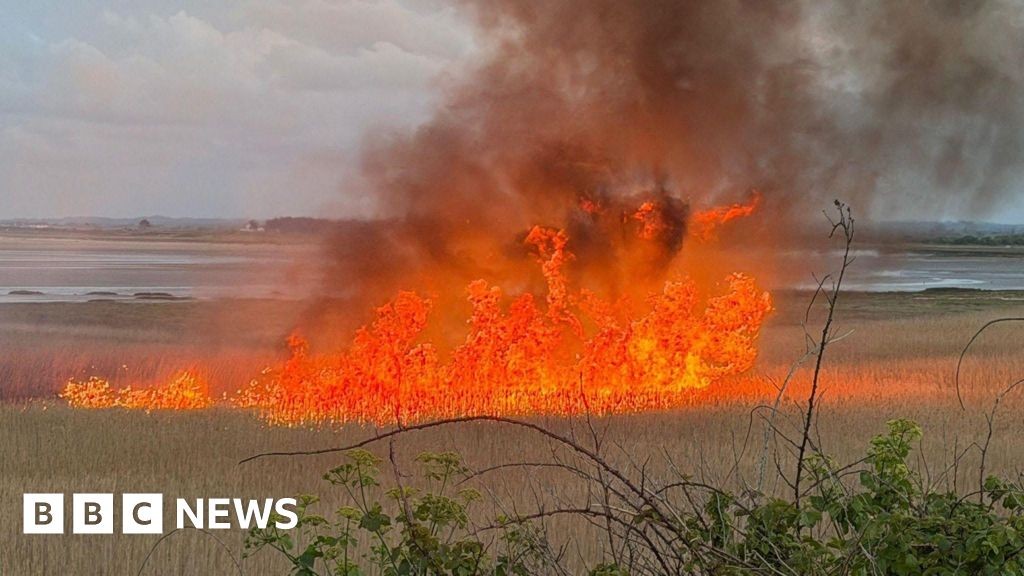
A significant fire has swept through a portion of the Pegwell Bay Site of Special Scientific Interest (SSSI) in Ramsgate, Kent, leaving a lasting scar on a vital ecological habitat. Local authorities have confirmed that the blaze is being treated as a deliberate act of arson.
The Incident and Immediate Impact
The fire broke out on Sunday evening around 8:30 PM BST. According to Kent Police, the incident began with reports of bins being set alight in the Cliffsend area, specifically affecting Pegwell Bay Nature and Chapmans Fields.
While the Kent Fire & Rescue Service (KFRS) managed to extinguish the flames and prevent further spread, the environmental toll is significant. Local environmentalist Nik Mitchell reported that the blaze left a 300-meter (984ft) scar across the landscape, destroying a large section of the reed beds.
Ecological Consequences
The timing of the fire is particularly damaging for the local ecosystem. Because the blaze occurred during the nesting season, there is a high probability that many birds lost their nests and offspring.
The loss of this specific habitat is critical for several reasons:
– Irreplaceable Habitat: The saltmarsh at Pegwell Bay supports rare species that cannot easily migrate or relocate.
– Ecosystem Stability: These reed beds are essential for the functioning of the wider coastal ecosystem.
– Recovery Risks: There are growing concerns that if the damaged area is used as a makeshift footpath by pedestrians, the delicate reed beds will be unable to regrow.
A Growing Trend of Disturbance
This incident is not being viewed as an isolated event, but rather as part of a troubling trend of antisocial behavior affecting protected wildlife areas in Kent.
The Kent Wildlife Trust has noted an increase in pressures on their reserves, ranging from direct vandalism to “recreational pressures” caused by social media. A recent example includes the necessity of removing a herd of Highland cattle from the Hothfield Heathlands Nature Reserve after viral social media content encouraged people to approach and disturb the animals.
“What is increasingly concerning is that this is not isolated. We are seeing rising disturbance across other Kent Wildlife Trust reserves… that are becoming harder for wildlife to withstand.”
Investigation Status
Kent Police have confirmed that an arson investigation is currently ongoing. No injuries were reported during the incident, and the focus remains on identifying those responsible for the deliberate ignition of the fires.
Conclusion: The arson at Pegwell Bay represents both a direct hit to local biodiversity and a symptom of increasing human interference in protected natural spaces. Authorities are now working to determine how the fire was started while conservationists scramble to protect the remaining habitat.