The past week in science has been defined by breakthroughs that challenge our understanding of scale—ranging from the subatomic movements of quantum particles to the sweeping evolutionary changes in the human species.
Physics: Breaking the Limits of Light and Motion
Researchers have achieved several milestones that push the boundaries of traditional physics, particularly in how we observe the very small and the very fast.
- Faster-than-light phenomena: In a groundbreaking observation, scientists witnessed singularities in combined light and sound waves that moved faster than the speed of light. Utilizing a new microscopic technique, this discovery offers a potential window into previously hidden processes in biology and chemistry.
- Quantum entanglement in motion: For the first time, researchers observed quantum entanglement between two moving atoms. This is a significant step toward developing a “theory of everything,” which seeks to unify all fundamental forces of the universe.
- Cosmic tensions and dimensions: The long-standing “expansion crisis”—the discrepancy in how astronomers calculate the universe’s expansion rate—was reaffirmed by a comprehensive new study. Meanwhile, theoretical physicists have proposed that Stephen Hawking’s “information paradox” regarding space-time ruptures could be resolved if our universe possesses seven dimensions.
Human Evolution: The “Missing Signal” Found
A common misconception in biology is that human evolution has slowed down or stalled. However, a massive new DNA study of West Eurasian populations (encompassing Europe, the Middle East, and parts of Asia) suggests otherwise.
The research reveals that natural selection has been actively shaping humans over the last 10,000 years. Rather than slowing down, the evolutionary “signal” was simply difficult to detect until now. Key findings include:
– An increase in the frequency of red hair and light skin.
– Enhanced genetic resistance to HIV and leprosy.
This suggests that our species continues to adapt biologically to the environments and pathogens we encounter.
Animal Sentience and Survival
The week also brought significant insights into how animals experience the world and how they are coping with a changing planet.
The Lobster Debate
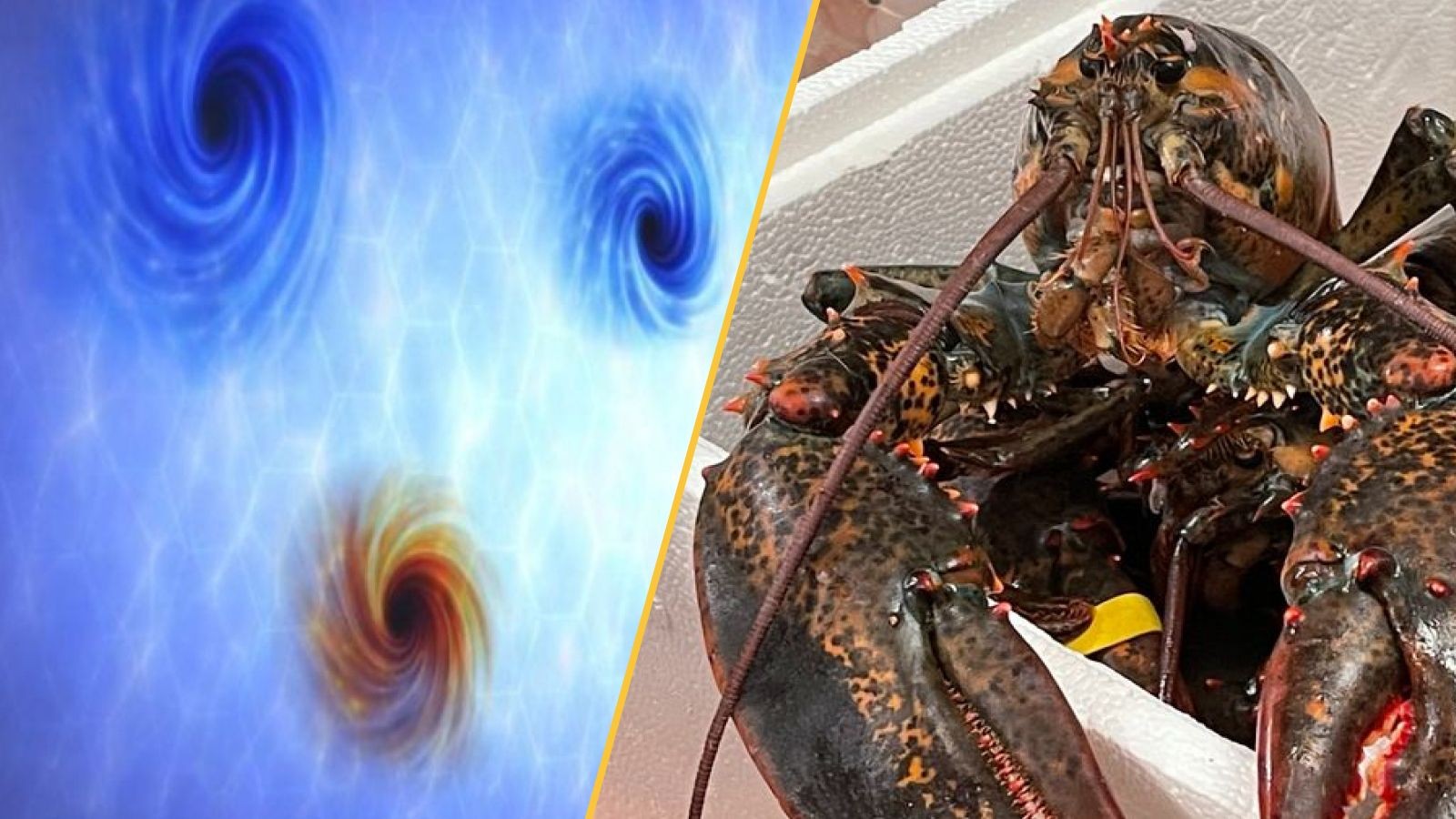
A new study has provided compelling evidence that lobsters feel pain. Researchers observed lobster subjects responding with pain reflexes to electrical shocks—a response that could be mitigated by painkillers. This finding adds weight to the growing movement to recognize the sentience of invertebrates like crabs and octopuses, fueling global calls for stricter animal welfare laws regarding how they are harvested and prepared.
Polar Bear Resilience
While climate change remains a dire threat to Arctic wildlife, there are surprising signs of adaptation. Some polar bears are reportedly becoming heavier than ever, suggesting that certain populations may be finding ways to exploit new food sources or adapt their hunting strategies to a melting habitat. Whether this resilience can outpace the rate of environmental loss remains a critical question for conservationists.
Tech, Health, and Other Briefs
- Cybersecurity: In one of the largest breaches to date, hackers utilized AI to steal hundreds of millions of records from the Mexican government and private citizens.
- Medical Breakthroughs: A patient in Oslo was likely cured of HIV following a stem cell transplant from his brother, who possesses a natural genetic resistance to the virus.
- Robotics: A new humanoid robot has been unveiled, designed specifically to handle domestic housework.
The Takeaway: From the microscopic dance of entangled atoms to the visible shifts in human DNA, science continues to prove that change is constant—whether we are looking at the evolution of our species or the fundamental laws governing the universe.