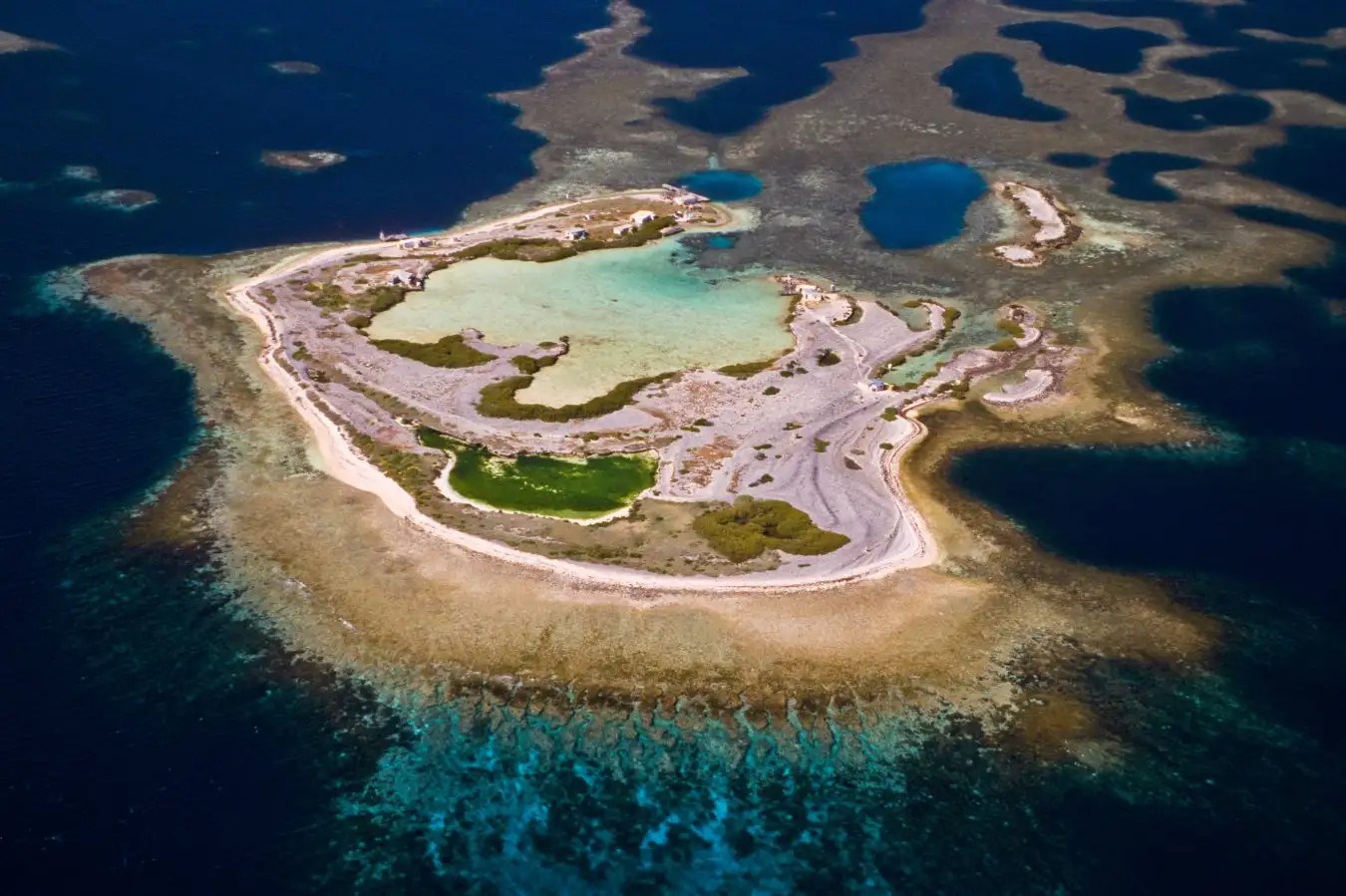
While marine heatwaves in early 2025 triggered catastrophic coral die-offs across the globe, a remote archipelago off the coast of Western Australia remained remarkably resilient. Researchers are now investigating this anomaly, fearing that the survival of these reefs may hold the “genetic blueprint” needed to save the world’s dying coral ecosystems.
An Unexpected Oasis in a Warming Ocean
In early 2025, the global marine environment faced a crisis. At the Ningaloo Reef, north of the Houtman Abrolhos archipelago, up to 60% of coral colonies perished due to intense heat. This pattern was mirrored in many other parts of the world, where massive bleaching events turned vibrant ecosystems into underwater graveyards.
However, when researchers from the University of Western Australia, led by Kate Quigley, surveyed the Houtman Abrolhos archipelago, they found something startling: almost no signs of stress.
Typically, extreme heat causes “bleaching”—a process where corals expel the symbiotic algae living in their tissues. These algae are vital, providing the coral with the majority of its food. Without them, corals turn white and eventually starve.
Defying the “Catastrophic” Threshold
To understand the scale of this anomaly, scientists use a metric called Degree Heating Weeks (DHW), which measures both the intensity and duration of heat stress.
The mathematical thresholds for coral survival are well-established:
– 4 °C-weeks: Significant bleaching is expected.
– 8 °C-weeks: Considered “catastrophic,” usually leading to widespread mortality.
The conditions at Houtman Abrolhos were extreme. By mid-April 2025, the corals had endured a staggering 22 °C-weeks of heat stress. By all standard scientific models, these reefs should have been decimated. Instead, the entire array of local coral species appeared virtually immune to the heat.
Laboratory Revelations: A “Superpower” in the Making
To test whether this resilience was a fluke or a biological reality, the research team brought various coral species into a controlled lab setting. The results confirmed a significant evolutionary advantage:
- Higher Survival: At the 8 °C-weeks threshold, these corals had twice the survival rate of typical reefs.
- Superior Resistance: Their resistance to bleaching was nearly four times higher than average.
- Extreme Endurance: Even at 16 °C-weeks, the survival rate remained near 100%.
The researchers believe this “superpower” might not lie within the coral animals themselves, but in their algal symbionts. It is possible that the unique environmental history of the Houtman Abrolhos has forced these specific algae to evolve a much higher tolerance for heat, which they then pass on to their coral hosts.
Why This Matters for Global Conservation
The discovery of these “heat-tolerant” reefs changes the strategy for marine conservation. Rather than just observing decline, scientists are looking at these sites as natural laboratories.
“They may hold the key to advancing selective breeding and other interventions aimed at enhancing thermal resilience in conservation aquaculture and coral restoration,” says Petra Lundgren of the Great Barrier Reef Foundation.
This research points toward a two-pronged approach for the future of our oceans:
– Protection: Identifying and giving the highest level of protection to these high-tolerance “refuge” reefs.
– Assistance: Using heat-tolerant corals from these sites to “seed” other struggling reefs, essentially helping them adapt to a warming world through human intervention.
Conclusion: While reducing carbon emissions remains the only long-term solution to ocean warming, the discovery of the Houtman Abrolhos corals provides a critical biological toolkit that could help stabilize and restore coral reefs globally.